
Manuscripts & novel drafts
Hear your own writing read back — the fastest way to catch awkward sentences and lifeless dialogue. Aoede HD keeps narrative voice steady across 200+ pages, no quality drop in chapter twelve.
Open the editor above, click File on the toolbar to upload your Word document (.docx, .doc, .rtf, .txt), and get a natural-sounding MP3 in seconds — manuscripts, reports, study notes. SpeechGen reads any Word file aloud in 146 languages using neural HD voices that sound nothing like Microsoft's built-in Read Aloud. No software install, nothing to log in for the first 3,000 characters.
Browser-based, no Microsoft Office required. Works with documents created in Word, Google Docs, LibreOffice, or Pages.
In the editor above, click the File button on the toolbar and pick a .docx, .doc, .rtf, or .txt file. Tracked changes and embedded comments are stripped automatically.
Choose any of 5,000+ voices across 146 languages. Adjust speed and pitch, or sample-listen to two voices side-by-side before converting.
Audio is ready in seconds for short docs and a few minutes for full books. MP3 lands in your account; download once or stream anywhere.
Four real workflows we see every day. Tap a card to listen — same engine, your file plugs straight into the editor above.
Hear your own writing read back — the fastest way to catch awkward sentences and lifeless dialogue. Aoede HD keeps narrative voice steady across 200+ pages, no quality drop in chapter twelve.
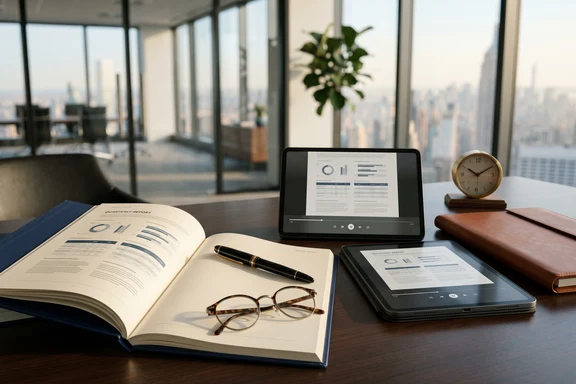
Quarterly reviews, market research, board memos, legal contracts — turn a 40-page Word doc into a 25-minute MP3 to listen to on the train. Lapetus delivers a clean corporate read.
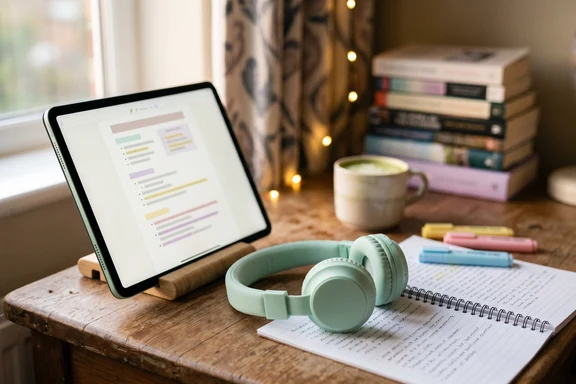
Convert lecture notes, course handouts and study guides into audio you can revise on a walk. Leda HD reads at a measured pace; speed control pushes to 1.4× for last-minute review without distortion.
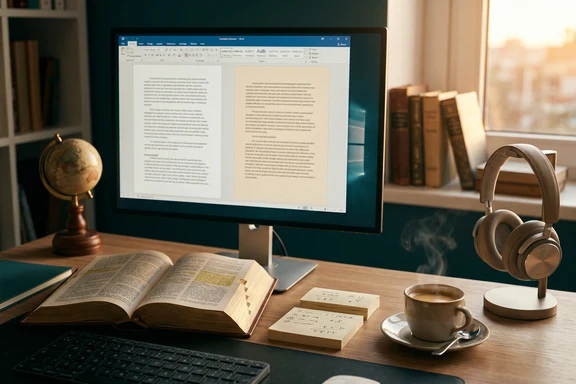
Two-language Word documents — drop the file, pick a German voice for German paragraphs, English for English. Proofread translations by ear, the way native speakers hear them.
Pro tools for novels and screenplays:
use the <cut> tag to split a manuscript into chapter MP3s in one synthesis,
the <dialog> tag to voice each character with a different actor across dialogue passages,
and <break> tags for precise dramatic pauses between scenes. Each tag has its own quick guide.
Microsoft Word has built-in narration. It's fine for proofreading inside Word — but three things SpeechGen does that Word can't.
Read Aloud plays inside Word and stops when you close the file. SpeechGen exports an MP3 you can keep — load it on your phone, listen offline on a flight, share it via Slack, drop it into a podcast feed. Output also as WAV or OGG.
Heading levels (H1/H2/H3) get a brief pause and slight pitch shift so structure is audible. Bulleted lists are read as discrete items. Tracked changes, embedded comments, and bookmarks are stripped automatically — the narrator reads only the final clean draft.
Works on Chromebook, Linux, iPad, Android — anywhere a browser runs. Same flow handles .docx exported from Google Docs, LibreOffice, Pages, or Apple Notes — you don't need Word installed to listen to a Word file.
Click the File button in the editor toolbar at the top of this page, pick your .docx (or .doc, .rtf, .txt), choose a voice and language, click Convert. The MP3 lands in your account in 30 seconds for short docs and 2–5 minutes for a full book. No Word installation needed.
No — both are stripped automatically. The narrator reads only the final clean text the way it would print. If you want comments included, accept-or-reject all tracked changes inside Word first and resolve / delete the comments, then re-export and upload.
Yes. In Google Docs go to File → Download → Microsoft Word (.docx), then upload the file here. Google's own read-aloud only plays inside the browser tab — SpeechGen gives you a portable MP3 you can stream offline or share.
Heading levels (H1/H2/H3) get a brief pause and a slight pitch shift so document structure is audible. Bulleted and numbered lists are read as discrete items. Tables are flattened row-by-row with column headers read once before each row. Images are skipped; alt-text is not read.
.doc (Word 97–2003 binary format), .rtf, and .txt are supported directly — drop them in the same way. .odt (OpenDocument from LibreOffice / Apple Pages) needs a quick re-save: open in LibreOffice, File → Save As → Word .docx, then upload.
Yes — both are built in. Wrap chapter breaks in the <cut> tag and one synthesis returns a separate MP3 per chapter. For dialogue between characters, the <dialog> tag voices each speaker with a different actor in a single audio file. Combine both for a full multi-voice audiobook.
Yes — Microsoft Word has a built-in Read Aloud feature that's fine for proofreading. But it plays only inside the app, doesn't export an MP3, and covers far fewer languages. SpeechGen gives you 146 languages, HD neural voices, and a downloadable file you can take anywhere.
Word is one starting point. Use the same SpeechGen account for these too.
Convert any text-based PDF — research papers, ebooks, long-form articles, business reports. Same languages, same voices. → Open
Upload 20 seconds, get a personal voice that reads your Word docs in your own voice. 15 languages. → Open
Type or paste any text. Adjust speed, pitch, emotion, language. 5,000+ voices. → Open
Click File in the editor at the top of this page. First 3,000 characters free — about 5 pages of audio, no card required. After that $5+.
Convert Word to MP3