Afrikaans Text to Speech
Convert text to natural Afrikaans speech — native af-ZA voices, free MP3.
Native Afrikaans Neural Voices — Rolled R, Guttural G & Cape Dutch Vowels
Hear your text read aloud with the authentic rolled r and guttural g of Stellenbosch and Cape Town. Adri and Willem are dedicated af-ZA speakers trained on real South African pronunciation — they handle circumflex vowels like ô in “Goeiemôre”, trema marks like ï in “naïef”, and the distinctive ei/ui/ou diphthongs that set Afrikaans apart from its Dutch parent. Pick a voice, paste your text, and download the audio file in seconds — ready for content creation, voice-over, audiobook narration, or language practice.
Whether you are a South African diaspora creator recording a Cape Winelands travel vlog, a linguistics student studying the youngest Germanic language, or a learner tackling Afrikaans pronunciation for the first time, these voices deliver the cadence of the Western Cape without robotic artifacts. First 1,000 characters free — no account, no watermark.
- Native af-ZA voices — Adri & Willem
- Additional neural alternatives available
- Adjustable speed & pitch
- Download MP3, WAV, FLAC, OGG
- Free — 1,000 chars, no signup
Afrikaans Voice Samples — Click to Preview
Click to preview · native & neural voices
Adri and Willem are the only dedicated af-ZA voices in the catalogue — true native South African speakers with Stellenbosch cadence. Ava and Andrew offer an alternative Afrikaans ai voice through a multilingual neural engine. Browse all available voices on the voices page.
Afrikaans Pronunciation — the G Sound, Trema & Diphthongs
Eight phrases that capture what makes Afrikaans sound unlike any other Germanic language. Click play to hear each one read by Adri, a native af-ZA speaker.
When to Use Afrikaans TTS
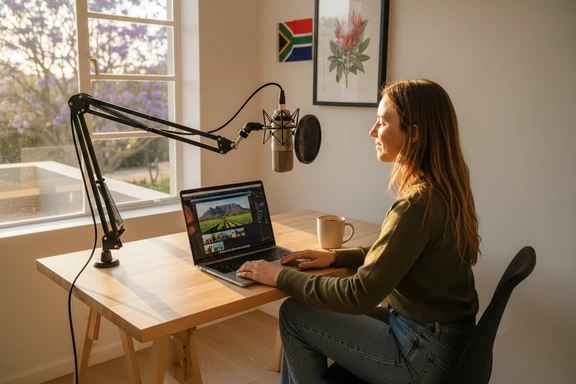
Content Creation & Voiceover
Add an Afrikaans voice-over to YouTube travel vlogs about the Cape Winelands, recipe videos featuring melktert and boerewors, or safari commentary from the Kruger. A native South African speaker gives your footage an authentic edge that stock English narration cannot match. Export the audio file and drop it straight into any video editor.
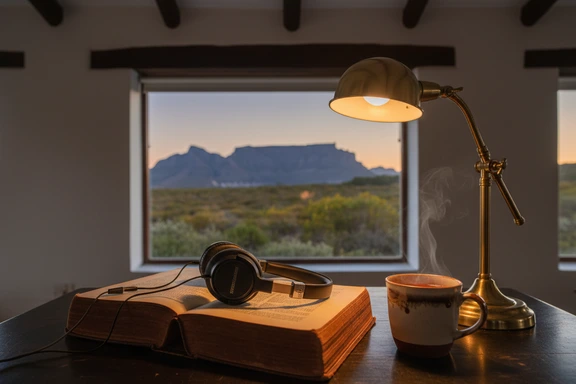
Audiobooks & Literary Narration
Turn Dalene Matthee’s forest novels, Etienne van Heerden, or Ingrid Jonker’s poetry into spoken audio for diaspora families who want their children to hear the language at bedtime. Willem delivers the weighty narrator cadence that Afrikaans literary prose demands, while Adri suits contemporary reads and children’s stories. Ideal for preserving a heritage language across generations.
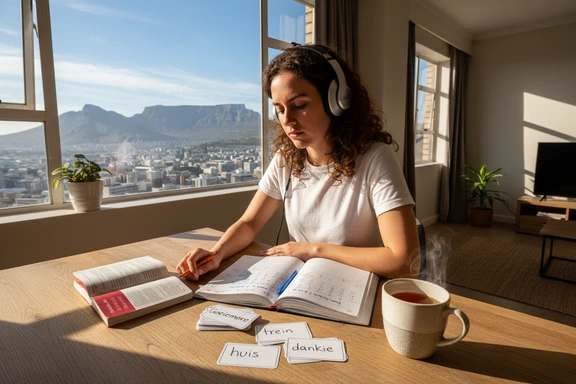
Language Learning & Pronunciation
Afrikaans ranks among the easiest languages for English speakers — no gender, no cases, no verb conjugation by person — yet the guttural g and the ui diphthong trip up every beginner. Slow playback to 0.75× to isolate each sound, then repeat at normal speed. Equally valuable for Dutch speakers curious about their linguistic cousin, Duolingo learners, and Germanic linguistics students at universities like Leiden, Cornell, or Stellenbosch.
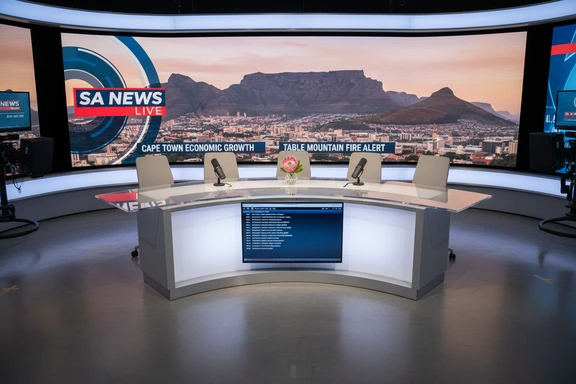
Voice-Over, News & Media
Produce broadcast-style narration for South African documentaries, Cape Town tourism audio guides, Stellenbosch winery tour commentaries, or Western Cape corporate training. A native speaker reading real place names — Franschhoek, Hermanus, Paarl — gives productions the credibility that a non-native narrator cannot deliver. Ideal for voice over projects where authentic regional pronunciation matters.
How to Generate an Afrikaans Voice in 3 Steps
Three steps to natural South African audio. No software, no signup.
Paste or type your Afrikaans text
Type directly or paste up to 1,000,000 characters. Upload DOCX, PDF, or SRT files. The engine accepts ô, ë, ï and all Afrikaans diacritics natively — no transliteration needed.
Choose an Afrikaans voice
Select from native af-ZA speakers like Adri or Willem, plus additional neural options. Filter by gender and adjust speed and pitch to match your project.
Listen & download free
Click Convert to Speech, preview the result, and download as MP3, WAV, or FLAC. First 1,000 characters free — no account needed. No watermark on any plan.
What Makes Afrikaans Distinctive — Youngest Germanic, 17th-Century Dutch Roots
Three features that set this South African language apart from every other member of the Germanic family — and that the engine handles natively.
Youngest Major Germanic Language
Codified in 1925 by the Taalkommissie, Afrikaans is roughly a century younger than standard German and four centuries younger than Shakespeare’s English. The Afrikaanse Taalmonument in Paarl (1975) celebrates it — the only monument in the world dedicated to a language. Adri and Willem speak standard Stellenbosch Afrikaans, the dialectal anchor used in broadcast media and literature across South Africa.
Most Analytical Germanic Grammar
Where Dutch has three genders and case remnants, Afrikaans dropped them all. No grammatical gender (“die” and “’n” for everything), no verb conjugation by person (“ek is, jy is, hy is, ons is”), no cases. That makes it one of the easiest Germanic languages for English speakers — and a favourite teaching example in comparative linguistics courses.
Cape Dutch Roots & Dutch Intelligibility
When 17th-century Dutch colonists settled at the Cape, 350 years of isolation, Khoi-San substrate influence, and Malay loanwords reshaped the language into something new. Today an Afrikaans speaker in Stellenbosch and a Dutch speaker in Utrecht can still understand each other roughly 70 percent of the time — but the tighter diphthongs (ei, ui, ou), the softer guttural g, and the simplified grammar mark Afrikaans as its own language, not a dialect.
Afrikaans Text to Speech — FAQ
Yes. Paste any Afrikaans text into the editor above and click Convert to Speech — text to speech Afrikaans works instantly. The first 1,000 characters are free with no account and no watermark. You get a native Cape accent reading, not a robotic synthesiser. Create a free account for an additional 3,000 characters per day for seven days. Commercial use is included in every paid tier.
Absolutely. Type or paste your text — even a few sentences will work. Pick Adri for a warm female reading or Willem for a deeper male narrator. Adjust speed and pitch, then download the audio file. Many diaspora families use the tool for birthday messages, church readings, and heritage-day greetings when a live Afrikaans reader is not available.
The circumflex (ô) marks a long, open vowel — hear it in “Goeiemôre” above. The trema (ë, ï) signals that two adjacent vowels are separate sounds, not a diphthong: “naïef” is na-EEF, not “naif”. Click the play buttons in the pronunciation table to hear Adri demonstrate each mark with a native Stellenbosch accent.
Not the same, but closely related. An Afrikaans speaker and a Dutch speaker can understand each other roughly 70 percent of the time. The two languages split when 17th-century settlers arrived at the Cape; centuries of isolation and Khoi-San influence gave Afrikaans simpler grammar (no gender, no cases) and different vowels. If you need Dutch instead, visit the Dutch text to speech page.
This page covers Afrikaans — the language with the rolled r and guttural g. If you need English spoken with a South African accent, visit the South African English page. Both pages share the same editor and download options.