Albanian Text to Speech
Convert text to natural Albanian speech — 45+ AI voices, free MP3 download.
45+ Neural Voices — Tosk Standard, ë Schwa & Rolled rr
Albanian stands alone in the Indo-European family — no sister language, no close relative, just a unique branch with sounds like the schwa ë and the rolled double rr. The library includes Ilir and Anila, two native speakers trained on standard southern dialect, plus cross-language neural voices localised to the sq-AL phoneme set. Pick a speaker, adjust speed or pitch, and export an Albanian ai voice clip ready for production.
Whether you are creating content for audiences in Albania and Kosovo, recording an audiobook in the tradition of Ismail Kadare, or practising pronunciation as a heritage learner in the diaspora, the text to voice workflow stays the same: paste, choose, download. The 36-letter Latin alphabet is processed natively — ç, xh, gj, ll and every other digraph read correctly without manual markup.
- 45+ neural voices — 2 native + cross-language
- Tosk standard (southern dialect) phonology
- Adjustable speed & pitch per speaker
- Download MP3, WAV, OGG, FLAC
- Free — 1,000 chars, no signup
Albanian Voice Samples — Click to Preview
Click to preview · 45+ voices total
These are 4 featured speakers. Browse all 45+ on the voices page — filter by sq-AL.
Albanian Pronunciation — ë, ç, xh & the Rolled rr
Seven phrases that showcase the sounds setting this Indo-European isolate apart. Click play to hear each one read by Anila, a native female speaker. The same text to speech Shqip engine handles all of them automatically.
How the Engine Reads Albanian Formatting
Small formatting details change how text sounds aloud. Four conventions worth knowing when preparing your input:
Numbers
“2.5” → “dy pikë pesë” — the decimal separator is a period in standard Tosk. Large numbers use the European pattern: 1 000 with a space, read as “njëmijë”. Ordinals attach the definite suffix automatically: i parë (the first), i dytë (the second).
Currency
“500 lekë” → “pesëqind lekë” — the Lek is the local unit. Euro symbols (€) are read as “euro” and placed after the number, matching Balkan convention. Write the currency word in full for the clearest output.
Dates & Time
“15 prill 2026” → “pesëmbëdhjetë prill” — day-first order, month name in lowercase. The 24-hour clock is standard: 14:30 reads as “katërmbëdhjetë e tridhjetë”. Spell months in full to avoid ambiguity.
Definite Articles
“libri” vs “libër” — the article attaches as a suffix: -i, -u, -a depending on gender and case. The engine handles this natively, so write standard Tosk and the suffix stress falls in the right place.
When to Use Albanian TTS
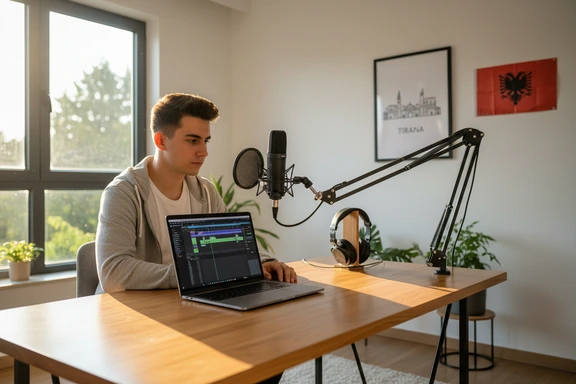
Content Creation & Voiceover
Add an Albanian voiceover to YouTube videos, podcasts, and social reels aimed at Balkan and diaspora audiences. Pick a voice, export the file, and drop it into Premiere, DaVinci, or CapCut. Ideal for creators who need consistent narration without booking a studio session.
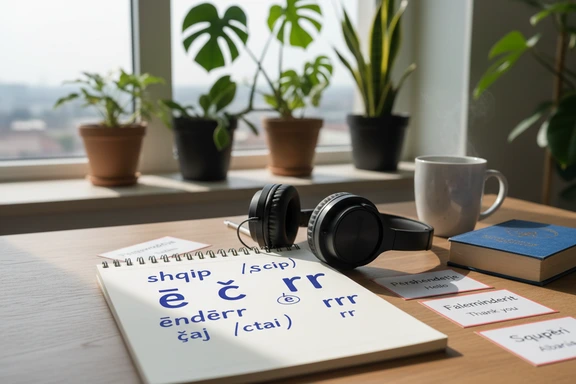
Language Learning & Pronunciation
Hear difficult digraphs like xh, gj and rr spoken clearly by a native speaker. Slow playback to 0.75× to isolate the schwa ë, then speed back up once you follow along. Especially useful for heritage learners in the diaspora reconnecting with the language of their parents.

Audiobooks & Narration
Turn manuscripts into spoken-word audio with a warm, natural narrator. Novels by Kadare, Agolli, or Kongoli deserve a reading that respects the cadence of literary Tosk. Use Dialog Mode to assign different speakers to characters for a richer listening experience.
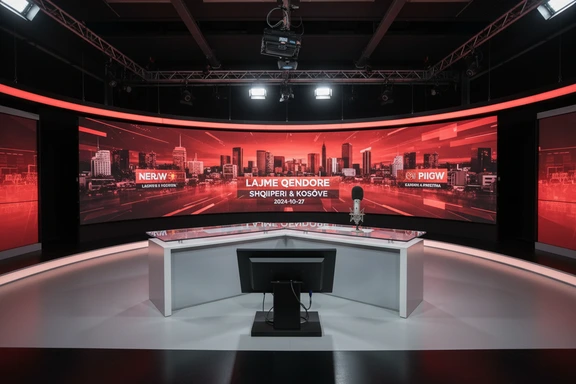
News & Media Narration
Produce news summaries, podcast intros, or bulletin-style reads in a clear broadcast register. The authoritative tone mirrors what listeners expect from channels across Tirana and Prishtina. Batch-convert scripts when you need multiple bulletins per day.
How to Generate an Albanian Voice in 3 Steps
Turn any text into natural-sounding speech in three steps. No software, no signup.
Paste or type your text
Open the editor and paste up to 1,000,000 characters of content in the Latin-based alphabet. Upload DOCX, PDF, or SRT files. Digraphs like xh, gj, dh, and ll are parsed automatically.
Choose a voice
Select from 45+ speakers. Filter by gender and tier, then adjust speed and pitch to match your project. Native voices like Ilir and Anila deliver authentic Tosk intonation.
Listen & download free
Click Convert to Speech, preview the result, and save as an audio file in your preferred format. First 1,000 characters free — no account needed, no watermark on any plan.
What Makes This Language Unique — and How the Engine Handles It
A few traits that matter when preparing text for spoken output:
Tosk vs Gheg
Standard written form is based on Tosk, the southern dialect spoken in Tirana and across southern Albania. Northern Gheg, common in Kosovo and parts of North Macedonia, differs in vowel inventory and some verb forms. The engine reads Tosk natively; most shared vocabulary from Gheg texts is handled correctly, though Gheg-only words may carry Tosk intonation.
36-Letter Latin Alphabet
Nine digraphs (dh, gj, ll, nj, rr, sh, th, xh, zh) and two special letters (ç, ë) bring the total to 36. Each maps to exactly one phoneme, so spelling is phonetic and the engine reads what it sees — no guessing required.
Indo-European Isolate
The language sits on its own branch of the Indo-European family — not Slavic, not Romance, not Greek. This means its sound system, including the schwa ë and the contrast between single r and trilled rr, has no close parallel in neighbouring languages. The neural model is trained specifically on this phoneme set.
Text to Speech Albanian — FAQ
45+ speakers in total. Two — Ilir (male) and Anila (female) — are native voices trained on standard Tosk phonology. The rest are cross-language neural voices localised to the sq-AL phoneme set. All deliver natural-sounding output with adjustable speed and pitch.
Yes. The library is roughly split between male and female speakers. Ilir is the primary native male, Anila the primary native female. You can also choose from dozens of cross-language voices in both genders and fine-tune each one with pitch and speed controls.
The engine is built on Tosk — the standard literary form used in education, media, and government across both Albania and Kosovo. Most everyday vocabulary is shared between Tosk and Gheg, so general-purpose texts read naturally. Words that are exclusive to northern Gheg may be pronounced with Tosk stress patterns. For official or educational content, Tosk is the expected standard.
Yes. A commercial licence is included in every tier, including the free one. First 1,000 characters are free with no account and no watermark. Export as an audio file and use it in videos, courses, presentations, or any published work.
It does. The 36-letter Latin alphabet is supported natively. Every digraph (dh, gj, ll, nj, rr, sh, th, xh, zh) and every accented letter (ç, ë) maps to the correct phoneme. Just write standard text and the reading comes out right.