Basque Text to Speech
Convert text to natural Euskara speech — neural AI voices, free MP3.
Basque Neural Voices — the Language Isolate with Ergative Case and tx/tz Digraphs
Euskara is the only surviving pre-Indo-European language in Western Europe — and its signature tx and tz digraphs plus the ergative case marker -k demand voices trained specifically on Basque phonology. The library includes neural voices trained on Euskara Batua — the unified literary standard understood across the entire Basque Country. Pick a native speaker like Ander (Neural, male) or Ainhoa (Neural, female) and download your audio file in one click.
Useful for pronunciation practice before a trip to Donostia or Bilbao, for recording a Basque voiceover, for linguists exploring the ergative-absolutive system, or for diaspora communities in Boise and Buenos Aires keeping the language alive. Multilingual European voices can also read aloud in Euskara if you need a broader tonal palette. First 1,000 characters free, no account required.
- Neural voices including 2 native Basque speakers
- tx, tz, ergative -k handled natively
- Adjustable speed & pitch
- Download MP3, WAV, FLAC, OGG
- Free — 1,000 chars, no signup
Euskara Voice Samples — Click to Preview
Click to preview · 2 native + multilingual voices
These are 4 featured speakers — 2 native Basque voices and 2 multilingual European voices that can read Euskara text. Browse the full catalogue on the voices page and filter by eu-ES.
Basque Pronunciation — tx, tz, Ergative -k and Palatal Consonants
Euskara has sounds you will not find in any neighbouring language. Click play to hear a native voice demonstrate each one.
What Makes Basque Pronunciation Distinct
- tx, tz, ts — Three Sibilant Digraphs — Euskara distinguishes three affricates where most European languages have one. The tx in etxea sounds like English “ch”; tz in hitza is a dental /ts/; ts in matsa sits between the two. The neural engine keeps all three separate.
- Ergative -k — Basque is the only European language with ergative-absolutive alignment. The subject of a transitive verb takes a -k suffix: gizonak ikusi du (the man saw it) vs. gizona etorri da (the man came). Hearing the suffix spoken naturally helps learners internalise the pattern.
- Palatalized Consonants — doubled letters like tt and dd, plus the ñ and ll clusters, signal a softened or diminutive quality. Ttantto (small amount) and oneño carry a warmth you can hear immediately when the voice reads them aloud.
Basque Text — Formatting Tips for Accurate Speech
Small formatting choices affect how the engine reads your text. Four Euskara conventions worth knowing before you paste:
Numbers
“hogeita hiru” — Basque uses a vigesimal (base-20) counting system. Twenty-three is hogeita hiru (twenty-and-three). Write digits and the engine applies the correct Basque number words automatically.
Currency
14,95 € → “hamalau euro eta laurogeita hamabost zentimo”. Use the comma as decimal separator and place the euro sign after the amount for the most natural reading.
Dates & Time
2026ko apirilaren 7a → “bi mila hogeita seiko apirilaren zazpia”. Basque dates use the genitive case with a -ko suffix on the year. The 24-hour clock is standard throughout Euskal Herria.
Agglutination
etxekoandre = etxe + ko + andre (“lady of the house”). Basque builds compound words by stacking suffixes. Keep compounds as single words — splitting them changes how the voice groups syllables and stress.
When to Use Basque TTS
Content Creation & Voiceover
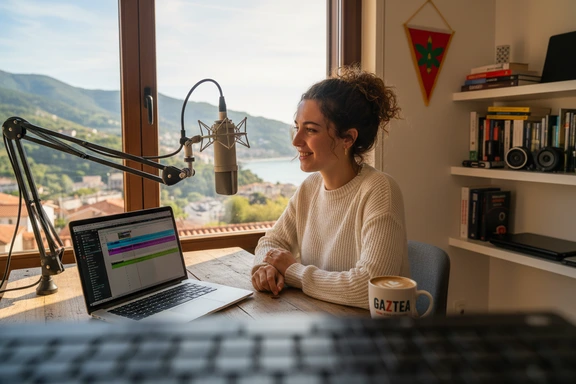
Add a Basque voice to YouTube videos, podcast episodes, or social-media reels. Young creators across Euskal Herria produce original content in Euskara for TikTok and Instagram — a neural speaker handles narration while you focus on editing. Export the audio file and drop it into Premiere, DaVinci, or CapCut.
Basque Learning & Pronunciation
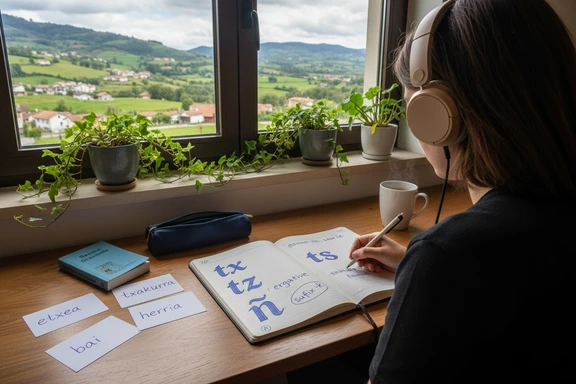
Hear how etxea, ertzaintza, and the ergative suffix -k actually sound before you try them in class. Paste vocabulary lists or dialogue exercises and slow the playback to catch the tx/tz distinction. Helpful for euskaltegi courses, barnetegi immersion programmes, and self-study before the EGA certification exam.

Audiobooks & Basque Literature
Turn a manuscript by Bernardo Atxaga or Kirmen Uribe into an audiobook with a natural narrator. The Euskara audiobook catalogue is growing on platforms like Elkar and Susa — a neural voice delivers the clarity that literary prose demands. Use Dialog Mode to assign different speakers to characters in novels and short stories.
Broadcast & Dubbing
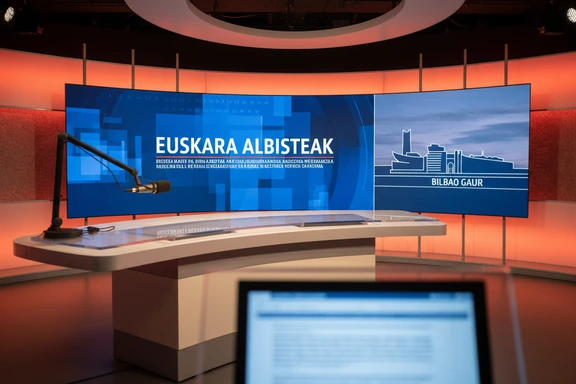
Record scratch voice tracks or finished off-screen narration for documentary, radio, and television work. Basque media runs deep — EITB broadcasts on ETB1, Euskadi Irratia, and Hamaika Telebista, and freelance dubbing professionals need quick read-throughs before final studio sessions. A neural Euskara voice provides the read-aloud speed that broadcast deadlines demand.
How to Generate a Basque Voice in 3 Steps
Three steps from text to audio. No software, no signup.
Paste or type your text
Type directly or paste up to 1,000,000 characters. Upload DOCX, PDF, or SRT files. Works with any Euskara text — scripts, articles, study notes, dialogue, news copy.
Choose a voice
Pick from 2 native Basque speakers or select a multilingual European voice. Adjust speed and pitch to match the tone you need — from a measured newscast to a conversational pace.
Listen & download free
Click Convert to Speech, preview the result, and download as MP3, WAV, or FLAC. First 1,000 characters free — no account needed. No watermark on any plan.
What Makes Euskara Unique — a Pre-Indo-European Survivor
Language Isolate
Basque is not related to any other known language — not to Spanish, not to French, not to any Indo-European family. Linguists believe it descends from languages spoken in Western Europe before the arrival of Indo-European peoples roughly 4,500 years ago. Euskaltzaindia, the Royal Academy of the Basque Language, codified the modern standard (Euskara Batua) in 1968.
Ergative-Absolutive Grammar
In most European languages the subject takes the same form regardless of the verb. Basque marks the subject of a transitive verb with the suffix -k: gizonak ikusi du (the man saw it) vs. gizona etorri da (the man came). Combined with SOV word order and agglutinative morphology, the result is a grammatical structure unlike anything else on the continent.
Dialects — Five Varieties, One Standard
Bizkaiera, Gipuzkera, Lapurtera, Nafarrera, and Zuberera reflect local history on both sides of the Pyrenees. The voices read in Euskara Batua, the unified standard that is understood from Bilbao and Donostia to Bayonne and Iruñea — so audio you generate works for any audience across Euskal Herria.
Basque Text to Speech — FAQ
The catalogue includes 2 native Basque speakers — Ander (male) and Ainhoa (female) — both Neural quality, trained specifically on Euskara Batua pronunciation. In addition, multilingual European voices can read aloud in Basque. All voices support adjustable speed and pitch.
Both native voices read in Euskara Batua, the unified literary standard codified by Euskaltzaindia. Batua is understood across Euskal Herria, from Bilbao and Donostia to Bayonne and Pamplona. Regional varieties like Bizkaiera or Gipuzkera are not available as separate voice options.
Strictly a reader. Paste text that is already written in Euskara and the tool speaks it aloud. It does not convert between languages — for that you would need a separate service. The purpose here is faithful Basque pronunciation, not language conversion.
Yes. Commercial use is included in every tier, including the free one. Generate voiceover for EITB broadcasts, audiobooks published through Elkar, YouTube channels, or branded content — no additional licence needed. First 1,000 characters are free with no account.
The ISO 639-1 code is eu, and the ISO 639-2 code is eus. In the voice filter, look for eu-ES to narrow down to Basque speakers. You may also find this page listed as text to speech euskera or TTS euskera in search results — both refer to the same tool.