Catalan Text to Speech
Convert text to natural Catalan speech — 58 AI voices, free MP3 download.
58 Neural Voices — l·l, ny and the Open/Closed Vowel System
Generate natural Catalan speech in seconds and hear the sounds that define Català: the geminated l·l, the soft ny digraph, and the open/closed vowel contrasts that separate this Romance language from its neighbours. The library includes 58 voices trained on native pronunciation from the central-oriental dialect area — the standard heard on TV3 and Catalunya Ràdio. Pick a speaker like Enric (Neural, male) or Alba (Neural, female) and download your audio file in one click.
Whether you are building content for a Barcelona-based audience, recording a Catalan voiceover for a documentary, preparing pronunciation drills for an Institut Ramon Llull course, or making web pages accessible to visually impaired readers across the Països Catalans, the catalogue covers the tonal range you need — from a calm read-aloud to a confident newscast register. First 1,000 characters free, no account required.
- 58 native voices — all Neural quality
- l·l, ny, ç and apostrofació handled natively
- Adjustable speed & pitch
- Download MP3, WAV, FLAC, OGG
- Free — 1,000 chars, no signup
Catalan Voice Samples — Click to Preview
Click to preview · 58 voices total
These are 4 featured speakers. Browse all 58 on the voices page — filter by ca-ES.
Catalan Pronunciation — Barcelona, Apostrophes & the Geminated L
Català has sounds you will not find in any neighbouring Romance language. Click play to hear a native voice demonstrate each one.
What Makes This Language Sound Distinct
- Geminated L (l·l) — the ela geminada is unique to Català among Romance languages. Words like col·legi and paral·lel hold the L consonant slightly longer, marked with a middle dot (punt volat). The engine reproduces this held consonant naturally.
- Open vs. Closed Vowels — where Italian distinguishes è/é and ò/ó, Català carries this contrast further with seven distinct vowel sounds in stressed position. The accent mark is not decorative — it changes pronunciation and sometimes meaning.
- Apostrofació — articles and prepositions fuse with vowel-initial words: l’amic, d’aigua, s’ha. The voices handle elision smoothly, with no awkward pause at the apostrophe.
How Català Handles Numbers, Dates & Currency in Speech
Formatting your source text correctly makes all the difference. Four conventions worth knowing before you paste:
Numbers
“vint-i-tres” — compound numbers from 21 to 29 use hyphens. Write digits and the engine applies the correct inflection automatically, including agreement for ordinals.
Currency
14,95 € → “catorze euros amb noranta-cinc cèntims”. Use the comma as decimal separator and place € after the amount — the engine reads it as euros and cèntims in the standard form.
Dates & Time
7 d’abril de 2026 → “set d’abril de dos mil vint-i-sis”. Day-first format with the preposition de. The 24-hour clock is standard: 14.30 reads as “dos quarts de tres” in traditional Catalan time-telling.
Accent Marks
café vs. cafè — acute (é) marks a closed vowel, grave (è) marks an open one. Omitting the accent can change pronunciation. Always include diacritics in your source text for the most accurate reading.
When to Use Catalan TTS
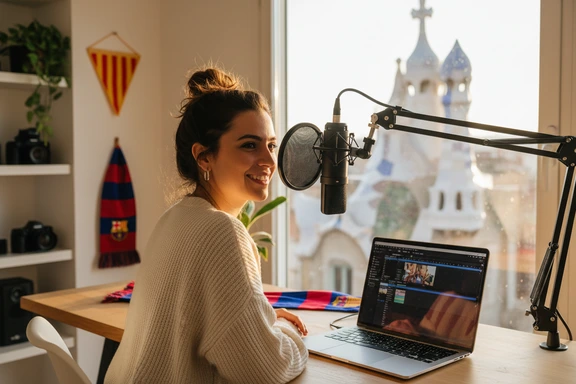
Content Creation & Voiceover
Add a native voiceover to YouTube videos, podcast intros, or social-media clips aimed at audiences across Catalonia. Pick a warm conversational speaker for vlogs or a confident register for product explainers — export the audio file and drop it into your editor.
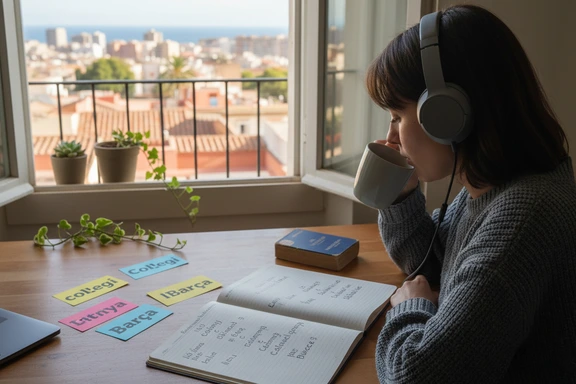
Language Learning & Pronunciation Practice
Hear how col·legi and Catalunya actually sound before you try them in class. Paste vocabulary lists, dialogue exercises, or tricky phrases and slow the playback to isolate the geminated l·l and open vowels. Useful for Institut Ramon Llull courses, Parla.cat lessons, and self-study.

Audiobooks & Literary Narration
Turn a manuscript by Mercè Rodoreda or Jaume Cabré into an audiobook with a steady, natural narrator. The audiobook market in Català is growing on Storytel and Audible — Neural voices deliver studio-level clarity that holds up alongside human narration. Use Dialog Mode to assign distinct voices to different characters.
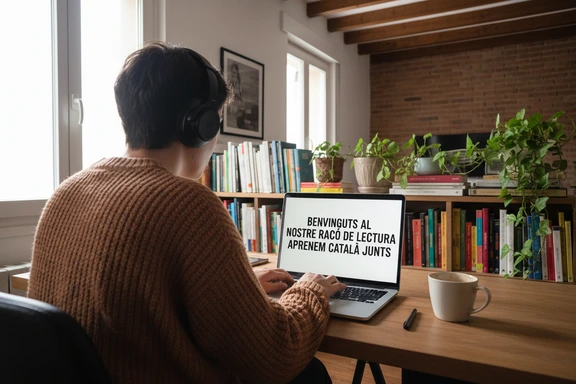
Accessibility & Screen Reading
Catalonia’s accessibility law (Llei 13/2014) requires public websites to support read-aloud. Generate audio versions of articles, municipal notices, or educational material so visually impaired readers can listen in their own language. Adjustable speed lets each user set a comfortable pace.
How to Generate a Catalan Voice in 3 Steps
Three steps from text to audio. No software, no signup.
Paste or type your text
Type directly or paste up to 1,000,000 characters. Upload DOCX, PDF, or SRT files. Works with any text — scripts, articles, study notes, dialogue.
Choose a voice
Pick from 58 native speakers. Filter by gender and adjust speed and pitch to match the tone you need — from a calm read-aloud to an energetic voiceover.
Listen & download free
Click Convert to Speech, preview the result, and download as MP3, WAV, or FLAC. First 1,000 characters free — no account needed. No watermark on any plan.
What Makes Català Unique — and Why the TTS Handles It
The Geminated L (l·l)
Català is the only Romance language with the ela geminada — a double-length L written with a middle dot (punt volat). Words like col·legi (school) and intel·ligent carry a held consonant that cheap readers often skip. The engine reproduces the precise lengthening.
Apostrofació — Automatic Elision
Articles and prepositions contract before vowels: l’amic (the friend), d’aigua (of water), s’ha (has itself). The voices handle elision automatically — no glitch or pause at the apostrophe boundary.
Dialects — One Standard, Five Varieties
Central-oriental (Barcelona, Girona, Tarragona), valencià (Valencia), balear (Mallorca, Menorca, Eivissa), nord-occidental (Lleida), and alguerès (Alghero, Sardinia). The voices use central-oriental pronunciation — the standard understood across all Països Catalans.
Català Text to Speech — FAQ
No. Català is a distinct Romance language with its own grammar, phonetics, and orthography. It evolved independently from Vulgar Latin — alongside Occitan, not from Castilian — and is the official language of Andorra and a co-official language in Catalonia, Valencia, and the Balearic Islands. If you need voices in Castilian, visit the Spanish TTS page instead.
Yes. Paste any text and convert it to speech free of charge — the first 1,000 characters require no account and no credit card. Create a free account to receive an extra 3,000 characters per day for seven days. Commercial use is permitted on every plan, including the free tier.
The current voices use central-oriental pronunciation (the Barcelona/Girona standard). Valencian and Balearic speakers will find them perfectly intelligible, though certain vowel reductions and consonant choices follow the central norm. If you write text in standard orthography, the result sounds natural to listeners across the Països Catalans.
Yes. Every plan — including the free tier — includes a commercial licence. You may use the generated audio in audiobooks, podcasts, YouTube videos, e-learning courses, presentations, and any other project. No watermark is added.
The l·l is a geminated (doubled) L sound unique to Català, written with a middle dot called punt volat. It appears in common words like col·legi (school), paral·lel (parallel), and intel·ligent. Pronouncing it correctly — holding the consonant slightly longer — is a marker of fluency. The engine handles the lengthening automatically when it encounters the · in your text.