Estonian Text to Speech
Convert text to natural Estonian speech — 50+ AI voices, free MP3 download.
50+ Neural Voices — Three Vowel Lengths, the Unique õ & 14 Cases
Estonia produced more tech unicorns per capita than any other EU country — Skype, Wise, Bolt, Pipedrive, Veriff — yet finding a reliable way to turn written eesti keel into spoken audio has been surprisingly hard. This page solves that: pick a native voice like Kert or Anu, paste your text, and hear the result in seconds. The engine handles the phonetic features that make the language tricky for machines: three degrees of vowel and consonant length, the õ sound that exists nowhere else in Europe, palatalised consonants, and 14 grammatical cases that replace prepositions with suffixes.
Practical for e-Estonia product demos, audiobook narration in the tradition of Tammsaare and Kross, pronunciation practice for newcomers relocating to Tallinn or Tartu, and voiceover work targeting a Baltic audience. Every Estonian AI voice in the catalogue covers Neural and HD tiers, from a calm read-aloud to an energetic newscast register. The first 1,000 characters are free — no account, no watermark.
- 50+ native voices — Neural & HD
- Three-way length contrast (Q1 / Q2 / Q3) handled natively
- Adjustable speed & pitch
- Download MP3, WAV, FLAC, OGG
- Free — 1,000 chars, no signup
Estonian Voice Samples — Click to Preview
Click to preview · 50+ native voices total
These are 4 featured speakers from the TTS Estonian catalogue. Browse all 50+ on the voices page — filter by et-EE.
Estonian Pronunciation — sada / saada / saada & the Three Lengths
Spelling is largely phonetic, yet duration alone can flip meaning. Click play to hear each example read by a native speaker.
What Makes the Sound System Distinct
- Three degrees of length — short (Q1), long (Q2), and overlong (Q3) apply to both vowels and consonants. The difference between Q2 and Q3 is roughly 1.5× in duration — no other European language uses a three-way contrast like this.
- The õ vowel — an unrounded back mid vowel found in everyday words like õhtu (evening) and õun (apple). Finnish, its closest relative, does not have it. The neural voices reproduce õ without rounding the lips.
- First-syllable stress — stress always falls on the opening syllable, regardless of word length. Even the 24-letter palindrome above starts strong and descends evenly — the prosody engine follows this rule without exception.
How Numbers, Dates & Currency Sound in Spoken Eesti
Formatting source text correctly makes all the difference. Four conventions worth knowing before you paste:
Numbers
1 020 → “tuhat kaksekümmend” — spaces separate thousands. Ordinals inflect through all 14 cases: “kolmas” (third), “kolmandas” (in the third). Write digits and the voice applies the correct case form.
Currency
12,50 € → “kaksteist eurot ja viiskümmend senti”. Use comma as decimal separator and the euro sign after the amount. The engine reads euros and cents with the partitive case that follows a numeral.
Dates & Time
7.04.2026 → “seitsmes aprill” (day-first with ordinal). 24-hour clock is standard: 14.30 reads as “neljateist kolmkümmend”. Write the period between day, month, and year.
Compound Words
kuulilennuteetunneliluuk — nouns chain into single unbroken strings without spaces. The engine splits compounds at morpheme boundaries and stresses the first syllable of each component.
When to Use Estonian TTS
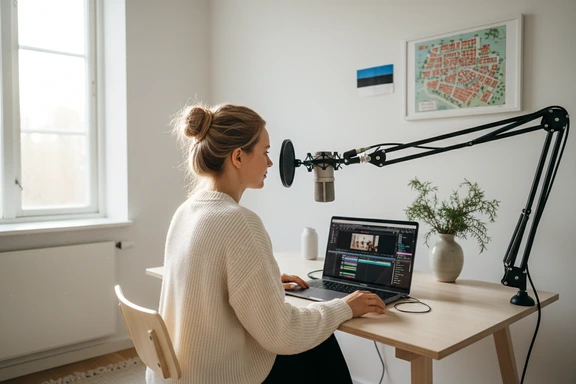
Content Creation & Voiceover
Add a native voiceover to YouTube videos, podcast intros, or social-media clips targeting the Baltic market. Choose a warm conversational speaker for vlogs or a confident register for explainers about design, the startup scene, or digital-society trends. Export the audio file and drop it into Premiere, DaVinci, or CapCut — ready to publish.
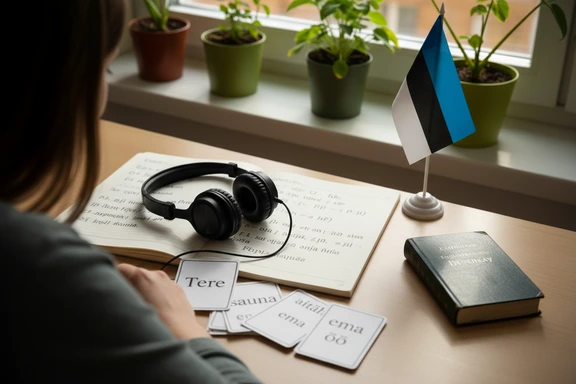
Language Learning & Pronunciation
Hear how the three vowel lengths and the õ sound actually work before you attempt them in class. Paste vocabulary lists, dialogue exercises, or tricky case-inflected words and slow the playback to isolate each phoneme. Ideal for e-residents preparing for life in Tallinn, exchange students heading to Tartu University, and anyone studying this Finno-Ugric language as a second tongue.
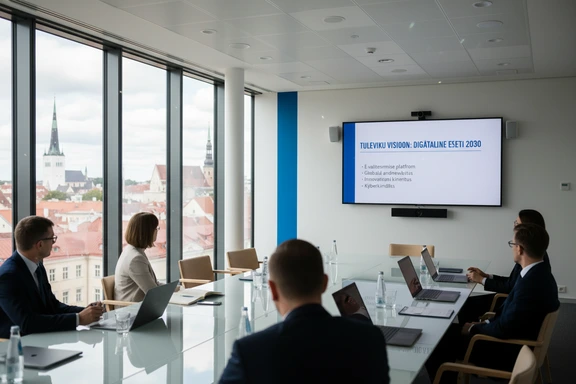
Business Presentations
Voice a quarterly report, onboarding walkthrough, or product launch in clearly articulated speech. Perfect for internal training at Nordic-Baltic tech companies where English slide decks need a local narration layer. The HD tier delivers studio-level clarity for webinars and investor updates — export the audio file and embed it directly in PowerPoint or Google Slides.

Audiobooks & Narration
Turn a manuscript into an audiobook with a steady, natural narrator. The literary tradition of Tammsaare, Kross, and Kivirahk deserves pronunciation that respects every overlong vowel and palatalised consonant. Storytel and Digiraamat serve a growing listener base — the HD tier delivers quality that holds up alongside human narration. Use Dialog Mode to assign distinct speakers to characters.
How to Generate Estonian Voice in 3 Steps
Three steps from text to speech — Estonian audio in under a minute, no software, no signup.
Paste or type your text
Type directly or paste up to 1,000,000 characters. Upload DOCX, PDF, or SRT files. Works with scripts, articles, study notes, dialogue, or compound-heavy technical docs in eesti keel.
Choose a voice
Pick from 50+ native speakers. Filter by gender and quality tier — Neural or HD. Adjust speed and pitch to match the tone you need, from a calm read-aloud to an energetic voiceover.
Listen & download free
Click Convert to Speech, preview the result, and download as MP3, WAV, or FLAC. First 1,000 characters free — no account needed. No watermark on any plan.
What Makes This Language Hard for TTS — and Why Ours Works
Three Degrees of Length (Q1 / Q2 / Q3)
A unique three-way length contrast: sada (hundred, short Q1), saada (to send, long Q2), saada (to get, overlong Q3) — same letters, three different meanings based on duration. The native voices hold overlong vowels roughly 1.5× longer than long ones, matching natural speech patterns measured by phoneticians at Tartu University.
The õ Vowel — Found Nowhere Else
An unrounded back mid vowel that appears in everyday words like õhtu (evening), õnn (happiness), and tõde (truth). Finnish does not have it. Latvian does not have it. The voices pronounce õ correctly — unrounded, back, mid — without falling into the common trap of substituting it with a rounded ö.
14 Cases, No Prepositions
Where English uses “in”, “from”, and “into”, this Finno-Ugric language stacks suffixes: majasse = into the house, majas = in the house, majast = from the house. Each case ending changes how the word sounds. The voice engine inflects through all 14 forms without mispronouncing the stem — critical for audiobooks, narration, and learning materials.
Estonian Text to Speech — FAQ
Yes. Paste any text and convert it to speech for free — the first 1,000 characters require no account and no credit card. Create a free account to receive an extra 3,000 characters per day for seven days. Commercial use is permitted on every plan, including the free tier.
The native Neural speakers (like Kert and Anu) are trained on real recordings from Tallinn and Tartu. They produce õ as an unrounded back mid vowel — not a rounded ö. The three-way length contrast (Q1, Q2, Q3) is preserved: the engine holds overlong segments noticeably longer than long ones, matching the durational ratios documented in academic phonetics research.
The voices are trained on native eesti speech, so they read text in that language naturally. If you want English with a recognisable Baltic inflection, try selecting a native speaker and pasting English text — the result often carries first-syllable stress patterns and vowel coloring typical of Finno-Ugric influence. For a dedicated English accent, check the British or American accent pages instead.
Yes. Every plan includes a commercial licence with no watermark. You can use the generated audio in audiobooks (audioraamat), podcasts, YouTube videos, e-learning courses, and any other commercial or personal project. The HD tier delivers studio-level quality suitable for distribution on Storytel, Digiraamat, or self-published platforms.
Neural voices (like Kert and Anu) deliver warm, expressive speech suitable for most narration tasks. HD voices (like Achird EE and Achernar EE) add studio-level clarity and richer dynamics — best for audiobooks, ads, and polished content. Both tiers handle the three-way length contrast, õ vowel, and all 14 case endings equally well.