Galician Text to Speech
Convert text to natural Galician speech — 58 AI voices, free MP3 download.
54 Neural Voices — Open Vowels, the x Sound & the Santiago Cadence
This Romance language has a voiceless fricative written as x that Castilian Spanish lost centuries ago, seven-vowel contrasts that shift meaning with every stressed syllable, and a gentle Atlantic cadence shaped by rain, granite and the Camino. No mainstream voice engine covers it well — most skip it entirely. SpeechGen fills the gap with 54 native neural speakers trained on the RAG standard, including Roi (male) and Sabela (female) as dedicated voices for Galego. Hear a passage from Rosalía de Castro or test your own text — the open ò in morriña and the /∫/ in xunta come through clearly.
Localizers working with clients in A Coruña, academics digitising the galego-portugués literary heritage, Camino pilgrims building audio guides for the cathedral, and developers adding a voice reader to their apps all start from the same editor. Adjust speed and pitch, download the audio file, and drop it into your project. First 1,000 characters free, no account required.
- 54 voices — all Neural quality
- x = /∫/, open/closed vowels, -ción handled natively
- Adjustable speed & pitch
- Download MP3, WAV, FLAC, OGG
- Free — 1,000 chars, no signup
Galician Voice Samples — Click to Preview
Click to preview · 54 voices total
These are 4 featured speakers. Browse all 54 on the voices page — filter by gl-ES.
Galician Pronunciation — Santiago, xunta and the Open/Closed Vowels
This language preserves sounds that Castilian Spanish dropped centuries ago. Click play to hear each one spoken by a native neural voice.
What Makes This Language Sound Distinct
- The x sound (/∫/) — written as x in words like xunta (government), peixe (fish), and queixo (cheese). Castilian lost this sound centuries ago, but the language preserved it alongside its cousin to the south. The voices reproduce it faithfully — never flattening it to a Spanish j or an English ks.
- Open vs. Closed Vowels — like Italian, the seven-vowel system distinguishes open è/ò from closed é/ó. Stress placement and vowel quality can change meaning. Spanish collapsed this contrast, but speakers in northwest Spain still use all seven vowel sounds in stressed syllables. The neural engine preserves these distinctions automatically.
- Gheada (Regional) — in parts of the western provinces, the g before a vowel shifts towards a breathy /h/ or /x/. This feature is not part of the RAG written standard, but it is culturally recognisable and widely heard in informal speech from A Coruña and Pontevedra.
How Galego Handles Numbers, Dates & Currency in Speech
Format your source text with these four conventions in mind and the engine will read them naturally:
Numbers
“vinte e tres” — compound numbers use the conjunction e (and). Write digits and the engine applies correct inflection, including gender agreement for ordinals: primeiro (m) vs primeira (f).
Currency
14,95 € → “catorce euros con noventa e cinco céntimos”. Use the comma as decimal separator and place the € symbol after the amount — the standard format across Galicia and Spain.
Dates & Time
7 de abril de 2026 → “sete de abril de dous mil vinte e seis”. Day-first format with the preposition de. The 24-hour clock is standard: 14:30 reads as “catorce e trinta”.
Accent Marks
mazá vs. café — acute accents signal stress and sometimes open/closed vowel quality. Omitting them can shift pronunciation. Always include diacritics for the most accurate reading.
When to Use Galician TTS
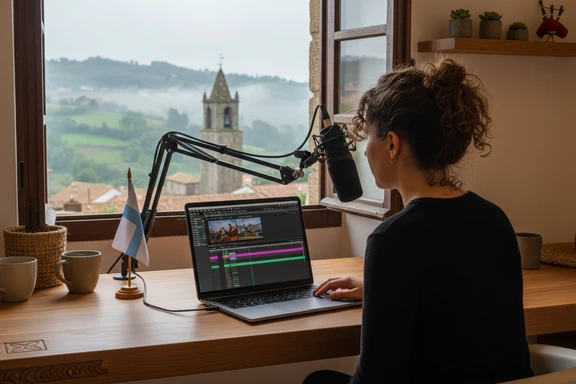
Content Creation & Voiceover
Add a native voiceover to YouTube videos, podcast intros, or social-media clips aimed at audiences across the four provinces. Creators in Vigo and Santiago producing culture, gastronomy, or Camino content can export studio-quality audio from the browser — no recording booth needed.
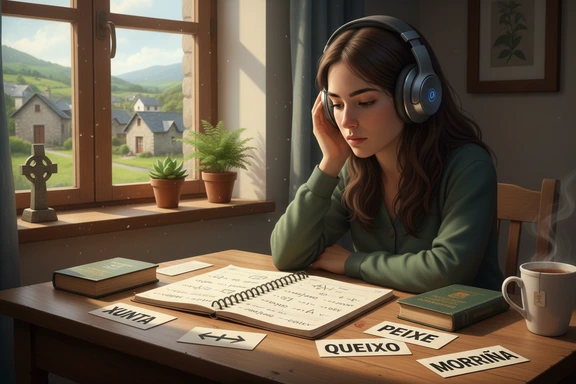
Language Learning & Pronunciation Practice
Preparing for CELGA exams or studying at the Instituto da Lingua? Paste vocabulary lists and tricky phrases, slow the playback, and isolate the x sound and open vowels before your next class. Also useful for diaspora learners in Argentina reconnecting with their heritage.
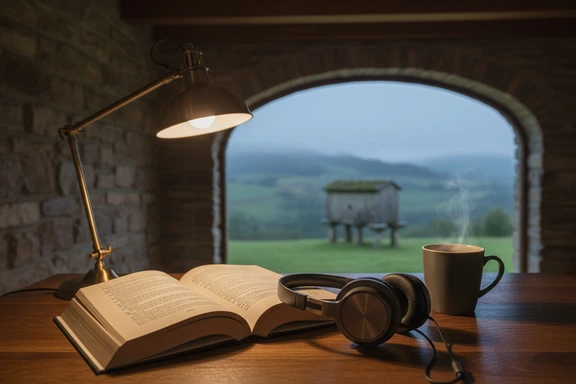
Audiobooks & Literary Narration
Turn a manuscript by Rosalía de Castro or Álvaro Cunqueiro into an audiobook with a steady, natural narrator. The market for audio content in the language is growing on platforms like Storytel, and publishers such as Editorial Galaxia are expanding into the format. Use Dialog Mode to assign distinct voices to different characters.
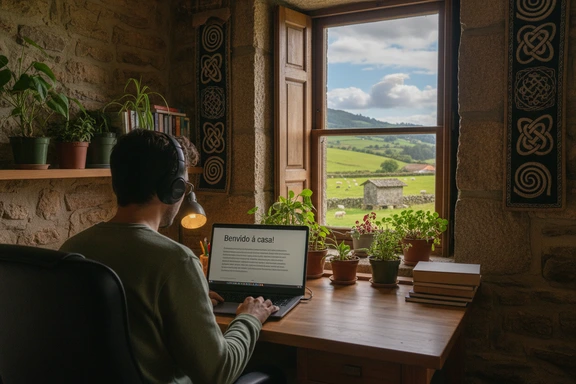
Accessibility & Screen Reading
Spanish and European accessibility directives require public-sector websites to support read-aloud. Generate audio versions of municipal notices, Xunta publications, or educational material so visually impaired readers can listen in the language of their community. Adjustable speed lets each user set a comfortable pace.
How to Generate a Galician Voice in 3 Steps
Three steps from text to audio — the quickest way to use TTS for Galician content. No software, no signup.
Paste or type your text
Type directly or paste up to 1,000,000 characters. Upload DOCX, PDF, or SRT files. Works with any text — scripts, articles, study notes, dialogue.
Choose a voice
Pick from 54 native speakers. Filter by gender and adjust speed and pitch to match the tone you need — from a calm read-aloud to a confident professional voiceover.
Listen & download free
Click Convert to Speech, preview the result, and download as MP3, WAV, or FLAC. First 1,000 characters free — no account needed. No watermark on any plan.
What Makes This Language Unique — and Why the TTS Handles It
The Galego-Portugués Heritage
The language and Portuguese share a common medieval root — galego-portugués — that split in the fourteenth century. A modern Portuguese speaker understands spoken galego at roughly 85 percent, yet they are separate languages today with independent standards. The Real Academia Galega (RAG) has codified written Galego since 1982, and the regional government (Xunta) enforces its co-official status.
Santiago, the Camino & Cultural Context
Northwest Spain is the destination of the Camino de Santiago, the medieval pilgrimage route that still draws hundreds of thousands of walkers every year. If you are building a pilgrim guide, an audio map of the cathedral, or a history module for students, the voice engine brings the language of the destination to your listener — with the right intonation and the right vowels.
Celtic Heritage & Morriña
The region shares its misty Atlantic landscape and bagpipe tradition (gaita galega) with Ireland, Scotland, and Brittany. The word morriña — an untranslatable blend of homesickness and longing — captures a feeling central to the literature of Rosalía de Castro and the diaspora memoirs still written across Argentina and Cuba. Read those texts aloud and the voice carries the weight of the word.
Galician Text to Speech — FAQ
No. Galego is a distinct Romance language with co-official status in the region since 1981. It shares a medieval ancestor with Portuguese (galego-portugués, which diverged around the fourteenth century) and exists alongside Castilian in daily life, but it has its own grammar, phonetics, and orthographic standard maintained by the Real Academia Galega. If you need Castilian voices, visit the Spanish TTS page.
Yes. The first 1,000 characters are free with no account and no credit card. Create a free account to receive an extra 3,000 characters per day for seven days. Commercial use is permitted on every plan, including the free tier.
The two languages share roughly 85 percent lexical similarity and many phonetic features, but differ in key areas. Portuguese has strong nasal vowels (the ã/õ sounds) and a softer, more melodic intonation. The language keeps the -ción ending (where Portuguese uses -ção), has less vowel nasalisation, and follows a rhythm closer to its geographic neighbour Castilian. The engine captures these specific patterns without drifting towards Portuguese pronunciation.
Yes. Every plan — including the free tier — includes a commercial licence. You may use the generated audio in audiobooks, podcasts, YouTube videos, e-learning courses, presentations, and any other project. No watermark is added.
Yes. The neural voices reproduce the voiceless /∫/ for x in words like xunta and peixe, and they distinguish open è/ò from closed é/ó in stressed positions. Including correct diacritics in your source text gives the best result. Listen to the pronunciation examples above to judge the quality yourself.