Lithuanian Text to Speech
Convert text to natural Lithuanian speech — 80+ AI voices, free MP3 download.
80+ Lithuanian Neural Voices — Pitch Accent, Seven Cases & Long Vowels Ė Ū Ą Ę
Hear the pitch accent, the seven-case inflections, and the long vowels ė ū ą ę that make lietuvių kalba the most archaic living Indo-European language — generated from any text in seconds. The library ships 80+ speakers trained on native Lithuanian pronunciation: free stress that can land on any syllable, three distinct tonal contours on long vowels, and the háček consonants š č ž adopted through the Jablonskis reform of 1901. Pick Leonas (Neural, male) or Ona (Neural, female) and download your audio file immediately.
Practical for the Lithuanian diaspora of roughly one million across the UK, Ireland, Norway, Germany and the United States — second-generation families keeping the language alive through bedtime stories and voice messages. Equally useful for Vilnius fintech localisation teams at Revolut, Paysera, and Nord Security, for Baltic audiobook narration in the tradition of Donelaitis and Maironis, and for anyone studying one of Europe’s oldest living tongues. Two quality tiers — Neural for everyday work, high-definition for studio-grade projects. First 1,000 characters free, no account, no watermark.
- 84 native voices — Neural & HD
- Pitch accent (3 tones) & free stress
- Adjustable speed & pitch
- Download MP3, WAV, FLAC, OGG
- Free — 1,000 chars, no signup
Lithuanian Voice Samples — Click to Preview
Click to preview · 84 native voices total
These are 4 featured Lithuanian AI voice speakers. Browse all 84 on the voices page — filter by lt-LT.
Lithuanian Pronunciation — Pitch Tones, Nasal Vowels & Free Stress
Spelling is largely phonetic, yet pitch accent and ogonek vowels carry meaning the ear must catch. Click play to hear each example read by a native speaker.
What Makes the Lithuanian Sound System Distinct
- Pitch accent (kirčio priegaidės) — long vowels carry one of three tonal contours: rising (kylanti), falling (krintanti), or broken (laužtinė). The word rūkas (fog, nominative) takes a broken tone while rūko (of fog) takes a falling tone — same spelling of the stem, different pitch, different grammatical form. Among living European languages, only Latvian shares this Baltic feature, and Lithuanian preserves it in a more archaic form.
- Free stress — unlike sister-language Latvian, where stress always falls on the first syllable, Lithuanian stress can land on any syllable and must be learned word by word. Namas stresses the first syllable, gerai the second, lietuviškai the third. The neural speakers place the accent correctly across the full vocabulary.
- Ogonek vowels ą ę į ų — these historically nasal letters are now pronounced as long vowels (the nasality was lost roughly 500 years ago, but the ogonek stayed in the orthography). The macron ū and the dotted ė serve the same lengthening role through different diacritics. Seven distinct vowel markers in a single alphabet — one of the richest in Europe.
When to Use Lithuanian TTS
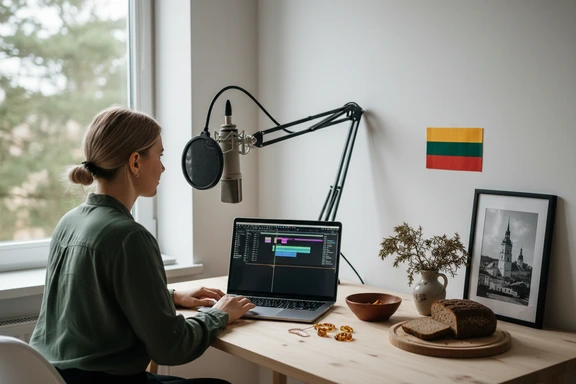
Content Creation & Voiceover
Add a native lietuviškas balsas to YouTube videos, podcast intros, and social-media clips. A warm conversational speaker works for lifestyle and travel vlogs about Vilnius Old Town or the Curonian Spit; a confident register suits explainers about Baltic fintech trends. Export the audio file and drop it into Premiere, DaVinci, or CapCut.

Language Learning & Pronunciation
Hear how the pitch accent, the seven-case endings, and the ogonek vowels actually sound before you attempt them in class. Paste vocabulary lists or tricky declension tables, slow the playback to isolate each phoneme, and build an ear for the tonal contours. Ideal for heritage speakers in the diaspora, Erasmus students at Vilnius University, and linguists drawn to the most archaic living Indo-European language.
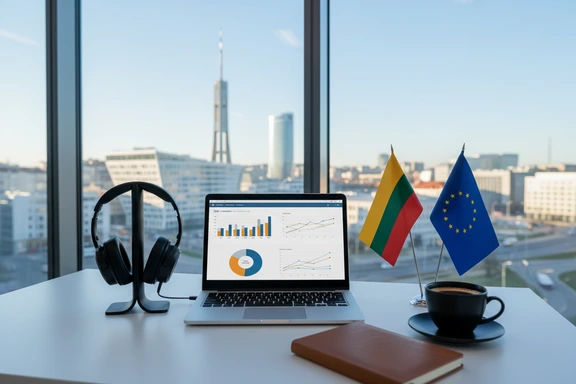
Business Presentations & E-Learning
Voice a quarterly report, onboarding walkthrough, or product launch in clearly articulated speech. Practical for the Vilnius–Kaunas fintech corridor where English decks often need a local narration layer for Baltic teams. The high-definition tier delivers studio-level clarity for webinars, investor updates, and corporate training modules — export and embed directly in slides or your learning management system.

Audiobooks & Narration
Turn a manuscript into an audiobook with a steady, natural narrator. The literary tradition of Kristijonas Donelaitis, Maironis, and Justinas Marcinkevičius deserves pronunciation that respects every pitch tone and ogonek vowel. Audioteka.lt and Storytel serve a growing Baltic listener base — the high-definition tier holds up alongside human narration. Use Dialog Mode to assign distinct speakers to characters.
How to Generate Lithuanian Voice in 3 Steps
Three steps to turn any text into natural-sounding audio. The full TTS Lithuanian pipeline runs in under a minute — no software, no signup.
Paste or type your text
Type directly or paste up to 1,000,000 characters. Upload DOCX, PDF, or SRT files. Works with scripts, articles, study notes, dialogue, or case-heavy legal documents in lietuvių kalba. Include all diacritics for accurate pronunciation.
Choose a voice
Pick from 84 native speakers. Filter by gender and quality tier — Neural or HD. Adjust speed and pitch to match the tone you need, from a calm read-aloud to an energetic Lithuanian voiceover.
Listen & download free
Click Convert to Speech, preview the result, and download as MP3, WAV, or FLAC. First 1,000 characters free — no account needed. No watermark on any plan.
Why Lithuanian Is the Most Archaic Living Indo-European Language
Sister to Sanskrit
Lithuanian preserves Proto-Indo-European features lost in every other living European language. Some noun forms are closer to Vedic Sanskrit than to Latin or Greek: Dievas (God) echoes Sanskrit devás, sūnus (son) matches sūnuḥ, vilkas (wolf) parallels vṛkas. The 19th-century linguist August Schleicher reportedly said that a Lithuanian farmer could understand simple Sanskrit sentences — an exaggeration, but rooted in genuine structural closeness that still astonishes comparative linguists.
Seven Cases, Five Declensions
Nouns inflect through nominative, genitive, dative, accusative, instrumental, locative, and vocative — across five declension classes and two grammatical genders. Namas (house, nominative) becomes namo (genitive), namui (dative), namą (accusative), namu (instrumental), name (locative), name! (vocative). That is more inflection than German, Russian, or even Classical Greek — and the neural voices read each ending correctly, respecting the pitch contour associated with every case form.
Jablonskis Reform & the Háček Imports
The letters š, č, ž entered the alphabet in 1901 when Jonas Jablonskis replaced old Polish-style digraphs (sz, cz, ż) with Czech-style háček letters. The ogonek vowels ą, ę, į, ų kept their Polish-origin shapes. A single modern word can carry orthography borrowed from Czech (háček), Polish (ogonek), and native Baltic innovations (ė with the dot above). Any text to speech tool Lithuanian users rely on must handle every one of these diacritics correctly — and this one does, with no fallback to stripped ASCII.
Lithuanian Text to Speech — FAQ
Yes. Anyone looking for a text to speech Lithuanian tool can start here for free — the first 1,000 characters require no account and no credit card. Create a free account to receive an extra 3,000 characters per day for seven days. Commercial use is permitted on every plan, including the free tier — download the audio file and use it in any project.
The native Neural speakers — Leonas and Ona — are trained on recordings that include the three tonal contours (kylanti, krintanti, laužtinė) and the full ogonek-plus-macron vowel inventory. They hold ū and ė at the correct longer duration and apply the right pitch shape to each syllable, matching patterns documented in Lithuanian prosody research at Vilnius University.
Every AI voice Lithuanian speakers produce is trained on native lietuvių kalba, so they read that language most naturally. If you want English with a recognisable Baltic inflection, try selecting a native Lithuanian speaker and pasting English text — the result often carries the free-stress cadence typical of the Baltic region. For a dedicated English accent, check the British or American pages instead.
Every plan includes a commercial licence with no watermark. You can use the generated audio in audiobooks, podcasts, YouTube videos, e-learning courses, LRT-style dubbing for animation, corporate presentations, and any other commercial or personal project. The high-definition tier delivers studio-level quality suitable for distribution on Audioteka.lt, Storytel, or self-published platforms.
Neural voices like Leonas and Ona deliver warm, expressive speech for most narration tasks. High-definition voices like Achird LT and Achernar LT add studio-level clarity and richer dynamics — best for audiobooks, ads, and polished commercial content. Both tiers handle pitch accent, ogonek vowels, háček consonants, and all seven case endings equally well.