Sundanese Text to Speech
Convert text to natural Basa Sunda speech — 80+ AI voices, free MP3.
80+ Sundanese Neural Voices — Lemes, Loma & the Unique “Eu” Vowel
Basa Sunda carries a six-vowel system that includes eu (/ɤ/), a back unrounded sound absent from both Indonesian and Javanese. Words like peuyeum (fermented cassava) and seueur (many) hinge on that phoneme, and flat single-register engines routinely collapse it into a plain “e” or “u.” The eighty-plus neural speakers on this page preserve the eu distinction alongside the three-tier politeness system known as undak-usuk basa — Lemes for formal address, Loma for everyday conversation, and Cohag for informal contexts rarely used in published content.
Select Jajang for a steady male narration suited to audiobooks and public announcements, or Tuti for a warm female read-aloud ideal for heritage learning and content creation. Download the audio file in one click and use it in any project — from a Kawah Putih tourism guide to a mulok school lesson on the undak-usuk register system. First 1,000 characters free, no account required.
- 80+ native Sunda voices — all Neural tier
- Lemes & Loma registers supported
- Adjustable speed & pitch
- Download MP3, WAV, FLAC, OGG
- Free — 1,000 chars, no signup
Basa Sunda Voice Samples — Click to Preview
Click to preview · 80+ native voices total
These are 4 featured speakers — each trained on native West Java pronunciation. Browse all 80+ on the voices page — filter by su-ID. All voices are Neural-tier; Basa Sunda is a specialized regional language of West Java with no studio-grade models yet.
Sundanese Pronunciation — Wilujeng Enjing, Hatur Nuhun & Tangkuban Perahu
A reliable text to speech Sunda engine must handle the six-vowel phonetic system and distinguish between Lemes and Loma register intonation. Click play to hear each phrase spoken by a native neural voice and follow the transliteration.
What Makes This Language Sound Distinct
- Three speech registers (undak-usuk basa) — Lemes (formal, to elders and strangers), Loma (neutral, among friends), and Cohag (rough, informal). Vocabulary shifts across registers: sim kuring (Lemes “I”) versus kuring (Loma) versus urang (Cohag). The voices handle both Lemes and Loma input with correct intonation when you provide text in either level.
- Six-vowel system with the “eu” phoneme — Basa Sunda adds the central-back unrounded vowel eu (/ɤ/) to the standard five. Words like peuyeum, seueur, and reueus (proud) rely on this sound, which Indonesian and Javanese lack entirely. The neural speakers preserve the contrast accurately.
- Open syllables and Austronesian rhythm — most native roots follow a consonant-vowel pattern, giving Basa Sunda a smooth, flowing cadence. Combined with nasal clusters at word boundaries, this rhythm distinguishes West Java speech from the retroflex-heavy patterns of neighbouring Javanese.
When to Use Sundanese Text to Speech
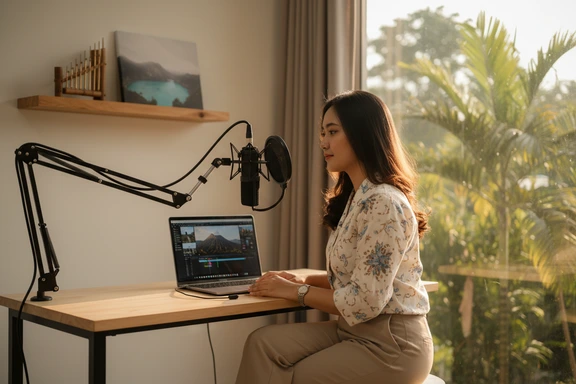
Content Creation & Voiceover
Record a native Basa Sunda voiceover for YouTube heritage channels, TikTok culture clips, or short-film dubbing set against the Parahyangan highlands. Choose a warm conversational speaker and export the audio for any editing tool — no studio session needed.
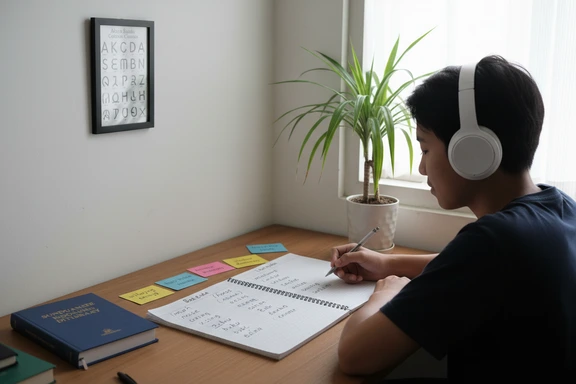
Language Learning & Heritage
Practice the Lemes/Loma register contrast and the distinctive eu vowel before a field visit to West Java or as a heritage speaker reconnecting with the language. Paste vocabulary lists, slow playback to 0.75×, and compare your recording with the neural reader — useful for linguistics students studying Austronesian languages.
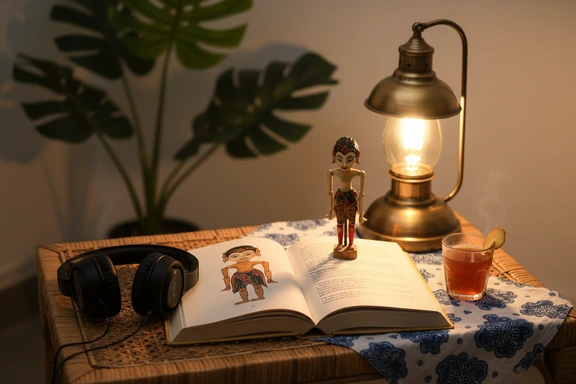
Audiobooks & Traditional Storytelling
Turn the Sangkuriang legend, Lutung Kasarung, or the witty Si Kabayan tales into listen-anywhere audio. Choose Jajang for a composed narrative tone or Tuti for a warm storytelling voice — works for preserving the rich pantun and wawacan oral-poetry tradition in digital form.
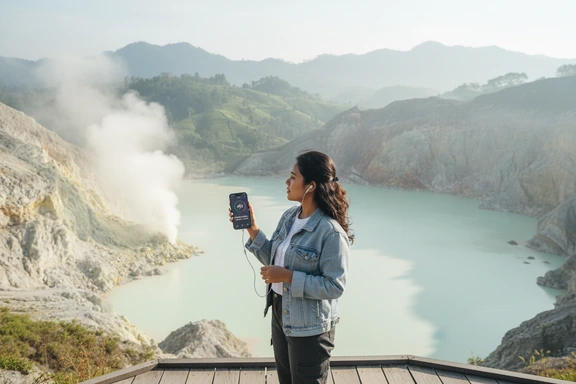
Tourism & Heritage Audio Guides
Create a walking-tour narration for Kawah Putih, Tangkuban Perahu, Gedung Sate, or the tea plantations of Ciwidey. Visitors hear place names and cultural context in natural West Java speech on their own phone — works for pre-trip preparation and for museum exhibits preserving tatar Pasundan heritage.
How to Generate Basa Sunda Voice in 3 Steps
Three steps from typed text to speech. No software, no signup.
Paste or type your Basa Sunda text
Type directly or paste up to 1,000,000 characters of Latin-script content in any register — Lemes, Loma, or a mix. Upload DOCX, PDF, or SRT files. The engine works with modern romanized spelling.
Choose a voice
Pick from 80+ native speakers. Filter by gender. Adjust speed and pitch to match the tone you need, from a calm Lemes read-aloud for audiobooks to an energetic Loma voiceover for social media.
Listen & download free
Click Convert to Speech, preview the result, and download as an audio file. First 1,000 characters free — no account needed. No watermark on any plan.
What Makes Basa Sunda Unique — Undak-Usuk Registers, the “Eu” Vowel & Aksara Sunda Heritage
Undak-Usuk Basa — Three Parallel Speech Registers
Basa Sunda is built around a respect-based register system: Lemes (formal, for elders and strangers), Loma (neutral, among friends), and Cohag (rough, for highly informal settings). “Sim kuring bogoh kana nasi timbel” (Lemes: I love nasi timbel) becomes “Kuring bogoh kana nasi timbel” (Loma) — the pronoun shifts while the verb stays. This system is philosophically similar to Javanese Ngoko/Krama, but uses entirely different vocabulary. Provide text in the register you intend and the voices will pronounce it with the matching intonation.
The “Eu” Vowel — Six-Vowel Phonetics
Beyond the standard a, e, i, o, u, Basa Sunda includes the distinctive eu (/ɤ/ or /ɯ/) — a central-back unrounded vowel not found in Indonesian, Javanese, or Malay. Everyday words rely on this phoneme: peuyeum (fermented cassava), seueur (many, Lemes), reueus (proud). A reliable engine must keep this vowel separate rather than defaulting to “e” or “u.”
Latin Script Modern & Aksara Sunda Heritage
Everyday digital content uses Latin letters (romanized Basa Sunda), which is what the engine reads. The traditional Aksara Sunda (also called Cacarakan) is a Brahmi-derived abugida with roughly twenty base characters. It is still taught in Jawa Barat schools as part of the mulok curriculum and appears on Bandung street signs alongside Latin script. If your source text uses the traditional script, convert it to Latin first; the language code for this voice set is su-ID.
Sundanese Text to Speech — FAQ
Yes. SpeechGen offers 80+ neural voices trained on native Basa Sunda pronunciation, including speakers like Jajang (male) and Tuti (female). You can use text to speech Sundanese content by pasting romanized Latin-script text and hearing it read aloud with correct Lemes or Loma intonation — no special markup needed. The engine correctly handles the distinctive eu vowel and open-syllable rhythm of West Java speech.
Sundanese (Basa Sunda) is a regional language spoken by roughly 40 million people in West Java (Jawa Barat) and Banten — the second-largest ethnic language in Indonesia. Javanese (Basa Jawa) is a separate regional language of Central and East Java with about 80 million speakers and its own Ngoko/Krama register system. Indonesian (Bahasa Indonesia) is the national lingua franca understood by 270 million people. Malay (Bahasa Melayu) is the national language of Malaysia, Brunei, and Singapore. All four are Austronesian but differ in vocabulary, phonology, and culture. SpeechGen has separate pages for each: /en/tts-sundanese/, /en/tts-javanese/, /en/tts-indonesian/, and /en/tts-malay/.
Basa Sunda has three formality levels: Lemes (respectful, used toward elders, strangers, and officials), Loma (neutral, among friends and peers), and Cohag (rough, for very informal settings). Pronouns and certain vocabulary change across levels — for example, the pronoun “I” is sim kuring in Lemes, kuring in Loma, and urang in Cohag. Provide text in the register you need and the voices will pronounce it with the appropriate intonation. Use Lemes for audiobooks, announcements, and educational content; Loma works well for social media and casual voiceover.
The engine reads Latin-script (romanized) Basa Sunda, which has been the standard for digital text, schools, and media since the colonial era. If you have content in the traditional Cacarakan abugida, convert it to Latin letters first. The historic script is still taught in Jawa Barat schools and used on Bandung street signs, but modern text to speech bahasa Sunda works on the romanized form.
Yes. Every plan, including the free tier, includes a commercial licence. You may use the generated audio in audiobooks, mulok (local-content) school materials, YouTube channels, cultural event announcements, heritage preservation projects, and any other purpose. No watermark is added on any plan.