Austrian German Text to Speech — Wiener AI Voice
3 Austrian German AI voices — ORF-style ÖSD standard. Free MP3.
3 de-AT Voices — ÖSD Standard, Wiener Cadence & Austriacisms
Say "Grüß Gott" to your audience in their own register. Austrian German (Österreichisches Deutsch) is no regional quirk — it is an ÖSD-certified written and spoken standard used by nine million people from Vienna's Stephansdom to the Tyrolean Alps, and it carries its own month names, vocabulary and sung-melodic cadence. This page turns any script into an authentic de-AT reading — Jänner instead of Januar, Erdäpfel instead of Kartoffeln, Paradeiser for tomato, and "Servus" where Hochdeutsch would say "Hallo".
Three native speakers — Ingrid Bauer, Jonas and Hannah plus — read with the characteristic melodic Viennese intonation, open /aː/ vowel lengthening and a softer alveolar /r/ that set the de-AT register apart from Bundesdeutsch. Produce an ORF-style news bed, a Schönbrunn audio guide, ÖBB train announcements or ÖSD exam prep material in minutes. Paste, pick a speaker, download a free MP3 — no signup. For pan-German content covering Berlin and Munich media, see our main German TTS page.
- 3 native de-AT speakers — Neural tier
- Vienna/Salzburg/Graz register — Wiener cadence
- ÖSD-aligned Austrian Standard German
- Austriacisms: Jänner, Feber, Marille, Erdäpfel
- Free — 1,000 characters, no signup
Austrian German Voices — Ingrid Bauer, Jonas & Hannah plus
Click to preview · 3 native de-AT speakers total
Three de-AT native speakers — Ingrid Bauer and Hannah plus for female reads, Jonas for the male register. All three carry a central Wien/Lower-Danube register also heard on ORF and Ö1. For Bundesdeutsch (de-DE) voices covering Berlin, Munich and Hamburg media, visit the main German TTS page.
Austrian German vs Hochdeutsch — Pronunciation & Vocabulary Comparison
Same meaning, two readings. Hear how the de-AT register reshapes the phrase against the Bundesdeutsch baseline.
What Makes Austrian German Sound Unique
- Distinct vocabulary (Austriazismen) — Jänner vs Januar, Feber vs Februar, Marille vs Aprikose, Sackerl vs Tüte, Schlagobers vs Schlagsahne, Topfen vs Quark. A trained voice reads these the local way; a generic de-DE model would collapse them to Bundesdeutsch equivalents.
- Melodic rising intonation — the famous Wiener Schmäh tilts sentences upward on the final syllable, a musical lilt absent from flatter Prussian-influenced Hochdeutsch.
- Vowel lengthening & open /aː/ — "Straße" sits longer and darker; the trilled /r/ softens into a lighter alveolar flap, closer to Bavarian than to Bundesdeutsch.
- Diminutive -erl — everyday nouns gain a warm diminutive ending ("Sackerl", "Häuserl", "Bisserl") where Hochdeutsch uses -chen or -lein.
Austrian Conventions — Month Names, Date Format & Currency
Local formatting rules shift how the same numbers read aloud. Four de-AT conventions worth feeding the voice correctly:
Month Names
Jänner / Feber — January and February keep their Habsburg-era forms. März, April, Mai, Juni are shared with Bundesdeutsch. Paste "Jänner" in the editor and the voice will pronounce it natively, never "Januar".
Currency
€ 1.500,00 — the euro with dot-thousands and comma-decimal. The speaker reads "eintausendfünfhundert Euro", no currency-code crutches required.
Dates
24.04.2026 — day-first DD.MM.YYYY. Spoken "vierundzwanzigster April zweitausendsechsundzwanzig", with Jänner/Feber for the first two months on domestic copy.
Time
15:30 — 24-hour clock is the broadcast default on ORF and ÖBB. Colloquially "halb vier" is "half-past three" in Vienna (i.e. 15:30), a point worth flagging for voice-over scripts.
What Can You Do with an Austrian German AI Voice?
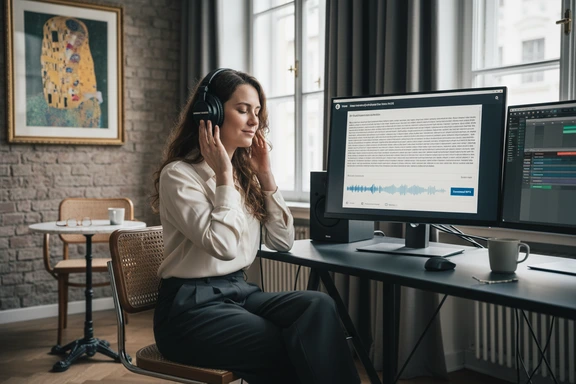
ORF & Austrian Broadcasting
Voice "Zeit im Bild" news beds, Ö1 feature reads and documentary narration in the register ORF and Der Standard listeners recognise at home. Broadcast-grade delivery from Wien out to Graz, Linz, Salzburg and Innsbruck.
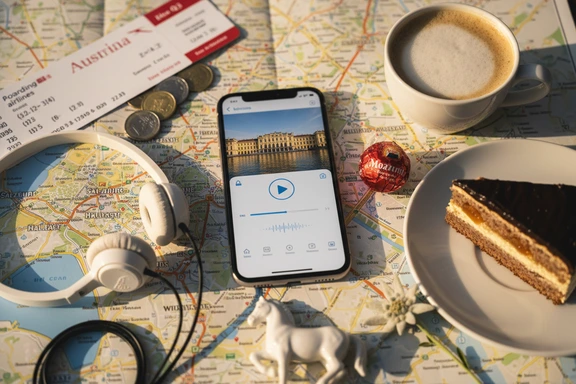
Alpine & Viennese Tourism
Build audio guides for the Stephansdom, Hofburg, Schloss Schönbrunn, Salzburg's Altstadt, Hallstatt and the Tyrolean Alps. The Wiener cadence and "Grüß Gott" greeting give heritage content authentic local character — ready for museum apps and hotel kiosks.
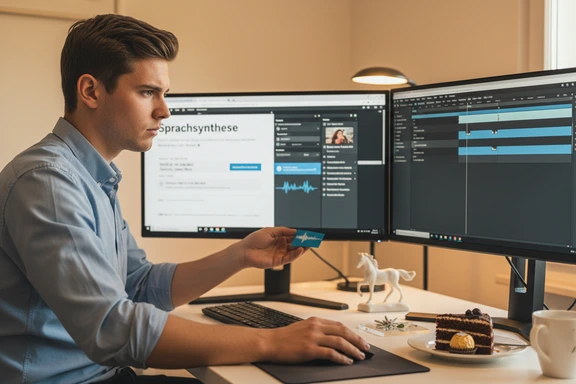
Business & Government (ÖBB, Banking)
Voice ÖBB Railjet announcements, Vienna Airport gates, Erste Bank phone prompts and federal government e-accessibility. The de-AT register handles local terms like Sackerl, Schlagobers and "halb vier" without tripping into Bundesdeutsch.
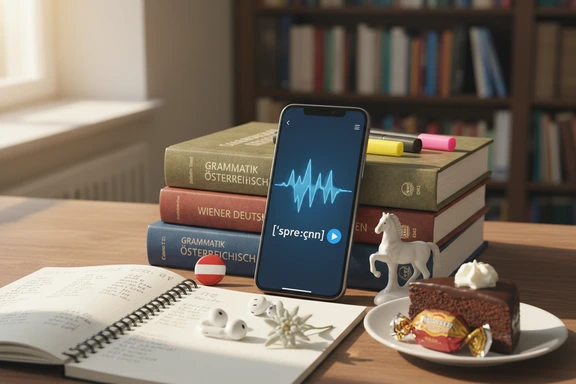
ÖSD Exam & Dialect Learning
Train for the ÖSD Zertifikat — master local terms (Jänner, Feber, Marille, Erdäpfel, Paradeiser), melodic Wiener intonation and the /r/ that softens south of the border. Compare each line against the Bundesdeutsch baseline to bridge the two registers.
Austrian German TTS — How It Works
Three steps to generate a de-AT reading online. No software, no signup.
Paste or type your text
Up to 1,000,000 characters. Local terms like "Jänner", "Erdäpfel" or "Grüß Gott" are read natively — no SSML overrides needed.
Choose a voice
Pick Ingrid Bauer, Jonas or Hannah plus. Adjust speed and pitch in the editor — no code required.
Listen & download free
Convert, preview, export MP3, WAV or FLAC. First 1,000 characters free, no account needed.
Frequently Asked Questions — Austrian German TTS
Austrian German (Österreichisches Deutsch) shares the written standard with Bundesdeutsch but carries distinct vocabulary — Jänner instead of Januar, Feber instead of Februar, Marille for Aprikose, Erdäpfel for Kartoffeln, Paradeiser for Tomate, Sackerl for Tüte — plus a rising melodic cadence (Wiener Schmäh), open /aː/ vowel and a softer /r/. The ÖSD certificate is the official Austrian Standard German credential for learners.
Yes. The three de-AT speakers read local terms natively — Jänner, Feber, Marille, Erdäpfel, Paradeiser, Sackerl, Schlagobers, Topfen — with the correct local pronunciation. A generic Bundesdeutsch engine would collapse most of them into the German equivalents or mispronounce the month names.
Yes. The register on this page is the ORF/Ö1 standard — Austrian Standard German — suitable for "Zeit im Bild" news beds, documentaries, Viennese audio guides, ÖBB Railjet announcements and federal corporate audio from Wien to Innsbruck.
Three de-AT neural speakers: Ingrid Bauer (female, Wien), Jonas (male) and Hannah plus (female, warm e-learning register). All three are broadcast-ready and used in the examples above.
Yes. Free MP3 download — no signup, no watermark. Paste your text, pick Ingrid Bauer, Jonas or Hannah plus and export. WAV and FLAC are also available. First 1,000 characters are free.
Pick Ingrid Bauer, Jonas or Hannah plus and export the reading in seconds. Need Bundesdeutsch voices for Berlin or Munich media? Visit the main German TTS page.