Pakistani Urdu Text to Speech — Lahori AI Voice
4 Pakistani Urdu AI voices — Karachi & Lahore register. Free MP3.
54 ur-PK Voices — Karachi, Lahore & Islamabad Broadcast Register
This Pakistani Urdu text to speech page reads any Nastaliq script in the register you actually hear on PTV and Geo News — measured, Persian/Arabic-leaning, with the rising sentence-end intonation of Lahore and Karachi speech. Four ur-PK AI voices lead the catalogue: Asad (male broadcast), Uzma (female formal), and the multilingual Ava PK and Brian PK for conversational YouTube-style narration. Paste اردو, pick a speaker, download a free MP3 — no signup, no watermark.
Creators reach for this dialect when a generic reading sounds neither Karachi nor Lahore to a local ear. Feed the engine a line in اردو — "اسلام علیکم، آپ کیسے ہیں؟" — and the speaker holds the broadcast cadence, fuller Arabic pharyngeals from classical recitation, and the Persian-heavy formal lexicon typical of Pakistan media. For the Hindustani/Bollywood register see our Indian Urdu page.
- 54 ur-PK speakers — native Azure plus multilingual PK-tagged
- PTV & Geo News broadcast register — authentic Lahori cadence
- Reads Nastaliq natively — no transliteration needed
- Download MP3, WAV, FLAC, OGG
- Free — 1,000 characters, no signup
Pakistani Urdu Text to Speech Voices — Asad, Uzma & PK-tagged Multilingual
Click to preview · 54 ur-PK speakers total
Asad and Uzma are native Azure ur-PK; Ava PK and Brian PK are multilingual speakers tagged for the PK locale — a warmer, more conversational tone for short-form video. The full catalogue holds 54 speakers covering news, narration, explainer and ad-read registers.
Pakistani vs Indian Urdu — Pronunciation Comparison
Same phrase, two readings. Hear how the Lahori broadcast register differs from the softer Hindustani cadence.
-e-, with /z/ distinct from /j/ — a hallmark of PTV/Geo News copy
What Makes Pakistani Urdu Sound Unique
- Persian/Arabic-heavy formal lexicon — state, media and religious copy draw on Persian (ذرائع, صدر, جمہوریہ) and Arabic (اسلامی, مذہبی) rather than the Sanskrit-origin pool favoured across the border. Feed the engine formal PTV/Geo News copy and the vocabulary lands naturally.
- PTV/Geo News/ARY broadcast register — measured cadence, preserved pharyngeal consonants (ح ع غ), and emphatic /q/ kept as /q/ rather than flattened to /k/. Asad in particular locks onto this news-desk delivery.
- Punjabi/Sindhi/Pashto substrate — speakers from Lahore, Karachi and Peshawar carry subtle regional intonation. The rising sentence-end contour is a Punjabi-influenced marker absent from Hindustani speech.
- Conservative Nastaliq calligraphy — Pakistani publishing still sets type in Nastaliq; the engine reads ligatures as a native would, without falling back to Naskh shapes.
Pakistani Conventions — Rupee, Hijri Dates & Prayer Times
Local formatting rules shift how the same numbers read aloud. Four ur-PK conventions worth feeding the speaker correctly:
Numbers
۲,۵۰۰ — Eastern Arabic-Indic numerals common in print and state signage; Western digits (2,500) dominate on digital. Nastaliq reads right-to-left but numerals flow left-to-right inside the line.
Currency
₨ 2,500 / روپے — the rupee (PKR), written "₨" or "Rs"; the speaker reads "دو ہزار پانچ سو روپے".
Dates
24/04/2026 — DD/MM/YYYY is standard. Islamic (Hijri) dates often accompany the civil date in news copy: ۵ ذوالقعدہ ۱۴۴۷.
Time & Prayer
14:30 — 24-hour in official broadcasts, 12-hour in speech. Prayer times (Fajr, Zuhr, Asr, Maghrib, Isha) appear routinely in national media and azan scheduling copy.
What Can You Do with a Pakistani AI Voice?
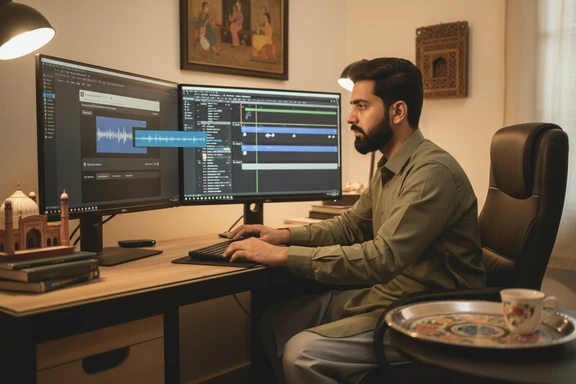
PTV/Geo News Broadcast Voiceover
Voice Pakistan bulletins, ARY promos and brand spots for Mobilink, Jazz or Telenor in a formal Islamabad register. Asad delivers the measured news-desk cadence a local listener recognises from PTV and Geo News.
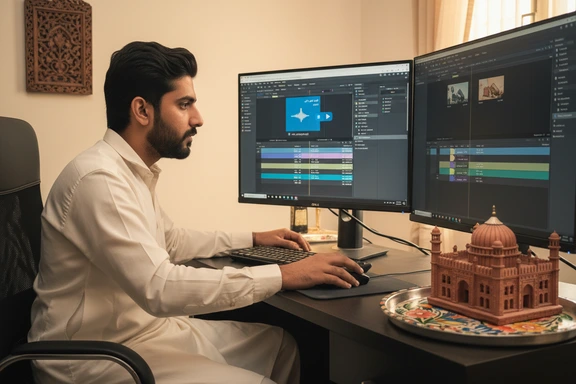
Urdu Drama & YouTube Content
Produce short-form drama, street-food vlogs and explainer channels in a conversational Karachi register. Ava PK and Brian PK give a warmer YouTube-style urdu voice over — a modern digital tone the broadcast voices intentionally avoid.
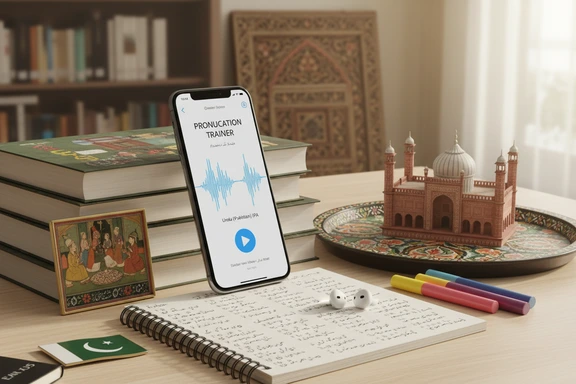
E-Learning & Diaspora Teaching
Build classroom audio for heritage-speaker kids in the UK, UAE and US — diaspora schools keeping the language alive. Nastaliq text to speech with Uzma pairs naturally with flashcards, Quranic transliteration practice and weekend Islamic-school apps.
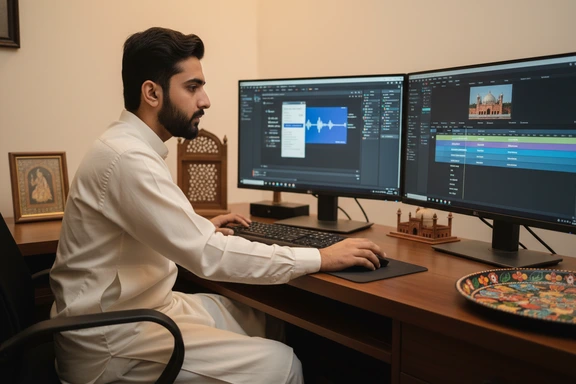
Iqbal & Faiz Audiobook Narration
Narrate allama iqbal's Shikwa and Jawab-e-Shikwa, or faiz ahmed faiz's Hum Dekhenge, for podcasts and audiobook apps. Slow Asad for Iqbal's Persianate register; choose Uzma for Faiz's softer contemplative line.
How It Works — 3 Steps
Three steps to generate a Lahori reading online. No software, no signup.
Paste or type your text
Up to 1,000,000 characters. Paste Nastaliq directly — "اسلام علیکم، اسپیچ جن میں خوش آمدید!" — the engine reads ligatures natively.
Choose a voice
Pick Asad, Uzma, Ava PK or Brian PK. Adjust speed and pitch to fine-tune the delivery.
Listen & download free
Convert, preview, export MP3, WAV or FLAC. First 1,000 characters free — no sign-up.
Frequently Asked Questions
The national language of Pakistan draws its formal vocabulary heavily from Persian and Arabic — especially in PTV news, Islamic and government registers — and preserves pharyngeal consonants (ح ع غ) more strongly. The Lahori/Karachi delivery carries a rising sentence-end intonation influenced by Punjabi. Indian Urdu leans closer to Hindustani with more Sanskrit-origin vocabulary and a softer, Bollywood-lyrical cadence. For that register see our Indian Urdu page.
Yes — Asad delivers the measured, formal news-desk register heard on Pakistan TV. Uzma handles formal bulletins and Islamic/educational content with appropriate formality. For a modern YouTube-style read, Ava PK or Brian PK give a younger, conversational tone.
Yes. The ur-PK speakers use the national broadcast standard understood from the coast to the Khyber. For distinct regional languages (Punjabi, Sindhi, Pashto), those are separate catalogues — each has dedicated neural voices on the platform.
This is a Pakistani urdu text to speech generator, not a voice changer. You type or paste Nastaliq text and receive a natural Lahori-accent reading — nothing is recorded, nothing is transformed after the fact. A voice changer modifies an existing recording; this engine synthesises speech from text.
Yes — the ur-PK speakers handle classical and modern Pakistani verse well. For Iqbal's Persianate register ("Shikwa", "Jawab-e-Shikwa"), slow Asad to 0.9 and insert manual pauses at the caesura. For Faiz's progressive lines ("Hum Dekhenge"), Uzma gives a softer, more contemplative delivery. Add explicit punctuation for natural verse rhythm.
Pick Asad, Uzma or a PK-tagged multilingual speaker and export in seconds. Looking for the Hindustani register? See the Indian Urdu page or return to the SpeechGen homepage.