Nigerian Accent Generator
Type text and hear a Nigerian English voice — 2 Neural speakers, free MP3.
2 Neural Voices — Syllable-Timed Rhythm, Unreduced Vowels & Lagos Cadence
Type any English text and hear it spoken in an authentic Nigerian accent — Abeo and Ezinne deliver the syllable-timed rhythm, unreduced vowels, and warm Lagos cadence that audiences recognise from Nollywood films and African literature audiobooks. Both speakers reproduce the phonetic hallmarks of Educated Nigerian English: full vowels in unstressed syllables, dental stops where British English uses the "th" fricative, and the even-paced tempo shaped by West African tonal languages.
Nigerian English is the working language of Africa's largest anglophone market, heard daily on CNN Africa, BBC Africa, and across Nollywood productions. Creators use these voices for Afrobeats YouTube reviews, Lagos tech explainers, accent training for film casting, and narrating African literature by writers like Chimamanda Ngozi Adichie and Chinua Achebe. Paste your script, pick a speaker, and download a free audio file in seconds — useful for voiceover demos, pronunciation practice, or any project that calls for an unmistakably Nigerian voice.
- 2 Neural speakers — Abeo (male) & Ezinne (female)
- Syllable-timed rhythm & unreduced vowels
- Adjustable speed 0.5×–2× & pitch
- Download MP3, WAV, FLAC, OGG
- Free — 1,000 characters, no signup
Nigerian English Text to Speech — Abeo & Ezinne Voices
Click to preview · 2 Nigerian voices total
These are the 2 available en-NG speakers. Browse the full catalogue on the voices page — filter by en-NG.
Nigerian Accent Translator & Pronunciation — What's Different
Nigerian English shares vocabulary with British English but sounds distinctly different. Click play to compare Nigerian and British readings of the same word side by side.
What Makes Nigerian English Sound Unique
- Syllable-timed rhythm — every syllable carries roughly equal weight, giving Nigerian English its characteristic even tempo. British and American English are stress-timed, compressing unstressed syllables; Nigerian English does not. This pattern reflects the tonal substrate of West African languages.
- Unreduced vowels — unstressed syllables retain their full vowel quality. "Teacher" sounds like /ˈtitʃɑ/ rather than the British /ˈtiːtʃə/ with its schwa ending. The result is a broader, more open sound across every word.
- Dental stops for "th" — "think" may sound closer to /tɪŋk/ and "brother" becomes /ˈbrɔdɑ/. This is a stable phonological feature of standard Nigerian English, not an error — it reflects the consonant inventory of the tone-based languages spoken natively alongside English across Nigeria.
Nigerian English — Formatting & Conventions
Small formatting choices in your source text affect how the reader pronounces it. Four conventions specific to Nigerian English:
Numbers
"one thousand naira" — Nigerian English follows the metric system and British-style number phrasing. Write 1,020 and the reader says "one thousand and twenty". Note: "lakh" is not used in Nigeria (that convention belongs to Indian English).
Currency
₦1,000 reads as "one thousand naira". The naira sign (₦) and the code NGN both work. For smaller amounts write 50 kobo — the reader handles the subunit naturally.
Dates & Time
7 April 2026 reads as "the seventh of April" — day-first format inherited from the British education system. The 24-hour clock also works: 14:30 becomes "fourteen thirty".
Spelling
colour, honour, centre, organise — Nigerian English follows British spelling conventions. Use the British form for the most natural-sounding output from the reader.
Where Creators Use Nigerian Voices
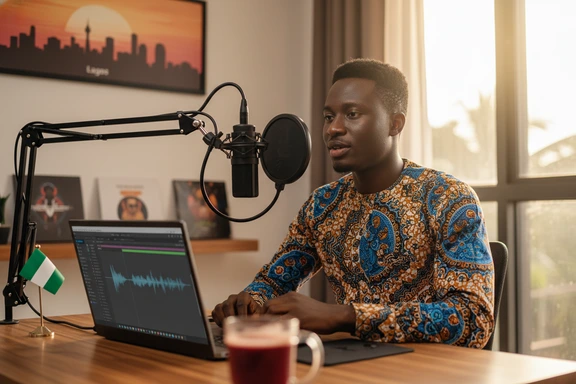
Content Creation & Voiceover
Add a Nigerian voice to Afrobeats reviews, Lagos tech explainers, and West African business podcasts. A Nigerian narrator reads trustworthy to audiences across the continent and the diaspora — export as an audio file and drop into Premiere, DaVinci, or CapCut.
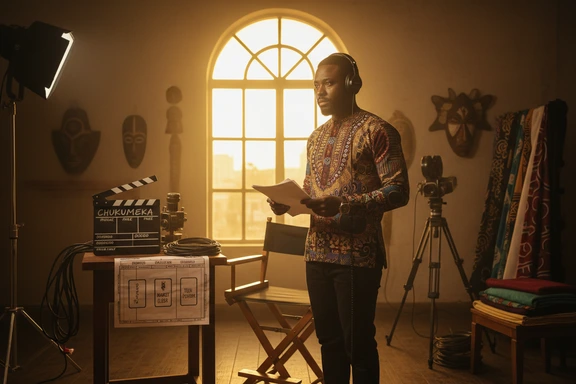
Nollywood & Character Voices
Cast authentic Nigerian characters in indie films, audio dramas, and streamer roleplays. A Lagos detective, an Abuja executive, a market elder — adjust pitch and speed to shape each role. Ideal for pre-vis scratch tracks and small-studio final production alike.
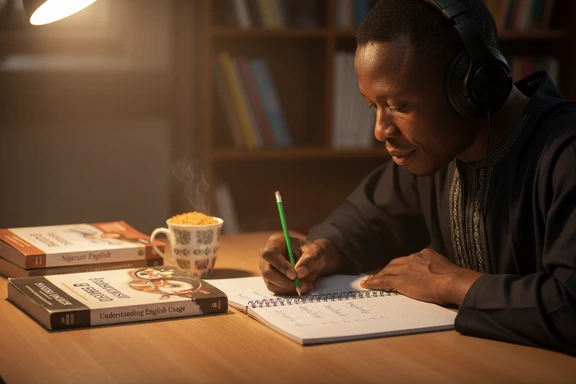
Accent Practice & Pronunciation
Train your ear for Nigerian English before a Nollywood audition, reconnect with family speech patterns, or study West African phonetics for a linguistics course. Slow playback to 0.75x to isolate syllable timing and vowel quality, then speed back up once you follow along.

Audiobooks & African Literature Narration
Narrate African-set novels with the accent their authors intended. A Nigerian reader carries the correct cultural weight for works by Chimamanda Ngozi Adichie, Chinua Achebe, and Wole Soyinka in a way that a British or American narrator cannot. Use Dialog Mode to assign Abeo and Ezinne to different characters.
How Nigerian Accent Generator Works — 3 Steps
Three steps to convert English text into Nigerian accent audio online. No software, no signup.
Paste or type your text
Type directly or paste up to 1,000,000 characters. Upload DOCX, PDF, or SRT files. Try this sample: "Good morning. How was the traffic on Third Mainland today?"
Pick Abeo or Ezinne
Choose from 2 Neural speakers — Abeo (male) or Ezinne (female). Filter by en-NG in the voice dropdown, then adjust speed and pitch to match your project.
Listen and download free
Click Convert to Speech, preview the result, and download as MP3, WAV, or FLAC. First 1,000 characters free — no account needed. No watermark on any plan.
Frequently Asked Questions
Nigerian English has three distinctive phonetic markers. First, it is syllable-timed — every syllable gets roughly equal length, unlike the stress-timed rhythm of British or American English. Second, unstressed vowels stay full rather than reducing to a schwa: "teacher" sounds like /ˈtitʃɑ/ instead of /ˈtiːtʃə/. Third, the "th" sound is often replaced by a dental stop: "brother" becomes /ˈbrɔdɑ/. Together these features produce the warm, evenly paced cadence you hear on CNN Africa, BBC Africa, and across Nollywood productions.
Focus on three elements. Keep your syllable timing even — resist the urge to swallow unstressed syllables the way British or American speakers do. Pronounce every vowel fully, especially at the end of words like "water" (/ˈwɔːtɑ/) and "better" (/ˈbɛtɑ/). Replace the "th" fricative with a clear /d/ or /t/: say "dis" for "this" and "tink" for "think". These patterns come from the tonal substrate of languages like the ones spoken natively across Nigeria. Use this page as a pronunciation reference — slow the playback to 0.75x and repeat after the speaker.
No. Nigerian Pidgin is a separate creole language with its own grammar, vocabulary, and syntax — spoken as a lingua franca across Nigeria but linguistically distinct from English. This page generates standard Nigerian English, also called General Nigerian or Educated Nigerian English: the variety you hear in Nollywood dramas, Nigerian parliamentary proceedings, and pan-African news broadcasts. If you need Nigerian Pidgin text to speech, that would require a dedicated Pidgin model, which is not currently available here.
Yes. Commercial use is included in every pricing tier, including the free tier. Abeo and Ezinne work well for Nollywood indie film scratch tracks, African literature narration, podcast voiceovers, and any project that benefits from an authentic Nigerian English narrator. Use Dialog Mode to assign both speakers to different characters in a single script.
Abeo and Ezinne speak in the General Nigerian register — the educated standard used across Nollywood, media, and business. In practice, Nigerian English varies by region: speakers from a background in one of the major language families may carry different tonal patterns or consonant preferences into their English. The General Nigerian register, however, is widely understood and serves as the default for professional narration, broadcasting, and creative production across the country.