French Pronunciation & Text to Speech
40+ French AI voices — Parisian, Québécois, Belgian. Liaison & nasal vowels.
40+ AI Voices — Parisian, Canadian & Belgian French
Convert French text to speech with proper liaison (les‿amis → /le.za.mi/), the four nasal vowels (/ɑ̃/, /ɛ̃/, /ɔ̃/, /œ̃/), and silent final consonants handled the way a Parisian — or a Québécois — actually speaks. Pick a voice like Bernard (PRO Neural, male) or Margot (PRO Neural, female) and download your MP3 in seconds.
The catalogue spans standard Metropolitan Parisian, Québécois from Canada (fr-CA), and Belgian Wallon variants — each tuned to the phonology of its region. Useful for DELF/DALF exam prep, YouTube voice-over, audiobook narration of classics from Hugo to Camus, e-learning modules, and anyone who needs a reliable French reader online. First 1,000 characters free — no account, no watermark.
- 40+ native voices — Standard, PRO, HD
- Parisian, Québécois, Belgian variants
- Adjustable speed & pitch
- Download MP3, WAV, FLAC, OGG
- Free — 1,000 chars, no signup
French Voice Samples
Click to preview · 40+ native voices total
These are 4 featured speakers. Browse all 40+ on the voices page — filter by fr-FR, fr-CA, or fr-BE.
Voice Styles — 4 Emotional Registers
Select PRO Neural voices unlock emotional styles on top of the default neutral register. Same sentence, same speaker — Bernard, a French male PRO Neural voice — reads the line below in four different moods.
All four samples above read the same French sentence: "Tout a changé en une seule journée." Bernard and Margot each ship with 4 styles (cheerful, sad, whispering, excited). The remaining 40+ French voices read in their default neutral register.
French Pronunciation — Listen & Practice
Click play to hear how the TTS engine handles liaison, nasal vowels, silent letters, and elision — the features that make French pronunciation challenging.
What Makes French Pronunciation Unique
- Four nasal vowels — air flows through the nose without closing the lips. Bonjour carries /ɔ̃/, vin has /ɛ̃/, dans uses /ɑ̃/, brun takes /œ̃/. None of these exist in English, and neural voices reproduce them with the tongue position that native speakers actually use.
- Liaison — silent final consonants re-awaken when the next word starts with a vowel: les amis → /le.za.mi/, vous avez → /vu.za.ve/. Mandatory liaison is applied automatically; optional liaison is handled naturally based on register.
- Silent letters — most final consonants are dropped. Beaucoup is /bo.ku/, petit is /pə.ti/. The mnemonic exceptions are C, R, F, and L (“CaReFuL”). The engine knows which letters speak and which stay quiet, so your text reads naturally without markup.
Language Features & TTS Handling
Four features of French phonology and grammar that the neural engine handles automatically — but that are useful to understand when preparing your source text:
Liaison & Elision
les amis → /le.za.mi/ — the silent s wakes up before a vowel. Elision: l'homme drops the final e of le. Both mandatory liaisons and elision are resolved automatically based on context.
Tu / Vous Registers
Comment vas-tu ? vs Comment allez-vous ? — informal tu and formal vous cascade through verb conjugation. Match the register to your audience: tu for casual videos and children's content, vous for corporate or broadcast narration.
Complex Numbers
quatre-vingt-dix-sept = 97 (literally 4 × 20 + 10 + 7). The engine reads these vigesimal constructions correctly, along with euro prices (12,50 € → douze euros cinquante) and French phone number groupings.
Silent Letters
beaucoup — final p is silent. Most final consonants drop unless followed by a vowel (which triggers liaison). Exceptions: C, R, F, L — the “CaReFuL” rule. Voicing is resolved automatically from spelling.
What Can You Do with French Text to Speech?
Language Learning & Pronunciation
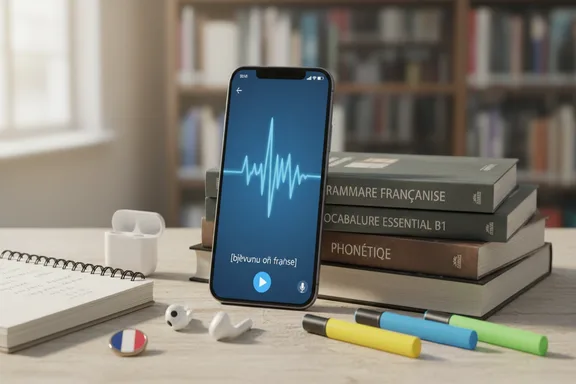
Hear authentic pronunciation for any word or phrase — practice liaison, nasal vowels, and the tricky u /y/ sound before your next DELF or DALF exam. Slow playback to 0.75× to catch each syllable, then ramp back up once your ear follows along.
Audiobooks & Narration
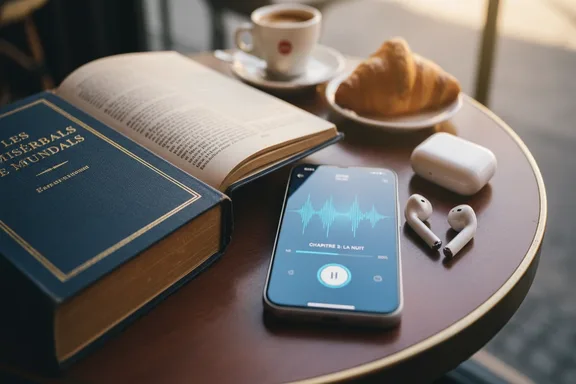
Turn manuscripts into audiobooks with a natural narrator. Pick a warm Parisian voice for literary classics — Hugo, Camus, Proust, Saint-Exupéry — or a sharper delivery for contemporary thrillers. Use Dialog Mode to cast different speakers across characters for a full-production feel.

Content Creation & Voice-Over
Add native-sounding narration to YouTube videos, podcasts, and social-media reels. A Bernard or Margot voice gives your content immediate credibility with francophone audiences in France, Belgium, and Switzerland. Export as MP3 and drop into Premiere, DaVinci, CapCut, or any editor.
Exam Prep & E-Learning
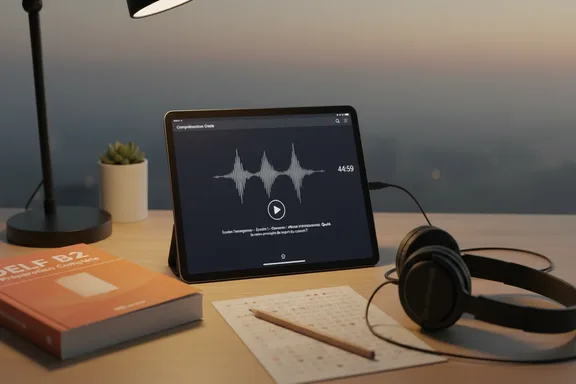
Build audio materials for DELF A1–B2, DALF C1/C2, and classroom use. Generate pronunciation drills, vocabulary lists, and listening exercises on demand. Teachers can produce consistent, repeatable audio for tests without ever rerecording — same voice, same pace, week after week.
French Text to Speech — How It Works
Three steps to convert your text to natural audio. No software, no signup.
Paste or type your text
Type directly or paste up to 1,000,000 characters. Upload DOCX, PDF, or SRT files. Accent marks (é, è, ê, ë, ç) and apostrophes (l'homme, c'est) are handled automatically — no markup needed.
Choose a voice
Pick from 40+ native speakers. Filter by gender, quality tier (Standard, PRO Neural, HD), and locale (fr-FR, fr-CA, fr-BE). Adjust speed and pitch to match your project.
Listen & download free
Click Convert to Speech, preview the result, and download as MP3, WAV, or FLAC. First 1,000 characters free — no account needed. No watermark on any plan.
Frequently Asked Questions
40+ native speakers across three quality tiers: Standard (baseline), PRO Neural (warmer, more natural delivery), and HD (studio-grade, best for audiobook and commercial work). The roster covers male and female voices and styles from formal news-reader through conversational. Speed from 0.5× to 2.0× and pitch from −20 to +20 adjust on every voice.
Yes. Standard Metropolitan voices (fr-FR) are the default and sound like contemporary Parisian broadcast. Québécois voices (fr-CA) use the distinctive Canadian vowel system and affricated /t/ before front vowels — tu becomes closer to /tsy/. Belgian voices (fr-BE) have a slower rhythm and characteristic handling of the nasal vowels. Switch variants in the voice picker before generating.
Yes. The first 1,000 characters are free with no account, no card, no watermark — just paste, generate, and download. Create a free account and you get an additional 3,000 characters a day for seven days. Paid plans raise monthly limits and unlock extras (longer scripts, bulk export, API), but the commercial licence is included in every tier including the free one.
Yes — YouTube videos, podcasts, e-learning courses, mobile apps, internal training, TV spots, audiobooks. Every generated file ships watermark-free with a commercial licence built into every plan, so you can monetise the output without additional fees or attribution.
Automatically, based on context. Mandatory liaison (les‿amis → /le.za.mi/) is always applied; optional liaison is resolved based on formality register. The four nasal vowels (/ɑ̃/, /ɛ̃/, /ɔ̃/, /œ̃/) are produced with the correct tongue and lip position. Silent final consonants drop except for the “CaReFuL” exceptions (C, R, F, L). Complex numbers like quatre-vingt-dix-sept (97) are read correctly, as are euro prices and phone formats. No SSML markup needed — the phonology is baked in.