Dominican Spanish TTS — Cibao AI Voice
2 Dominican Spanish AI voices — Cibao accent from Santo Domingo. Free MP3.
Dominican TTS — 2 es-DO Voices with Santo Domingo & Cibao Cadence
This Dominican Spanish text to speech page turns any script into an authentic voz dominicana reading — the rapid-fire register heard from the Zona Colonial to Santiago de los Caballeros. Two native es-DO neural speakers, Ramona (female) and Emilio (male), read with the aspirated /s/ of "má" for "más", the elided /d/ of "pescao", and the unmistakable Cibao vocalization of "vamo a cantai" that makes the dialect instantly recognisable across the islands.
Creators reach for this Cibao AI voice when a Castilian or neutral LatAm reading lands flat on a local ear. Hand the system "qué lo que", "tíguere", "chele", "jeva" or a Juan Luis Guerra merengue line and the delivery stays in the Santo Domingo pocket. The es-DO register on this page covers everything from diaspora podcasts in Washington Heights to a bachata show cold-open, a Punta Cana audio guide or a dembow drop intro. For Castilian, Mexican, Argentine or other regional variants see our main Spanish page.
- 2 native es-DO speakers — Neural tier
- Cibao vocalization & /s/ aspiration
- Fastest cadence in Caribbean Spanish
- Download MP3, WAV, FLAC, OGG
- Free — 1,000 characters, no signup
Dominican Voices — Cibao Speakers from Santo Domingo
Click to preview · 2 es-DO speakers
Ramona and Emilio are the full es-DO roster — both trained on Santo Domingo speech with real rapid cadence, no neutral-Spanish fallback. For other variants visit the main Spanish page.
Dominican Spanish vs Castilian — Pronunciation Comparison
Same word, two readings. The six sounds that separate the Cibao from Madrid.
What Makes Dominican Spanish Sound Unique
- /s/ aspiration & d-elision — "más" reads /ma/, "pescado" reads /peˈskao/, "cansado" reads /kanˈsao/. The engine preserves the drop instead of restoring a textbook /s/ or /d/.
- Cibao vocalization (r/l → i) — the signature move of the northern valley: "vamos a cantar" becomes /ˈbamo a kanˈtai/, "mujer" becomes "mujei", "papel" becomes "papei". No other variant of the language does this.
- Rapid cadence — the fastest speech rate among Caribbean varieties. Fewer consonants per syllable, unbroken rhythm, shorter pauses. The synthesis keeps that tempo rather than slowing down to a "neutral" pace.
- Taíno lexical layer — everyday nouns from the pre-Columbian substrate survive on the island: "ají", "bohío", "yagua", "jaiba", "barbacoa". The first Spanish colony of the Americas carries the oldest indigenous layer in the region.
Dominican Conventions — Peso, Date Format & Number Style
Four local formatting conventions worth feeding the voice correctly — peso and date format are how es-DO separates from sister islands on paper:
Numbers
2,500,000.00 — comma thousands, dot decimals. US-style punctuation is the norm on the island.
Currency
RD$ 1,500.00 — Dominican peso (DOP). USD circulates freely in Punta Cana and Bávaro resorts — key separator from sister islands.
Dates
24/04/2026 — day-first DD/MM/YYYY, Latin American standard. Not the MM-DD-YYYY style of US-aligned territories.
Time
3:30 PM — 12-hour AM/PM is everyday speech (US influence). 24-hour clock appears on official documents and airline schedules.
What Can You Do with a Dominican AI Voice?
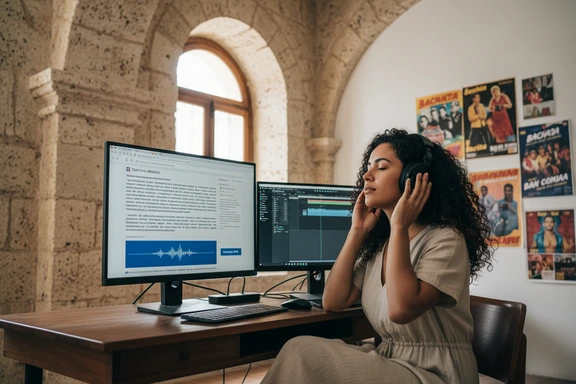
Merengue, Bachata & Dembow Narration
Voice intros, interludes and social captions for merengue shows, bachata playlists and dembow drops. The Cibao AI voice lands every Juan Luis Guerra reference, every Romeo Santos and Aventura throwback, and every Villa Mella dembow punchline the way Santo Domingo audiences hear them.
DR Diaspora Content
Reach the two-million-strong community of La Tribu in New York, Boston and Miami. Podcasts, family voice messages and radio spots hit harder when the cadence sounds like home — from Washington Heights to Santiago de los Caballeros, mangú and all.
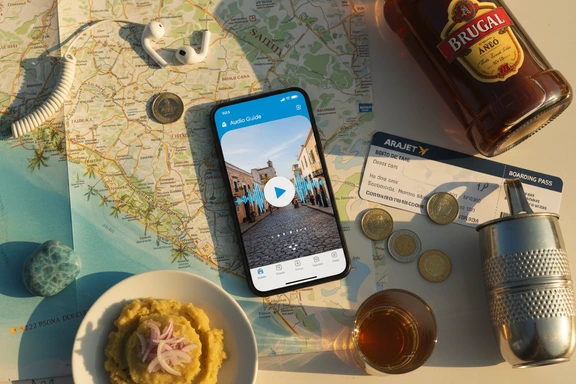
Punta Cana & DR Tourism
Build audio guides for the Zona Colonial, Alcázar de Colón, Bávaro resorts, La Romana and Puerto Plata. A native voice gives heritage and hospitality content its true character — ready for museum apps, hotel self-checkin kiosks and Higüey pilgrimage routes.
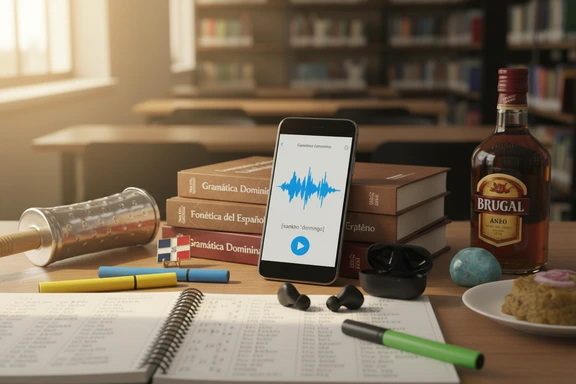
Spanish Learning — Dominican Variant
Train your ear to the fastest-speaking variety on the map — /s/ aspiration in "má café", d-elision in "pescao", Cibao r/l-to-i vocalization in "vamo a cantai", and everyday slang like qué lo que, tíguere, chele, jeva, vaina. Great prep for a Santo Domingo trip or a bachata listening session.
Dominican Spanish TTS — How It Works
Three steps to generate a Santo Domingo reading online.
Paste or type your text
Up to 1,000,000 characters. Island slang — qué lo que, tíguere, vaina — read natively.
Choose a voice
Pick Ramona (female) or Emilio (male). Adjust speed and pitch.
Listen & download free
Export MP3, WAV or FLAC. First 1,000 characters free, no signup.
Frequently Asked Questions — Dominican Spanish TTS
Three markers define it. Aspirated or completely dropped final /s/ ("má" for "más"); intervocalic /d/ elision ("pescao" for "pescado"); and the signature Cibao vocalization where syllable-final /r/ and /l/ become /i/ — "vamo a cantai" for "vamos a cantar", "mujei" for "mujer". Add the fastest speech rate in the region, island-only vocabulary (tíguere, chele, jeva, qué lo que, vaina), and a Taíno indigenous layer inherited from the first Spanish colony of the Americas.
All three share /s/ aspiration and intervocalic /d/ elision. The signature separator is the Cibao vocalization (r/l → i in "cantai") — neither sister island does it. The Havana variety has softer aspiration and uses "asere" / "qué bolá"; the Boricua variety has a velar R in "carro" and "Ay bendito" / "wepa" as fillers. Santo Domingo goes faster than both, swaps consonants for vowels, keeps the peso (DOP) where Puerto Rico runs on USD, and its iconic greeting is "qué lo que".
The variety has the highest speech rate among Caribbean varieties — a combination of aggressive consonant dropping (final /s/, intervocalic /d/, syllable-final /r/) and unbroken rhythm means fewer phonetic obstacles per second. Ramona and Emilio preserve that cadence authentically, not slowed down to "neutral Spanish" tempo.
SpeechGen is a text-to-speech service — the engine voices text you already have, it doesn't translate. For end-to-end workflow: translate with DeepL or Google Translate, then paste the result here and pick Ramona or Emilio to hear it in authentic Cibao accent with island cadence.
Two native es-DO Neural voices: Ramona (female) and Emilio (male). Both trained on Santo Domingo speech with authentic rapid cadence — no accent fake-out, no neutral-Spanish fallback. For Castilian, Mexican and other variants visit our main Spanish TTS page.
Pick Ramona or Emilio and export a Santo Domingo reading in seconds. For other variants see the main Spanish page.