Armenian Text to Speech
Convert text to natural Armenian speech — 2 native voices, free MP3 download.
Native Armenian Neural Voices — Mesrop Mashtots Alphabet, Aspirated Stops & Eastern Standard
Hear your grandmother's name spoken in authentic Eastern Armenian, a classic Raffi novel read aloud chapter by chapter, or a family recipe passed down through four generations of diaspora. Drop any text written in the 39-letter alphabet of Mesrop Mashtots into the editor above and two native speakers — Hayk (male) and Anahit (female) — will convert it to natural speech in seconds. Both voices handle the aspirated consonants, unique affricates, and final-syllable stress that define Armenian pronunciation.
Armenia stands at the crossroads of the Caucasus, and its language carries a singular heritage: the oldest surviving translation of the Bible (405 AD), an independent branch of the Indo-European family with no close living relatives, and a three-way consonant contrast found in very few modern languages. In addition to Hayk and Anahit, SpeechGen provides 51 multilingual cross-language neural voices that can also speak this language — useful when you need a specific voice character, though native voices are recommended for authentic Eastern Armenian phonology. Whether you need an Armenian voiceover for a diaspora YouTube channel, a text to voice Armenian reader for study, or narration for an audiobook, the full catalogue is here.
- 53 voices — 2 native + 51 multilingual
- Neural tier throughout (Eastern Armenian hy-AM)
- Adjustable speed & pitch
- Download MP3, WAV, OGG free
- First 1,000 characters — no signup
Armenian Voice Samples — Hayk & Anahit
Click to preview each native Armenian TTS voice · 53 speakers total
The two native Neural voices — Hayk and Anahit — pronounce authentic Eastern Armenian phonology, including aspirated stops, uvular fricatives, and the unique affricates (ձ, ծ, ց, ջ, չ) that set this language apart from other Indo-European branches. An additional 51 multilingual cross-language voices can also read Armenian text when you need a specific voice character. Browse the full catalogue on the voices page — filter by hy-AM.
Armenian Pronunciation — Greetings, the Mesrop Alphabet & Aspirated Consonants
Seven essential phrases that demonstrate the sounds unique to this language. Click play to hear each one read by Anahit.
Working with Armenian Text — Formatting & Conventions
How you format the source text affects the spoken output. Four conventions worth knowing when preparing content in this language:
Armenian Script Input
Paste directly in Armenian alphabet — no romanisation needed. The engine recognises all 39 letters, including the unique affricates ձ, ծ, ց and the ligature և (ev).
Numbers
1,000 → “մեկ հազար” — the engine reads numerals with correct Eastern Armenian declension. Separate thousands with a comma or space and the number is spoken naturally.
Punctuation
։ (vertsaket) = Armenian full stop — use it instead of a Latin period. The engine pauses correctly after both ։ and standard punctuation, but vertsaket produces the most natural sentence-ending intonation.
Stress Pattern
Stress falls on the final syllable in nearly all Eastern Armenian words. No need to mark it manually — the neural voices apply this rule automatically. Exceptions (loanwords, vocatives) are handled by context.
When to Use Armenian Text to Speech
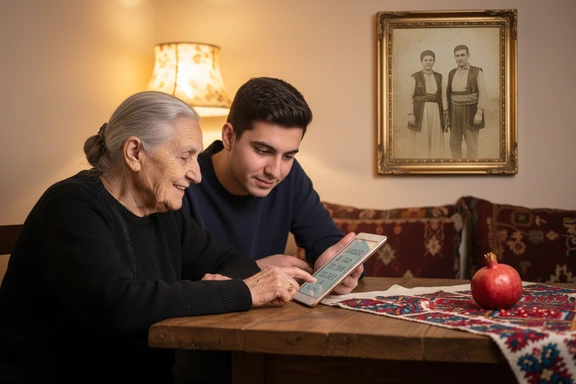
Diaspora & Heritage Connection
Roughly eight million people of Armenian descent live outside Armenia — from Glendale to Paris, Moscow to Buenos Aires. Third- and fourth-generation families who lost the spoken language can paste a grandparent's letter, a family recipe, or a baptismal certificate and hear it read aloud in the Eastern standard. A heritage tool no competitor offers.
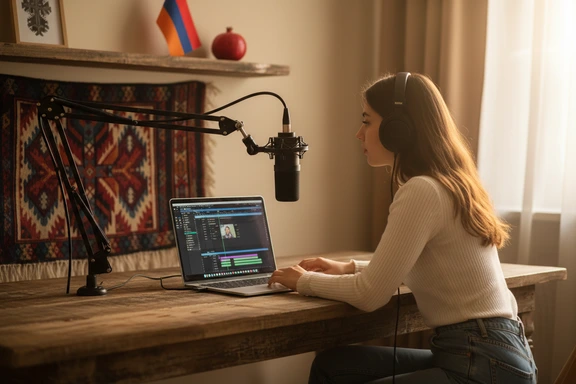
Content Creation & Voiceover
Add narration to travel vlogs about Yerevan, khorovats cooking reels, or diaspora podcast episodes. Choose Hayk for a baritonal newscast tone or Anahit for warm conversational delivery, adjust pacing, and export the audio file for Premiere, DaVinci, or CapCut.
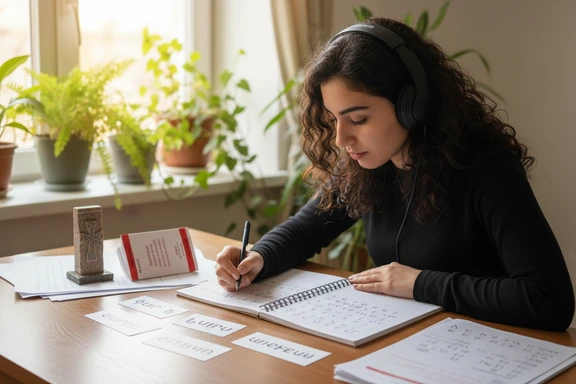
Language Learning
Practice the 39 letters of the Armenian alphabet at adjustable speed, hear aspirated-stop minimal pairs, and build listening fluency before a trip to Armenia or an Armenian Studies programme. Slow the playback to catch every affricate, then speed it up once the pattern clicks.

Audiobooks & Literature
Turn a Raffi novel, a Hovhannes Tumanyan fable, or a Yeghishe Charents poem into listenable audio. Hayk suits epic prose and historical chronicles with deep resonance; Anahit brings clarity to children's stories and contemporary fiction. The literary tradition begins with the Bible translation of 405 AD — narrate any chapter of it here.
Generate an Armenian AI Voice in 3 Steps
No software to install, no account needed for the first 1,000 characters.
Paste or type your text in Armenian
Type directly in the Armenian alphabet or paste up to 1,000,000 characters. If your source is in English, run it through a machine translation tool first, then paste the result here to hear it spoken aloud.
Choose a voice
Pick from 53 speakers. Start with the two native voices — Hayk (male) or Anahit (female) — for the most authentic pronunciation. Adjust speed and pitch to match the tone you need.
Listen & download free
Click Convert to Speech, preview the result, and save as MP3 or WAV. The first 1,000 characters cost nothing and carry no watermark. Longer texts are available on paid plans with commercial use included.
What Makes Armenian Unique — 39 Letters, Aspiration & Indo-European Isolate
Mesrop Mashtots & 39 Letters
The Armenian alphabet was created in 405 AD by the monk Mesrop Mashtots (Մեսրոպ Մաշտոց) specifically to write a Bible translation. The original 36 letters grew to 39 over the centuries. Each carries a numerical value inherited from Greek. Mashtots is a saint of the Apostolic Church, and his statue stands beside the Matenadaran manuscript museum in Yerevan.
Three-Way Consonant Contrast
This language preserves a rare three-way stop distinction: aspirated (Թ, Փ, Ք), plain voiceless (Տ, Պ, Կ), and voiced (Դ, Բ, Գ). Compare Թութ [tʰut] (mulberry), Տուն [tun] (house), and Դուռ [tur] (door). Most modern Indo-European languages only distinguish voiceless from voiced — the aspirated tier is a signature of authentic phonology here.
Indo-European Isolate
Armenian is its own branch of the Indo-European family with no close living relatives — like Greek and Albanian, it stands alone. Despite centuries of Persian, Turkish, and Russian vocabulary influence, the grammar retains deeply archaic features: SOV word order, seven noun cases, and stress that almost always falls on the final syllable. Linguists sometimes call it "the loneliest Indo-European language."
Armenian Text to Speech — FAQ
Yes. SpeechGen offers two native Eastern Armenian neural voices — Hayk and Anahit — plus 51 cross-language multilingual voices. The first 1,000 characters are free with MP3 download and no signup required. Paid plans unlock longer texts and commercial licensing.
The native voices use Eastern Armenian (hy-AM, the Yerevan standard spoken in the Republic of Armenia). Western Armenian speakers — the tradition of the Beirut, Los Angeles, and Paris diaspora communities — will hear pronunciation differences in certain consonants. For example, classical Բ is pronounced 'b' in Eastern and 'p' in Western. For Western pronunciation practice, adjust your source text accordingly before pasting.
Yes. SpeechGen licensing covers commercial use including audiobooks, YouTube monetisation, podcasts, and e-learning modules. See the pricing page for plan details and character limits.
The ISO code is hy (Armenian) and the locale code is hy-AM (Eastern Armenian, Armenia). Filter by hy-AM in the voice catalogue to see all 53 speakers available through the SpeechGen service.
No — this page provides text-to-speech only: you type or paste text and receive audio. For speech-to-text (transcription), consider Google Docs voice typing, which supports Armenian in the hy-AM locale.
Mesrop Mashtots created 36 letters in 405 AD. Two more (Օ and Ֆ) were added during the medieval period, and the ligature և was later standardised as the 39th. Each letter represents a distinct sound, including affricates (ձ, ծ, ց, ջ, չ) that do not exist in Latin or Cyrillic alphabets.