Bosnian Text to Speech
53 neural voices for Latin and Cyrillic Bosnian text — free MP3 download.
53 Neural Voices — Latin Script, Diacritics & Balkan Diaspora
Five special letters set this language apart from its neighbours: č, ć, š, ž, and đ. Most engines stumble on those diacritics, but here each one resolves to the correct sound — hard ch, soft ch, sh, zh, and soft dj. The library holds 53 neural speakers trained on native recordings, so every ijekavian diphthong and every non-final stress lands exactly where it should. Choose Goran or Vesna for an authentic Sarajevo timbre, or pick a cross-lingual clone like Adam BA for a more neutral delivery.
Whether you run a diaspora YouTube channel from Germany or St. Louis, want to preserve family stories for heritage speakers, plan to narrate Ivo Andrić’s Na Drini ćuprija as an audiobook, or simply need pronunciation drills before a first trip to Sarajevo — the engine reads your text and returns a downloadable audio file in seconds. First 1,000 characters are free, no account required.
- 53 neural voices — male & female
- Latin alphabet with č ć š ž đ support
- Adjustable speed & pitch
- Download as audio file — no watermark
- Free — 1,000 chars, no signup
Bosnian Voices — Male & Female Neural Speakers
Click to preview · 53 voices total
These are 4 featured speakers — each a Bosnian AI voice trained on native recordings. Browse all 53 on the voices page — filter by bs-BA.
Bosnian Pronunciation — Diacritics, Ijekavian & Stress
Click play to hear how each phrase sounds. All examples use native speakers from the catalogue.
What Makes This Language Sound Distinct
- Diacritics — five extra letters (č, ć, š, ž, đ) represent sounds that English spells with two or three characters. The engine maps each to its correct phoneme, including the tricky ć / č contrast that even fluent second-language speakers mix up.
- Ijekavian reflex — where Serbian uses an e (mleko) and Croatian often aligns with the same pattern, the standard here uses ije or je (mlijeko, lijepo). This diphthong is the clearest phonetic marker of the dialect group.
- Non-final stress — word accent never lands on the last syllable, a rule the prosody model applies automatically. Place names like Sarajevo (sa-RA-je-vo) and Mostar (MO-star) follow this pattern consistently.
Language Spotlight — How the Engine Handles Local Conventions
Practical details that matter when you paste real-world content into the editor:
Numbers & Currency
1.500,00 KM → “hiljadu petsto konvertibilnih maraka”. The decimal comma and period-as-thousands separator follow continental European convention. The convertible mark (KM) is read in full.
Dates & Time
15.03.2026. → “petnaesti mart” (day-first, trailing period after the year). 24-hour clock is standard: 14:30 reads as “četrnaest trideset.”
Script & Alphabet
The language uses the Latin alphabet with 30 letters — 25 base Latin characters plus č, ć, š, ž, and đ. Unlike its Serbian neighbour, Cyrillic is rarely used in everyday writing.
Mutual Intelligibility
Speakers of Serbian and Croatian understand this language at 95 %+ mutual intelligibility. The main phonetic difference is the ijekavian vowel reflex; grammar and vocabulary overlap almost completely.
Use Cases: Bosnian Voice in Action
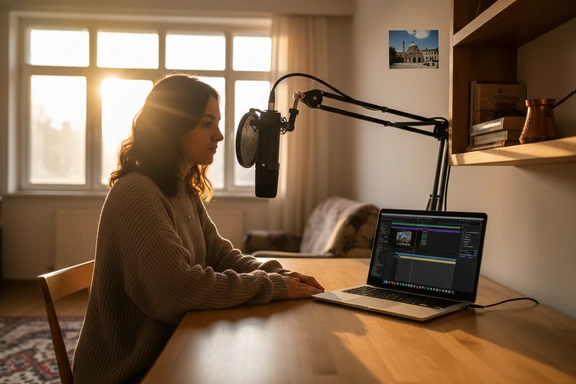
Content Creation & Voiceover
Diaspora creators in Germany, Austria, Sweden, and the United States produce YouTube vlogs, TikTok reels, and community podcasts about life back home. Need a Bosnian voice over for your next video? Drop the script into the editor, pick a native speaker, and export an audio file ready for any editing timeline — Premiere, DaVinci, or CapCut.
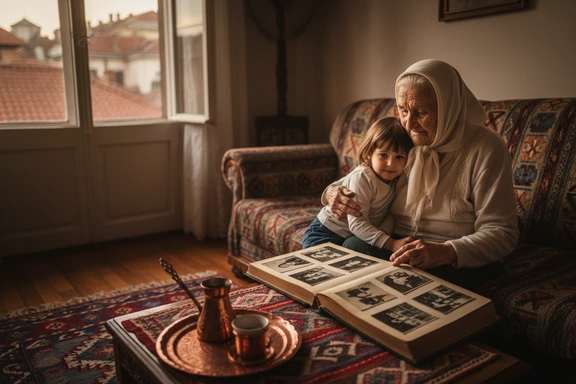
Heritage Speakers & Family Stories
Second- and third-generation families are losing the language their grandparents brought from Travnik or Mostar. Record grandmother’s recipes, childhood memories, and wartime accounts as narrated audio — a private archive the next generation can listen to long after the storyteller is gone.
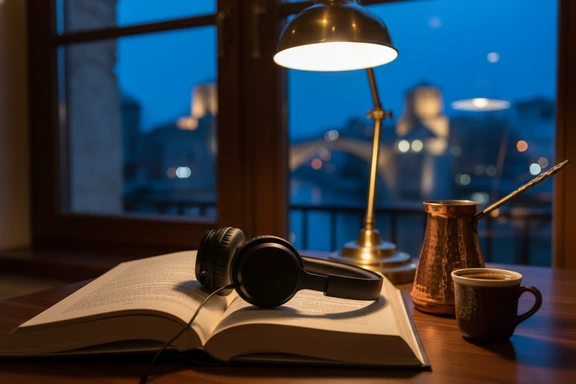
Audiobooks & Balkan Literature
Ivo Andrić’s Nobel-winning Na Drini ćuprija, Meša Selimović’s Derviš i smrt, and dozens of folk tales still have no proper audio edition. Upload the manuscript, assign a narrator, and produce chapter-by-chapter recordings — the engine handles every diacritic and long vowel faithfully.
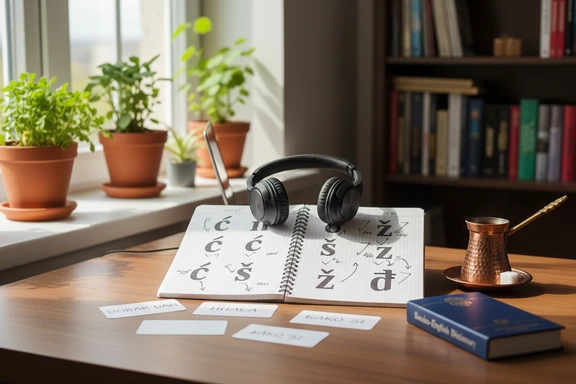
Language Learning & Pronunciation Practice
Slavic-studies students, peacekeepers, and humanitarian workers preparing for a posting in Bosnia and Herzegovina need to hear the difference between ć and č, or between lijepo and lepo. Slow playback to 0.75×, repeat each phrase, and build confidence before the field assignment begins.
Bosnian Text to Speech — How It Works
Three steps to turn written text into natural audio. No software to install, no account required.
Paste or type your text
Enter up to 1,000,000 characters in the Latin alphabet with full diacritic support. Upload DOCX, PDF, or SRT files directly.
Pick a voice
Choose from 53 neural speakers. Filter by gender, then fine-tune speed and pitch to match your project’s tone.
Download the audio file
Click Convert to Speech, preview the result, and save your file. First 1,000 characters free — no account, no watermark.
Frequently Asked Questions
Yes. The phonology engine maps all five diacritic letters to their correct sounds: č (hard ch, as in “čaj”), ć (soft ch, as in “ćevapi”), š (sh), ž (zh), and đ (soft dj). Simply paste your text with the original characters — no transliteration required.
All three belong to the same South Slavic dialect continuum, and mutual intelligibility exceeds 95 %. The main phonetic marker is the vowel reflex: the standard here uses the ijekavian form (mlijeko, lijepo), while standard Serbian typically uses the ekavian form (mleko, lepo). Croatian aligns with ijekavian as well, so in practice the audio output from a bs-BA speaker and a hr-HR speaker sounds very similar. We offer dedicated voice catalogues for Serbian and Croatian if you need those labels specifically.
The first 1,000 characters are free with no account, no card, and no watermark. Create a free account to unlock 3,000 characters per day for seven days. Paid plans raise the monthly limit and add extras like bulk export and longer scripts, but commercial use is included in every tier — even the free one.
Absolutely. Every tier includes a commercial licence, so you can publish narrated audiobooks on Audible or add a voiceover to YouTube videos, podcasts, and social-media clips without extra fees. The 53 speakers cover both formal and conversational registers, which makes it easy to match the tone of your project.
Yes. The engine processes literary text with the same diacritic and stress rules it uses for everyday content. Paste a chapter of Na Drini ćuprija or Derviš i smrt, choose a narrator, and the output preserves every ć, š, and ijekavian diphthong. Slow the reading to 0.85× for a more deliberate narration style.
The standard code is bs-BA (ISO 639-1 bs for the language, ISO 3166-1 BA for Bosnia and Herzegovina). Filter by bs-BA in the voice catalogue to see all 53 available speakers. Cross-lingual clones carry the BA suffix in their name (Adam BA, Ada BA) for the same reason.
53 neural speakers in total — 29 male and 23 female, plus 1 neutral. Two carry native names (Goran and Vesna); the remaining 51 are cross-lingual clones that bring English-trained prosody to native phonemes. All sit in the PRO Neural tier, with adjustable speed (0.5×–2.0×) and pitch (−20 to +20).