Javanese Text to Speech
Convert text to natural Basa Jawa speech — 80+ AI voices, free MP3.
80+ Javanese Neural Voices — Ngoko, Krama & Retroflex Consonants
Basa Jawa is one of the few languages where the word for “eat” changes completely depending on whom you are addressing — mangan among friends, dhahar when speaking to elders. This three-tiered register system, called unggah-ungguh, runs through every greeting, pronoun, and numeral, giving Javanese text to speech a depth that flat single-register tools miss. The 80-plus neural speakers here handle both Ngoko (casual) and Krama (formal) input, preserving retroflex consonants like the “dh” in dhahar and the open syllable rhythm that defines Central and East Java speech.
Pick Dimas for a composed male narration or Siti for a clear, warm female read-aloud and download the audio file in one click. Whether you are recording a Borobudur heritage guide, preparing mulok Basa Jawa school material, voicing a wayang kulit narration, or adding Javanese audio to a diaspora content channel, the catalogue covers conversational through courtly registers. First 1,000 characters free, no account required.
- 80+ native Javanese voices — all Neural tier
- Ngoko & Krama registers supported
- Adjustable speed & pitch
- Download MP3, WAV, FLAC, OGG
- Free — 1,000 chars, no signup
Basa Jawa Voice Samples — Click to Preview
Click to preview · 80+ native voices total
These are 4 featured speakers — each a native Basa Jawa voice trained on Javanese pronunciation. Browse all 80+ on the voices page — filter by jv-ID. All voices are Neural-tier; studio-grade models for this regional language are not yet available.
Javanese Pronunciation — Sugeng Enjang, Matur Nuwun & Gudeg Yogya
A reliable text to speech Jawa engine must handle the register split between Ngoko and Krama and articulate retroflex consonants correctly. Click play to hear each phrase spoken by a native neural voice and follow the transliteration.
What Makes This Language Sound Distinct
- Three speech registers — Ngoko (informal, among peers), Madya (neutral), and Krama (respectful, to elders or strangers). Vocabulary, pronouns, and even numerals change across registers. The voices pronounce both Ngoko and Krama input with correct intonation when you provide text in either level.
- Retroflex consonants — Basa Jawa distinguishes dental and retroflex stops inherited from its long contact with Sanskrit: dadi (to become) versus dhadha (chest). The speakers preserve this contrast, which matters for clarity in narration and educational content.
- Open syllables and nasal clusters — most native words follow a consonant-vowel pattern, giving the language its fluid, vowel-heavy rhythm. Nasal sounds like ng appear frequently at word boundaries, connecting syllables in a way that is characteristic of the Malayo-Polynesian family.
When to Use Javanese Text to Speech
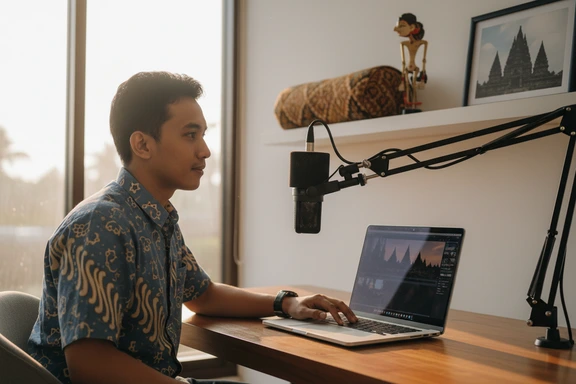
Content Creation & Voiceover
Record a native Basa Jawa voiceover for YouTube heritage channels, diaspora vlogs from Suriname or the Netherlands, or cultural documentary narration. Choose a warm conversational speaker and export the audio for Premiere, DaVinci, or CapCut — no studio session needed.
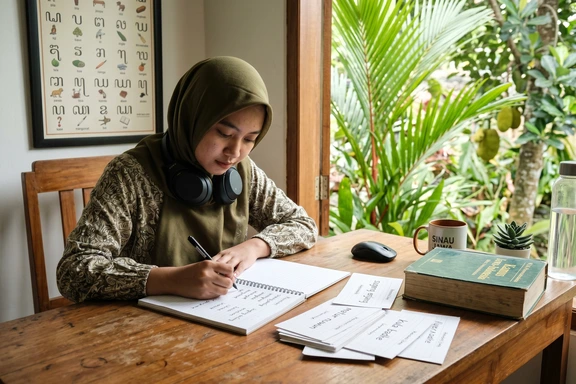
Language Learning & Heritage
Drill the Ngoko/Krama register contrast and retroflex sounds before a field visit to Java or as a heritage learner reconnecting with the language. Paste vocabulary lists, slow playback to 0.75×, and compare your recording with the neural reader. Useful for diaspora families in Suriname, the Netherlands, and New Caledonia — as well as linguistics students studying Austronesian languages.
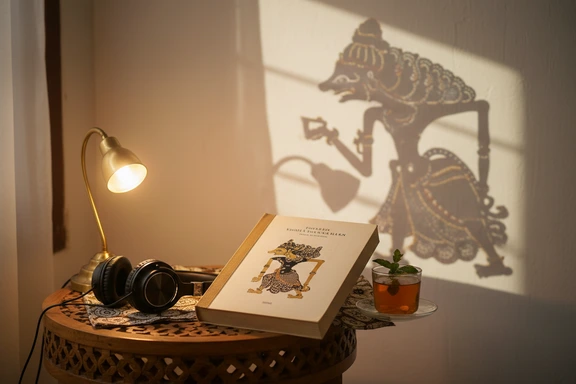
Audiobooks & Traditional Storytelling
Turn classic Javanese literature — Serat Centhini, Babad Tanah Jawi, the Ramayana in Basa Jawa — into listen-anywhere audio. Choose Dimas for a composed narrative voice or Siti for a warm storytelling tone. Also works for children’s dongeng like Timun Mas and Keong Emas.
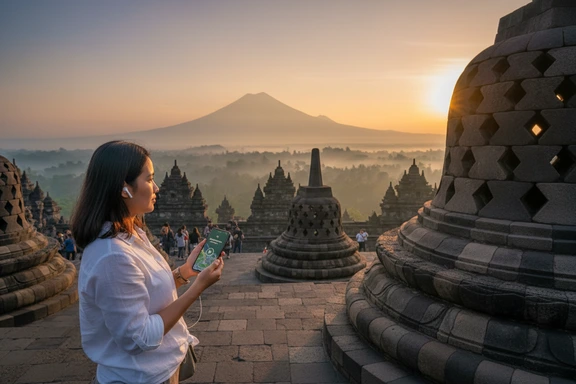
Tourism & Heritage Audio Guides
Create a walking-tour narration for Borobudur, Prambanan, the Keraton Yogyakarta, or the Dieng Plateau temples. Visitors hear place names and context in natural speech on their own phone. Works for pre-trip preparation and for museums preserving Central Java heritage.
How to Generate Basa Jawa Voice in 3 Steps
Three steps from typed text to speech. No software, no signup.
Paste or type your Basa Jawa text
Type directly or paste up to 1,000,000 characters of Latin-script content in any register — Ngoko, Madya, or Krama. Upload DOCX, PDF, or SRT files. The engine works with modern romanized spelling.
Choose a Javanese voice
Pick from 80+ native speakers. Filter by gender. Adjust speed and pitch to match the tone you need, from a calm Krama read-aloud to an energetic Ngoko voiceover.
Listen & download free
Click Convert to Speech, preview the result, and download as an audio file. First 1,000 characters free — no account needed. No watermark on any plan.
What Makes Basa Jawa Unique — Speech Registers, Retroflex & Javanese Script Heritage
Three Speech Registers (Ngoko / Madya / Krama)
Basa Jawa is one of the rare languages where pronouns, verbs, and numerals change entirely depending on the social context. “Aku mangan gudeg” (Ngoko: I eat gudeg) becomes “Kula dhahar gudeg” (Krama) — different words for “I” and “eat”, same dish. With over 80 million native speakers across Central Java, East Java, and Yogyakarta, this register system is alive in daily conversation. The voices pronounce both Ngoko and Krama input correctly when given the corresponding text.
Retroflex Consonants from Sanskrit Contact
Unlike most Austronesian languages, Basa Jawa distinguishes dental and retroflex stops: dadi (to become) versus dhadha (chest), telu (three) versus ṭiṭi. This phonetic layer came from centuries of contact with Sanskrit through the Hindu-Buddhist Majapahit Empire. The neural speakers preserve the contrast — important for accuracy in narration and heritage content.
Latin Script Modern & Hanacaraka Heritage
Everyday digital content uses Latin letters (romanized Basa Jawa), which is what the engine reads. The traditional Hanacaraka script — a Brahmi-derived abugida with roughly 20 base characters — is still taught in Central Java schools and appears on ceremonial inscriptions at Keraton Yogyakarta and Surakarta. If your source text is in Hanacaraka, convert it to Latin first; the ISO language code for this voice set is jv-ID.
Javanese Text to Speech — FAQ
Yes. SpeechGen offers 80+ neural voices trained on native Basa Jawa pronunciation, including speakers like Dimas (male) and Siti (female). You can use text to speech Javanese content by pasting romanized Latin-script text directly and hearing it read aloud with correct Ngoko or Krama intonation — no special markup needed.
Javanese (Basa Jawa) is a regional language spoken by roughly 80 million people in Central Java, East Java, and Yogyakarta — the largest language in the world without its own country. Indonesian (Bahasa Indonesia) is the national lingua franca of Indonesia, understood by 270 million people. Malay (Bahasa Melayu) is the national language of Malaysia, Brunei, and Singapore. All three belong to the Austronesian family but differ in vocabulary, grammar, and cultural context. SpeechGen has separate pages for each: /en/tts-javanese/, /en/tts-indonesian/, and /en/tts-malay/.
Basa Jawa has three levels of formality: Ngoko (casual, used among friends and younger people), Madya (neutral middle level), and Krama (respectful, used toward elders, strangers, and officials). Entire words change across these registers — the pronoun “I” is aku in Ngoko and kula in Krama. Provide your text in the register you need and the voices will pronounce it with the appropriate intonation.
The engine reads Latin-script (romanized) Basa Jawa, which is the standard for digital text, schools, and media since the 1970s. If you have content in Hanacaraka (Aksara Jawa), the traditional abugida, convert it to Latin letters first. Hanacaraka is still taught in schools across Java and used on ceremonial inscriptions, but modern text-to-speech works on the romanized form.
Yes. Every plan, including the free tier, includes a commercial licence. You may use the generated audio in audiobooks, mulok (local-content) school materials, YouTube channels, cultural event announcements, heritage preservation projects, and any other purpose. No watermark is added on any plan.