Malay Text to Speech
Convert text to natural Bahasa Melayu speech — 60+ AI voices, free MP3.
60+ Malaysian Neural Voices — Rumi Script, Schwa & Reduplication
Generate natural Bahasa Melayu speech in seconds — perfect for content reaching Malaysia, Brunei and Singapore. The library includes 60+ native Malaysian AI voices trained on Dewan Bahasa dan Pustaka standard pronunciation: clean open vowels, the characteristic schwa in words like lemak, and natural intonation for reduplication patterns such as banyak-banyak. Pick a speaker like Osman (Neural, male) or Yasmin (Neural, female) and download your audio file in seconds.
Voices cover the full range from formal newsreader tone — the kind heard on Malaysian broadcast channels — through casual conversation for social media and podcasts. Useful for YouTube voiceover, language study, audiobook narration, corporate training modules, and anyone who needs a reliable Bahasa Melayu reader online. First 1,000 characters free — no account, no watermark.
- 60+ native Malaysian voices — all Neural PRO
- Rumi (Latin script) — DBP standard
- Adjustable speed & pitch
- Download MP3, WAV, OGG, FLAC
- Free — 1,000 chars, no signup
Bahasa Melayu Voice Samples — Click to Preview
Click to preview · 60+ native voices total
These are 4 featured speakers. Browse all 60+ on the voices page — filter by ms-MY.
Malay Pronunciation — Selamat Pagi, Terima Kasih & Nasi Lemak
Bahasa Melayu uses Rumi (Latin) script and has relatively transparent phonetics, yet several features trip up learners. Click play to hear each phrase.
What Makes Bahasa Melayu Sound Unique
- Schwa /ə/ — the letter e often sounds like a quick, unstressed “uh” rather than a full vowel. In lemak and negara, the first e is a schwa. This is the most common surprise for English speakers.
- Reduplication — doubling a word changes meaning: buku (book) → buku-buku (books), cepat (fast) → cepat-cepat (quickly). The voice engine handles the hyphenated pattern with natural intonation.
- Final glottal stop — words ending in k often close with a glottal stop rather than a released consonant. Lemak sounds closer to “leh-mah’” than “leh-mack.”
Bahasa Melayu — Formatting & Input Tips
How you format the source text affects the reading. Four conventions worth knowing when preparing input:
Numbers
1,500 → “seribu lima ratus” — numbers read out in full with ribu (thousand) and ratus (hundred). Decimals use a dot: 3.5 → “tiga perpuluhan lima.”
Currency
RM 12.50 → “dua belas ringgit lima puluh sen.” Use the RM symbol and the engine reads it as Ringgit Malaysia automatically.
Dates & Time
7 April 2026 → “tujuh April dua ribu dua puluh enam.” Day-first format. 24-hour clock works: 14:30 → “pukul empat belas tiga puluh.”
Loanwords & Abbreviations
“Komputer” not “computer” — Bahasa Melayu adapts English loanwords to local spelling. Feed the adapted form for the most natural reading. Acronyms like KLCC are read letter-by-letter.
When to Use Malay TTS
Content Creation & Voiceover
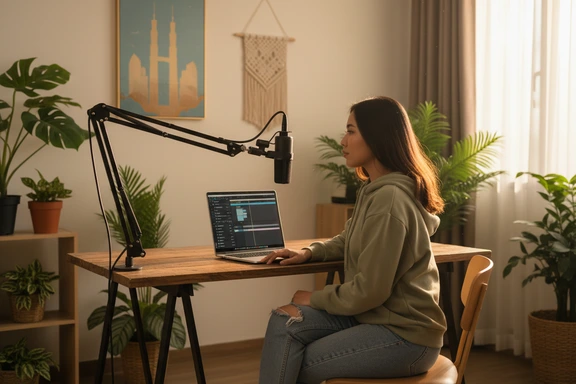
Add a native Malaysian voiceover to YouTube videos, TikTok clips and podcast intros. Whether you produce travel vlogs from Penang or product reviews for the Southeast Asian market, a Bahasa Melayu narrator lends authenticity that a dubbed track cannot match. Export the file and drop it into any editor.

Language Learning & Pronunciation Practice
Studying Bahasa Melayu at university or preparing for a stay in Kuala Lumpur? Paste vocabulary lists, dialogue scripts or exam passages and listen at reduced speed. Slow the playback to 0.75x to catch every syllable, then ramp it back up once the rhythm feels comfortable.

Audiobooks & Narration
Turn manuscripts into audio with a warm narrator. Classic Hikayat literature, contemporary fiction by Sasterawan Negara laureates, or children’s stories — a clean Neural voice handles long-form reading with steady pacing. Use Dialog Mode to assign different speakers to characters for a multi-voice production.

Business Presentations
Government-linked companies, universities and corporate teams in Malaysia often present in Bahasa Melayu. Paste your quarterly report or training module, pick a formal-register speaker, and receive a polished narration track ready for slides, webinars or internal learning platforms.
How to Generate Bahasa Melayu Voice in 3 Steps
Three steps from text to spoken audio. No software to install, no signup required.
Paste or type your text
Type directly or paste up to 1,000,000 characters. Upload DOCX, PDF or SRT files. Works with any Bahasa Melayu or Rumi-script text — scripts, articles, study notes, presentation slides.
Choose a voice
Pick from 60+ native Malaysian speakers. Filter by gender and Neural PRO tier. Adjust speed and pitch to match the tone you need — formal newsreader, casual conversation, or anything in between.
Listen & download free
Click Convert to Speech, preview the result, and download as an audio file. First 1,000 characters free — no account needed. No watermark on any plan.
What Makes Bahasa Melayu Unique — Rumi, Reduplication & the Shared Nusantara Legacy
Rumi vs Jawi
Modern Bahasa Melayu is written in Latin script called Rumi, standardised by Dewan Bahasa dan Pustaka. Historically, the language used Jawi — an Arabic-derived script still seen in Brunei, Kelantan and religious contexts. All voices on this page read Rumi input.
Reduplication
Doubling a word is standard grammar, not a quirk: buku-buku (books), cepat-cepat (quickly), sayur-mayur (assorted vegetables). The voice engine reads each repeated element with natural rising-falling intonation, preserving the rhythm native speakers expect.
Mutual Intelligibility with Indonesian
Bahasa Melayu and Bahasa Indonesia share roughly 80 percent vocabulary — comparable to Serbian and Croatian. Spelling and preferred words differ: kereta (car) in Malaysia vs mobil in Indonesia, hospital vs rumah sakit. The 60+ voices here follow DBP-standard Malaysian pronunciation.
Frequently Asked Questions
No. Malayalam is a Dravidian language spoken in Kerala, India. Bahasa Melayu belongs to the Austronesian family and is used in Malaysia, Brunei and Singapore. The two are completely unrelated — different script, grammar, vocabulary and language family. This page covers Bahasa Melayu voices only.
Bahasa Melayu and Bahasa Indonesia are mutually intelligible but differ in spelling, loanwords and preferred vocabulary. The voices on this page use Malaysian DBP-standard pronunciation. If you need Indonesian speech, check the dedicated Indonesian page — the voice catalogues are separate.
Yes. The first 1,000 characters are free with no account and no watermark. Create a free account for an additional 3,000 characters per day for seven days. Commercial use is included in every tier, including the free one.
Yes. Every plan — free and paid — includes a commercial licence. Use the generated audio in YouTube videos, podcasts, audiobooks, corporate training, IVR systems and advertising without restriction.
Currently, the engine reads Rumi (Latin script) input. If your source text is in Jawi (Arabic-derived script), convert it to Rumi first and paste the romanised version. Standard Rumi spelling as defined by Dewan Bahasa dan Pustaka produces the most natural reading.