Nepali Text to Speech
Convert text to natural Nepali speech — 53 AI voices, free MP3 download.
53 Neural Voices — Nepali Devanagari Script & Himalayan Indo-Aryan Phonology
Hear the Devanagari script spoken naturally — aspirated consonants, nasalized vowels, and greetings like namaste (“I bow to you”) all rendered with correct stress and intonation. The library ships 53 neural speakers trained on native Nepali pronunciation, so words like Sagarmatha (the Nepali name for Everest) land with proper long vowels and soft dental stops. Pick Sagar (neural, male) for confident narration or Hemkala (neural, female) for a warm, clear read-aloud and download the audio file in one click.
Nepali text to speech fits a wide range of needs: diaspora content creators recording Nepal travel vlogs for audiences in the Gulf states, the USA and Japan, heritage speakers practising their family language, trekkers preparing Annapurna or Everest Base Camp audio guides, researchers adding a Nepali voiceover to South Asian studies, and developers building Nepali language tools. First 1,000 characters free, no account required.
- 53 native Nepali voices — all Neural tier
- Devanagari conjuncts & nasalization handled natively
- Adjustable speed & pitch
- Download MP3, WAV, FLAC, OGG
- Free — 1,000 chars, no signup
Nepali Voice Samples — Click to Preview
Click to preview · 53 native voices total
These are 4 featured speakers — each a Nepali AI voice trained on native Devanagari phonology. Browse all 53 on the voices page — filter by ne-NP for Nepali TTS. Studio-grade models for this Himalayan language are not yet available; all voices are Neural-tier.
Nepali Pronunciation — Greetings, Aspirated Stops & Devanagari Script
Any reliable text to speech engine must handle these sounds accurately. Click play to hear each phrase spoken by a native neural voice and follow the transliteration.
What Makes This Language Sound Distinct
- Aspirated consonants — Nepali distinguishes four stops at every place of articulation: plain voiceless, aspirated voiceless, plain voiced, and aspirated voiced. English speakers hear ‘k’ and ‘kh’ as the same sound, but in Nepal they change the meaning of a word entirely.
- Nasalization — the chandrabindu mark ( ँ ) above a vowel adds nasal resonance and can distinguish otherwise identical syllables. The engine reads this diacritic correctly from the Devanagari input.
- Sanskrit-rooted vocabulary — roughly sixty percent of formal terms come from Sanskrit, giving Nepali a recognisable ceremonial register. The voices shift naturally between formal Sanskrit borrowings and colloquial Himalayan loanwords.
When to Use Nepali Text to Speech
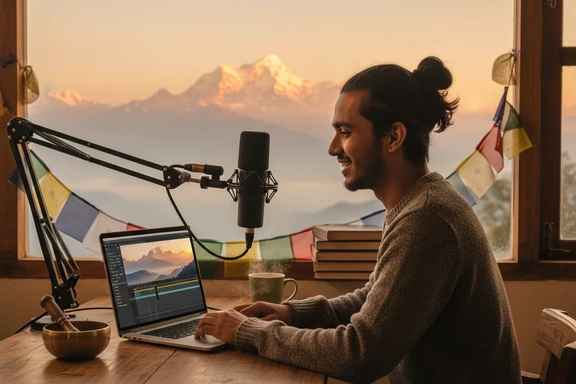
Content Creation & Voiceover
Add a Nepali voice to YouTube travel vlogs, Himalayan trekking channels, and diaspora culture videos. The neural speakers handle both conversational narration and formal introductions, so a documentary about Kathmandu valley sounds just as polished as a casual Annapurna trail vlog. Export the audio file and drop it into Premiere, DaVinci, or CapCut.
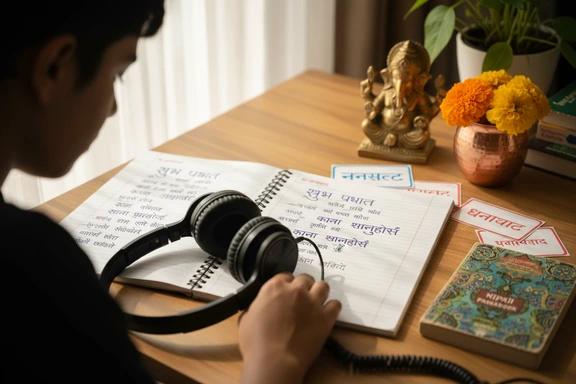
Nepali Language Learning
Drill the aspirated consonants and Devanagari syllables that make Nepali challenging for new learners. Slow the playback to 0.75x to catch every vowel, then ramp it up once you follow along. Heritage speakers reconnecting with a family language, trekkers learning trail phrases before Everest Base Camp, and researchers preparing fieldwork all benefit from repeatable, accurate Nepali pronunciation on demand.
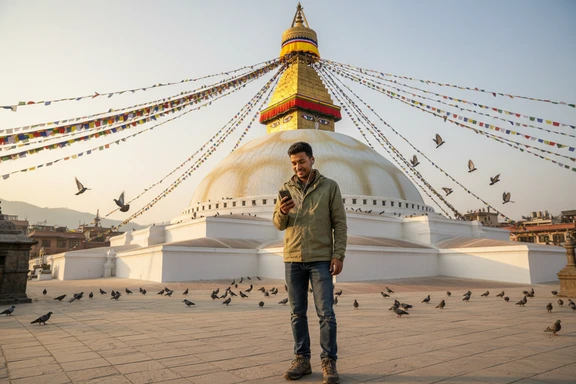
Tourism & Heritage Audio Guides
Record walking-tour narration for Kathmandu Durbar Square, Boudhanath Stupa, Pashupatinath Temple, and the Lumbini pilgrimage site — all UNESCO World Heritage locations. A Nepali-language audio guide adds authenticity that a generic English track cannot match, whether the listener is circling the stupa in person or exploring Nepal virtually from abroad.
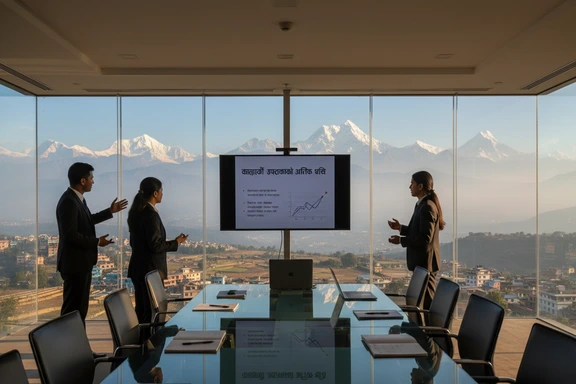
Diaspora Business & Remittances
Voice business presentations, remittance-service announcements, and internal training materials for Nepalese enterprises operating across the Gulf states, Japan, Australia, and the UK. A Nepali reader handles formal quarterly-report language just as fluently as casual staff-update notes, keeping the tone professional for cross-border teams that span Kathmandu to Doha.
Generate a Nepali Voice in 3 Steps
Three steps to produce Nepali audio online. No software, no signup.
Paste or type your Nepali text
Type directly in Devanagari or paste up to 1,000,000 characters. Upload DOCX, PDF, or SRT files. The editor accepts any Nepali content — scripts, articles, trail notes, study flashcards.
Choose a Nepali voice
Pick from 53 native speakers. Filter by gender and quality tier. Try Sagar for a confident male read or Hemkala for a warm female narration. Adjust speed and pitch to fine-tune the delivery.
Listen and download free
Click Convert to Speech, preview the result, and download as MP3, WAV, or FLAC. First 1,000 characters free — no account needed, no watermark on any plan.
What Makes Nepali Unique — Devanagari, Aspiration & Sanskrit Heritage
Devanagari Script (Shared, Yet Separate)
Nepali uses the Devanagari abugida — the same script system as Sanskrit and Marathi. Each consonant carries a built-in ‘a’ vowel; other vowels attach as modifiers above, below, or beside the letter. The alphabet has 33 consonants, 11 vowels, plus conjuncts for consonant clusters and nasalization marks (chandrabindu ँ, anusvara ं). Crucially, sharing the script does not mean the languages are interchangeable — Nepali has its own vocabulary, its own grammar, and its own official status as the national language of Nepal.
Four-Way Stop Contrast
Like all Indo-Aryan languages, Nepali distinguishes four stops at each place of articulation: voiceless unaspirated (क ka), voiceless aspirated (ख kha), voiced unaspirated (ग ga), and voiced aspirated (घ gha). English speakers hear ‘k’ and ‘kh’ as the same consonant, but in Nepali they change meaning entirely: काम (kaam, “work”) vs खाना (khaanaa, “food”). The voices render all four distinctions from the spelling.
Sanskrit Heritage & Himalayan Loanwords
About sixty percent of formal vocabulary is Sanskrit-derived (tatsama words), giving Nepali a recognisable ceremonial register — dharma, karma, guru, namaste. On top of that, everyday speech borrows from Tibeto-Burman substrate languages of the Himalayan region: Newari (Kathmandu valley), Gurung, Magar, Tamang, and Sherpa. Words like chiyaa (tea), momo (dumpling), and dal bhat (lentils and rice) carry the Himalayan identity. The engine preserves formal Sanskrit pronunciation for religious texts while handling colloquial Himalayan borrowings naturally.
Nepali Text to Speech — FAQ
No. Nepali and Hindi both use the Devanagari script and belong to the Indo-Aryan language family, but they are separate languages with different vocabulary, grammar, and official status. Nepali is the national language of Nepal; Hindi is the official language of India. A basic level of mutual intelligibility exists for written text thanks to the shared script and Sanskrit borrowings, but spoken conversation is not mutually intelligible.
The ISO 639-1 code is ne. The full IETF tag used by browsers and speech engines is ne-NP. Filter the voice catalogue by this code to see all available Nepali speakers.
Yes. SpeechGen offers a REST interface that covers every text to speech Nepali voice in the catalogue. Send a request with your Devanagari text, specify the speaker and output format, and receive an audio file in return. Documentation is available on the developer page. The interface supports batch processing and webhook callbacks for larger projects.
Yes. Every plan, including the free tier, includes a commercial licence. You may use the generated audio in documentaries, e-learning courses, audiobooks, podcasts, business presentations, tourism guides, and any other project. No watermark is added.
No. This is a text to speech tool — paste Nepali text and receive audio. It does not transcribe spoken audio back into written form. For Nepali speech recognition, other specialised tools exist.