Filipino Text to Speech
Convert text to natural Filipino speech — 12+ AI voices, free MP3 download.
12+ Filipino & Tagalog AI Voices — Ng, Glottal Stop & Taglish-Ready
Over 110 million Filipinos switch between Tagalog and English daily, creating Taglish — and only voices trained on that rhythm get it right. The neural engine reads standard Luzon Filipino natively, handling the mga digraph, polite particles like po and opo, and agglutinative verb forms such as magbasa, binasa, basahin without breaking a syllable. Pick a voice like Blessica (neural, female) or Angelo (neural, male) and get a clean MP3 for any project.
The roster spans neural and high-definition tiers across male and female speakers, all trained on Manila-standard Filipino. Every Filipino AI voice handles Tagalog text to speech naturally — useful for content creators targeting the Philippines, heritage learners brushing up on pronunciation, and businesses localising products for the Philippine market. The engine also handles Taglish — mixed Tagalog and English in one sentence — so scripts like I-download mo ang file play back naturally. First 1,000 characters free, no account needed.
- 12+ Filipino voices — neural & HD tiers
- Ng digraph, glottal stops & enclitic particles
- Adjustable speed & pitch per voice
- Download MP3, WAV, OGG, FLAC
- Free — 1,000 chars, no signup
Filipino Voice Samples — Click to Preview
Click to preview · 12+ Filipino voices total
These are 4 of the 12+ Filipino voices. Browse the full roster on the voices page — filter by fil-PH.
Tagalog Pronunciation — Ng, Mga & the Glottal Stop
Seven everyday phrases that highlight Filipino pronunciation features the engine handles natively. Click play to hear each one.
Filipino Pronunciation — What Sets It Apart
- Ng as a single letter — the Filipino alphabet has 28 letters, and Ng is one of them. It represents the velar nasal [ŋ] — the same sound at the end of English “sing” but appearing at the start and middle of words too: nga, mga (pronounced “manga”), ngayon. The engine reads these combinations as a single consonant, not as two separate sounds.
- Glottal stop [ʔ] — an unwritten catch in the throat that separates vowels and changes meaning. Bata (child) and batá (robe) differ only in where the glottal stop falls. The neural voices reproduce this hidden consonant in common words automatically.
- Enclitic particles — small words like na, pa, ba, din/rin, and nga attach after the first stressed word in the sentence. They carry aspect, politeness and emphasis. The voices place natural micro-pauses around them so they sound conversational rather than clipped.
How the Engine Handles Filipino Formatting
Formatting details that affect how your text sounds when read aloud. Four conventions worth knowing before you paste Filipino content:
Numbers
isa, dalawa, tatlo — the engine reads digits using Filipino cardinal forms. Type 3 araw and it reads tatlong araw (three days), applying the linker -ng automatically.
Currency
₱1,500 → “isang libo’t limang daan na piso”. The peso sign ₱ is read as piso. Commas separate thousands, periods for decimals — following Philippine standard formatting.
Dates
Abril 13, 2026 → “Abril trese, dalawang libo’t dalawampu’t anim”. Filipino dates follow month-day-year order (US influence). Spanish-derived month names are standard.
Taglish Mixing
I-download mo ang file — Taglish blends Tagalog grammar with English vocabulary. The engine recognises the Tagalog verbal prefix i- attached to an English root and reads both languages smoothly in the same sentence.
When to Use Filipino TTS
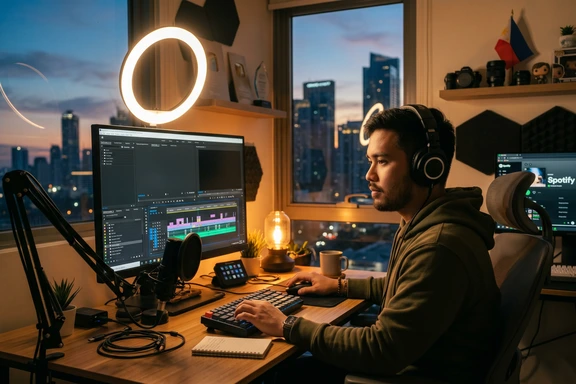
Content Creation & Voiceover
Add a Tagalog voice over to YouTube videos, TikTok clips, Facebook Reels and podcasts. Blessica delivers warm, conversational narration for lifestyle and travel vlogs; Angelo brings a clear, steady tone to explainer content. Export the file and drop it straight into Premiere, CapCut or DaVinci — no watermark on any tier.
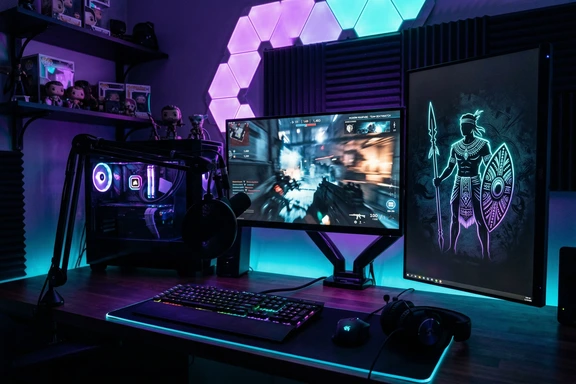
Character Voices & Gaming
Give Tagalog-speaking characters a distinct personality in indie games, visual novels, TikTok skits and animation dubs. Arnel works well for heroic or dramatic roles; switch between speakers with Dialog Mode to voice an entire cast. Streamers use these voices for live chat reactions and donation alerts in Filipino.
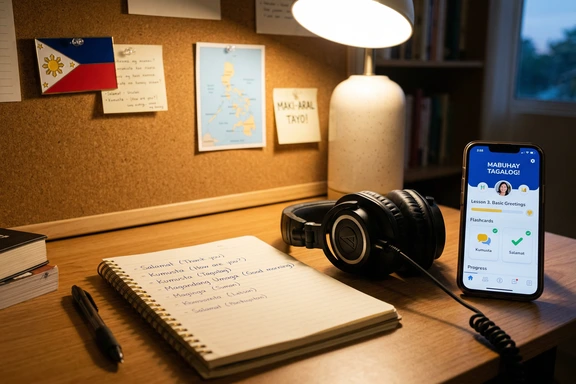
Filipino & Tagalog Learning
Train your ear on native pronunciation by pasting vocabulary lists, textbook dialogues or personal phrase sheets. Slow playback to 0.5× to catch the ng digraph and glottal stops, then speed up once you follow along. Useful for heritage learners reconnecting with family language, students, and travellers preparing for a trip to the Philippines.

Business, BPO & Training
The Philippines is the world’s largest outsourcing hub — and many internal trainings run in Filipino. Generate Tagalog voice audio for onboarding modules, compliance scripts and product demos. Blessica’s clear delivery suits formal narration; pair it with Angelo for two-narrator training walkthroughs using Dialog Mode.
How to Generate a Filipino Voice in 3 Steps
Three steps to convert Filipino text to audio online. No software, no signup.
Paste or type your Filipino text
Open the editor above and type or paste up to 1,000,000 characters per project. Upload DOCX, PDF, or SRT files. The editor accepts Taglish — mixed Tagalog and English in the same paragraph — without any preprocessing.
Choose a Filipino voice
Pick from 12+ native speakers. Filter by gender and quality tier — neural or high-definition. Adjust speed and pitch per voice to fine-tune the reading for vlogs, narration or formal presentations.
Listen & download free
Click Convert to Speech, preview the result, and download as MP3, WAV, or OGG. First 1,000 characters free — no account, no credit card. No watermark on any plan.
What Makes Tagalog Unique — Agglutination, Ng & Taglish
Three features that shape how Filipino sounds — and why they matter for text to speech:
Agglutinative Morphology
Tagalog verbs chain prefixes, infixes and suffixes around a root: basa (read) becomes magbasa, binasa, basahin, pinagbasahan. The neural engine parses affix boundaries correctly so each form sounds natural rather than robotic.
Ng — The 28th Letter
The Filipino Abakada alphabet has 28 letters, and Ng counts as a single one. It appears everywhere — mga (the plural marker, pronounced “manga”), ngayon (now), ang (the topic marker). The engine treats Ng as one consonant, never splitting it into separate N and G sounds.
Taglish Code-Switching
Modern Filipino speakers blend Tagalog grammar with English vocabulary in everyday conversation: I-download mo ang file, Nag-meeting kami kanina. This is the living language of Manila, social media and the 10 million-plus Overseas Filipino Workers who mix both languages daily. The voices handle these switches without pausing or mispronouncing.
Filipino Text to Speech — FAQ
Yes — this Tagalog TTS works without any registration. Paste your text into the editor at the top of this page, pick a voice, and click Convert to Speech. The first 1,000 characters are free with no account and no credit card. Download the result as an audio file and use it in any project. Create a free account to unlock 3,000 additional characters per day for seven days.
Filipino is the national language of the Philippines, standardised from Tagalog with additions from other Philippine languages and English. In everyday usage the two are nearly identical — the same grammar, the same vocabulary, the same pronunciation. For text to speech purposes they are interchangeable: the same 12+ voices read both Filipino and Tagalog text naturally.
Yes. All paid plans include a commercial licence that covers YouTube, TikTok, Facebook, Instagram, podcasts, e-learning courses, audiobooks and corporate presentations. The free tier is for personal and non-commercial use. Check the pricing page for details on character limits per plan.
The “ng” digraph is a single nasal sound [ŋ] — think of the ending in English “sing” but placed at the start of a word. Mga is pronounced “manga”, not “m-ga”. The glottal stop [ʔ] is an unwritten catch between vowels — it distinguishes bata (child) from batá (robe). The neural voices reproduce both sounds automatically when you type standard Filipino text.
Currently the Filipino voices on this page speak Tagalog-based standard Filipino (Luzon/Manila). Cebuano (Bisaya) is a separate language with its own grammar and vocabulary — not a dialect of Tagalog. Cebuano support is on the roadmap. For English spoken with a Filipino accent, see the dedicated Filipino accent page.