Jilu Mandarin Text to Speech — Hebei & Shandong AI Voice
4 native Jilu Mandarin AI voices — Hebei, Shandong & Tianjin reader.
Northern Mandarin Sub-Variant — Hebei, Shandong & Tianjin Cadence
This Jilu 冀鲁官话 text to speech page turns Simplified Chinese script into a North China Plain reading — the everyday register heard from Shijiazhuang across Jinan to Tianjin. Four native zh-CN speakers — Xiaobei, Xiaoni, Yundeng and Yunxiang — read with the regional cadence that defines the dialect: reduced erhua, softer retroflex consonants and the downward-drifting first tone of Tianjin xiangsheng. Paste, pick a speaker, download a free MP3 — no signup.
Creators reach for this Northern Mandarin sub-variant when a Beijing Putonghua reading feels off-register for a North China ear. Feed the engine a line for a Qingdao harbour report or a Jinan weather forecast and the speaker stays in the local pocket — a genuinely North China Plain read instead of a capital-city render. For standard Putonghua narration, see our main Chinese page.
- 4 native Jilu speakers — Neural PRO tier
- Shijiazhuang-Jinan register — Northern cadence
- Reduced erhua, softer retroflex, distinct tone contours
- Download MP3, WAV, FLAC, OGG
- Free — 1,000 characters, no signup
冀鲁官话 Voices — Xiaobei, Xiaoni, Yundeng & Yunxiang
Click to preview · 4 native Northern Mandarin speakers total
Four native Northern speakers — two female (Xiaobei, Xiaoni) and two male (Yundeng, Yunxiang). Each reads Simplified Chinese with the reduced erhua and softer retroflex that distinguish 冀鲁官话 from the Beijing capital register. For standard Putonghua, Cantonese, Taiwanese Guoyu or other Sinitic variants visit the main Chinese page.
Jilu Mandarin vs Beijing Putonghua — Pronunciation Comparison
Same Simplified characters, two readings. Hear how the Northern sub-variant reshapes Mandarin against the standard Putonghua baseline.
What Makes 冀鲁官话 Sound Different from Beijing Putonghua
- Reduced erhua 儿化音 — the capital sprinkles an -r suffix onto daily nouns (花儿, 事儿, 哪儿). Speakers across the North China Plain usually drop it, which is the first tell ears pick up.
- Softer retroflex — zh, ch and sh flatten toward z, c and s across many counties of the region, so the tongue-curl of the capital register is noticeably lighter.
- Distinct tone contours — the famous downward-falling first tone of the xiangsheng stage replaces the capital's level T1, and the third tone stays flatter than the sharp dipping shape of standard Putonghua.
- Regional vocabulary — 地瓜 for sweet potato instead of 红薯, the particle 嘛 in place of 什么, and a handful of everyday items that set the variant apart from capital speech.
Mainland Conventions — Simplified Hanzi, Yuan & Regional Anchors
Four mainland rules worth feeding the voice correctly:
Script
简体字 — Simplified Hanzi, same mainland standard as Putonghua. The sub-variant lives in speech, not in writing; text input is identical to the capital.
Currency
¥1,288.00 — Chinese yuan, 人民币 / RMB. The speaker reads "一千二百八十八元" in full form for broadcast copy.
Dates
2026年4月24日 — mainland YYYY年MM月DD日 order. 24-hour clock (14:30) is standard for broadcast and railway timetables.
Regional markers
泰山 · 曲阜 · 济南 · 石家庄 · 天津 — Mount Tai (UNESCO), Qufu (Confucius birthplace), the two provincial capitals, and the xiangsheng heartland on the Bohai coast.
What Can You Do with a 冀鲁官话 AI Voice?
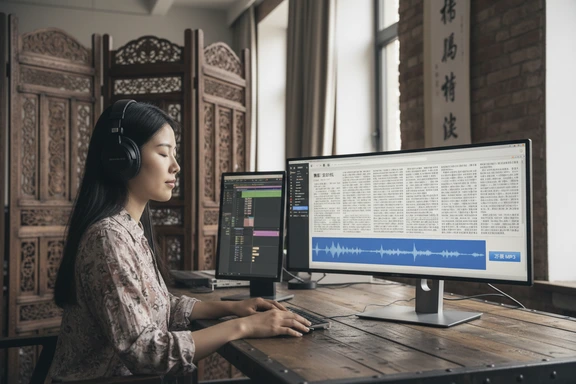
Shandong & Hebei Regional Media
Voice regional TV and radio across Jinan, Qingdao, Shijiazhuang and the Bohai port cities. A local cadence — softer retroflex, reduced erhua, a downward-falling first tone — reaches North China Plain listeners in a register the capital delivery cannot fake.
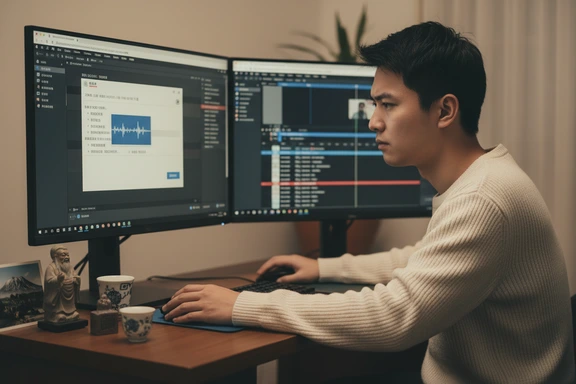
Northern Chinese E-Commerce
Record Douyin and Taobao livestream voiceover for Yantai cherries, Dezhou roast chicken, Zhangqiu scallions and Baiyangdian crab. The North China register sells regional produce to buyers who trust a seller who sounds like home.
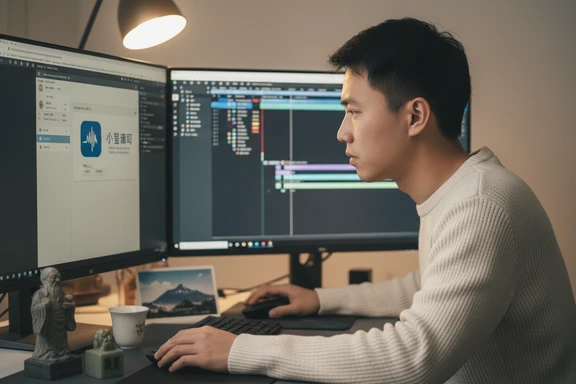
Xiangsheng & Comedy Stage
Xiangsheng 相声 — the Bohai-coast crosstalk tradition with its downward-falling first tone — is the vocal signature of Northern comedy. Draft punchlines, voice sketches for short video, or prototype animated characters with a speaker who already carries that sing-song cadence.
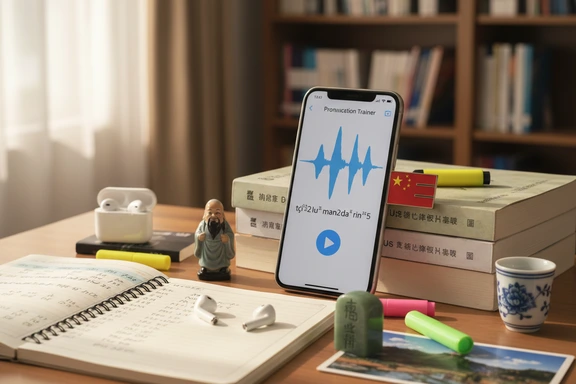
Dialect Learning & Pronunciation
Study a distinctive Northern Mandarin sub-variant — reduced erhua, softer retroflex, distinct tone contours, and the regional vocabulary of the North China Plain. Train listening with the 4 native speakers, then flip each line against standard 普通话 to bridge the registers.
Jilu Mandarin TTS — How It Works
Three steps to generate a 冀鲁官话 reading online. No software, no signup.
Paste or type your text
Up to 1,000,000 Simplified Chinese characters. Numbers, punctuation and Pinyin annotations all read correctly.
Choose a voice
Pick Xiaobei or Xiaoni (female), Yundeng or Yunxiang (male). Adjust speed and pitch to taste.
Listen & download free
Convert, preview, export MP3, WAV or FLAC. First 1,000 characters free.
Frequently Asked Questions — 冀鲁官话 TTS
No. 冀鲁官话 is a Northern Mandarin sub-variant covering Hebei province, most of Shandong and the city of Tianjin — roughly 70–80 million speakers. Putonghua is the national standard built on Beijing phonology. Jilu speakers write identical Simplified script, but the spoken register has lighter erhua, softer retroflex, and distinct tone contours that mark it apart from the capital.
Chinese linguists group 冀鲁官话 into three clusters: Baotang, Shiji and Cangzhou-Huimin, each stretching across a different stretch of the North China Plain. They share reduced erhua and softened sibilants; the differences are mostly tonal contour and a handful of vocabulary items — 地瓜 for sweet potato is a classic Northern marker.
Tianjin 天津话 is a famous member of the Baotang cluster — the 冀鲁官话 sub-group spoken around the Bohai port city. Its signature sing-song melody, with the first tone falling instead of staying level, is the vocal fingerprint of xiangsheng 相声 crosstalk. Xiaobei and Yunxiang carry that rhythm in their delivery; Yundeng reads with a steadier broadcast register closer to Jinan and Shijiazhuang.
This is a reader, not a dialect converter. Paste Simplified Chinese and the 4 native speakers read it with the local cadence — reduced erhua, softer retroflex, distinct tone contours. The engine does not rewrite a Beijing script into Shandong slang; it reads what you type, in the Northern register.
Four native speakers: Xiaobei and Xiaoni (female), Yundeng and Yunxiang (male) — all Neural PRO tier. Free MP3 download, no signup, no watermark. Paste your text, pick a speaker, export. WAV, FLAC and OGG are also available. First 1,000 characters are free.
Pick Xiaobei, Xiaoni, Yundeng or Yunxiang and export the reading in seconds. Need another Sinitic variant? Visit the main Chinese page.