Shanghainese TTS — Wu Chinese Simplified AI Voice
Shanghainese text to speech — Wu Chinese native render via Xiaoxiao Dialects, free MP3.
The Wu Branch of Sinitic — Rendered via a Multi-Dialect Neural Model
Shanghainese (上海话) is the most widely spoken variety of Wu Chinese (吴语) — a separate Sinitic language with roughly 80 million speakers across the lower Yangtze. Unlike Mandarin, the branch preserves voiced obstruents lost a thousand years ago, runs an 8-tone system (Mandarin has four), still pronounces Middle Chinese entering-tone (入声) finals such as veq (勿, "not"), and uses a distinct lexicon — nong (侬, you), ala (阿拉, we), lao (老, very).
Native-level rendering is available today. This shanghainese text to speech page routes the reading through Xiaoxiao Dialects — Azure's multi-dialect neural model that renders Wu/Shanghainese (wuu-SH) alongside several mainland varieties through one voice. It is the closest thing to a native-dedicated dialect release on the platform, and two zh-CN male neural speakers (Yunxi, Yunjian) join the gallery to supply masculine register when a scene needs it. For the full Mandarin catalogue see our Chinese Text to Speech page.
- Xiaoxiao Dialects — multi-dialect neural model covering Wu
- Reads Simplified Chinese 简体字 with local vocabulary
- Covers Jiangnan — Yangtze Delta — cultural content
- Download MP3, WAV, FLAC, OGG
- Free — 1,000 characters, no signup
Voices for Yangtze Delta Content — Multi-Dialect Neural Model
Xiaoxiao Dialects leads · 2 zh-CN male voices for gender diversity
Xiaoxiao Dialects is a single multi-dialect neural voice; the model renders Wu/Shanghainese alongside mainland varieties through SSML locale tagging. Yunxi and Yunjian are zh-CN male neural speakers added so scripts that call for a masculine register are not forced into a female voice. Paste Simplified Chinese text (including local vocabulary like 侬, 阿拉, 勿, 老) and the engine reads it. For the Mandarin catalogue visit the Chinese Text to Speech page.
Wu Chinese vs Mandarin — Pronunciation & Vocabulary
Six local words side-by-side with their Mandarin counterparts. Dialect rows route through Xiaoxiao Dialects; Mandarin rows route through a standard zh-CN speaker for direct comparison.
What Makes the Dialect Sound Different from Mandarin
- Voiced obstruents — this is the only major Sinitic branch that still distinguishes voiced /b d g z/ from voiceless /p t k s/. Mandarin, Cantonese and Min all merged these a thousand years ago; the three-way /b–p–pʰ/ contrast is the branch's signature phonological moat.
- Eight tones — the system runs 7-to-8 tones depending on syllable type (yin/yang split across level, rising, departing and entering categories) versus Mandarin's four. Tone sandhi chains across whole phrases, not just pairs.
- Middle Chinese entering tone — checked finals ending in /ʔ/ (入声) survive: 勿 veq, 白相 beq sian, 十 zeq. Mandarin redistributed entering-tone syllables into its four open-ending tones centuries ago.
- Distinct pronouns and vocabulary — 侬 (you), 阿拉 (we), 老 (very), 勿 (not), 白相 (play), 小菜 with reduced vowels. These lexical swaps, not just accent, separate a native reading from a Mandarin one.
Writing Conventions for the Yangtze Delta
Four formatting rules that shape how any reader — native-model or supporting voice — renders Simplified Chinese text from this region:
Script
简体字 — Simplified Hanzi, mainland standard. There is no widely-used dialect-only orthography; most content is written with standard characters plus a handful of region-specific ones: 侬, 阿拉, 勿, 老, 白相. Traditional forms appear only in heritage contexts.
Currency
¥15,250 / 人民币 — renminbi (RMB / CNY), same across the entire Yangtze Delta and mainland Jiangsu and Zhejiang. The region is a mainland financial hub; HK$ and NT$ do not appear in local content.
Numbers & Dates
2026年4月22日 — YYYY年MM月DD日 mainland order. Digits read as Mandarin numerals (一二三) in formal copy, Arabic digits in casual text. A dialect reading via Xiaoxiao Dialects preserves distinct tones and checked finals where the input script signals it.
Regional Coverage
Suzhou · Hangzhou · Ningbo · Wuxi — the Jiangnan core of Jiangsu and Zhejiang. Sub-varieties share 70–85% mutual intelligibility; Xiaoxiao Dialects serves the dialect broadly across the cluster. For Suzhou or Hangzhou sub-variants as dedicated models, let us know.
What Can You Do with Simplified Chinese Audio for the Yangtze Delta?
Business & Media in the Delta
Voice copy for Pudong finance, Hongqiao trade and Lujiazui FinTech — corporate video, investor decks, product explainers. Yunxi or Yunjian deliver Standard Mandarin for broad reach; Xiaoxiao Dialects layers a local-register female delivery when a piece targets a heritage audience.

Yangtze Delta Culture
Audio guides for Suzhou classical gardens, Hangzhou West Lake, Ningbo harbour and the Jiangnan literary circuit. Xiaoxiao Dialects lends a local-register delivery to heritage stops; a male zh-CN voice keeps business hubs readable for the broader domestic tourist.
Literature & Kunqu Opera
Read passages from Eileen Chang, Jin Yucheng's Blossoms, Suzhou pingtan and kunqu librettos. Route the dialect lines through Xiaoxiao Dialects for a local-register female delivery; keep narrator/stage-direction framing in a male zh-CN voice to preserve the study-versus-performance contrast.
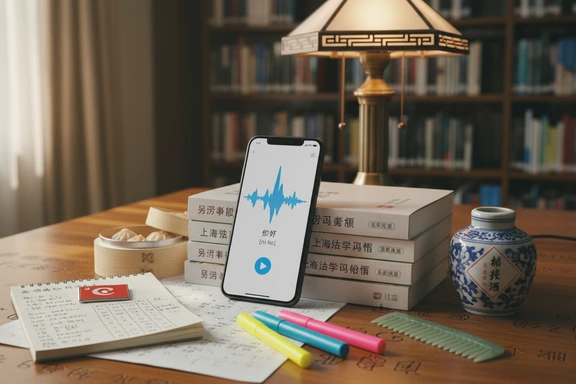
Language Preservation & Learning
For heritage speakers and language-learners studying a variant UNESCO lists as vulnerable, capture readings of region-specific characters — 侬, 阿拉, 勿, 老, 白相 — through Xiaoxiao Dialects for flashcards today. Loop the audio alongside romanisation charts and share decks with family overseas. Try it free on speechgen dot io — first one thousand characters, no signup.
Shanghainese Text to Speech — How It Works
Three steps to generate a Simplified Chinese reading online. No software, no signup.
Paste or type Simplified Chinese
Up to 1,000,000 characters. Include region-specific words — 侬好, 阿拉, 老好, 勿 — exactly as you'd write them.
Pick Xiaoxiao Dialects or a male speaker
Xiaoxiao Dialects handles the dialect natively; Yunxi or Yunjian cover the male zh-CN register.
Listen & download free
Convert, preview, export MP3, WAV or FLAC. First 1,000 characters free.
Frequently Asked Questions — Wu Chinese & Multi-Dialect Voices
Linguists classify the Wu branch (吴语) as a separate Sinitic language, not a Mandarin dialect. Shanghainese is the most widely spoken variety. It preserves voiced obstruents giving a three-way /b–p–pʰ/ contrast, 7–8 tones versus Mandarin's 4, and Middle Chinese entering-tone (入声) final stops. It also differs from Cantonese, which belongs to a separate Yue family with 6 tones and a different lexicon. For Mandarin readings, use our Chinese Text to Speech page.
Yes — through Xiaoxiao Dialects, Azure's multi-dialect neural voice that renders Wu/Shanghainese (wuu-SH) alongside Mandarin. Male voice diversity is supplemented by zh-CN neural speakers (Yunxi, Yunjian). If you need additional dedicated Wu models (like Suzhou or Hangzhou sub-variants), let us know.
The voice is trained on a broad regional register rather than one city's speech. All five Yangtze Delta cities — 上海, Suzhou 苏州, Hangzhou 杭州, Ningbo 宁波 and Wuxi 无锡 — share 70–85% mutual intelligibility, so the rendering reads reasonably across the whole Jiangnan cluster. For a city-tight sub-variant (Suzhou pingtan-style, Hangzhou register), get in touch about a dedicated model.
There is no widely-used dialect-only orthography. Most content is written in Simplified Chinese (简体字) using standard characters plus a handful of region-specific ones: 侬 (you), 阿拉 (we), 勿 (not), 老 (very), 白相 (to hang out). Paste Simplified text and include those words where appropriate — Xiaoxiao Dialects renders them with local phonology through its multi-dialect model.
No — the tool reads what you write, it does not translate. Paste Mandarin, English or region-specific characters and you receive an audio file that reads your exact input. For authentic output, include local words directly (e.g. 侬好 instead of 你好, 阿拉 instead of 我们) and route through Xiaoxiao Dialects for a local-register delivery.
Pick Xiaoxiao Dialects or a male zh-CN speaker and export the reading in seconds. Need Standard Mandarin? Visit the Chinese Text to Speech page.