New Zealand Accent Generator
Type any text and hear a real New Zealand voice — 3 Neural speakers, free MP3.
3 Neural Voices — NZ Vowel Shift, Centralised KIT & Non-Rhotic R
Type any English text and hear it spoken in a real New Zealand voice. Mitchell, Aria and Molly reproduce the natural Kiwi vowel shift, the centralised KIT sound and that relaxed Pacific cadence familiar from rugby broadcasts and Wellington coffee-shop chatter. Use the result for voiceover work, accent coaching, audiobook narration or simply to check how a phrase sounds before recording it yourself.
The three speakers cover male and female registers at the Neural PRO tier, so every reading captures the non-rhotic /r/, the lifted DRESS vowel and the trademark NEAR-SQUARE merger that sets Kiwi English apart from its Australian neighbour. Adjust speed from 0.5x to 2.0x and pitch up or down to match your project, then download the audio file and drop it straight into Premiere, DaVinci or any editor. First 1,000 characters are free — no account, no watermark.
- 3 native en-NZ AI voices — all Neural PRO
- NZ vowel shift + KIT centralisation
- Adjustable speed 0.5x–2.0x & pitch
- Download MP3, WAV, FLAC, OGG
- Free — 1,000 chars, no signup
New Zealand English Speaker — Voice Samples
Click to preview · 3 New Zealand voices total
These are all 3 New Zealand English speakers. Browse more accents on the voices page — filter by en-NZ.
New Zealand Vowel Shift & Pronunciation — What's Different
New Zealand and Australian English share a Pacific heritage but sound distinctly different. Click play to compare the same word side by side.
What Makes New Zealand English Sound Unique
- NZ Vowel Shift — a chain shift where the KIT vowel centralises toward schwa, DRESS rises to /ɪ/, and TRAP lifts to /e/. This is the single most distinctive phonetic marker of Kiwi speech.
- Centralised KIT Vowel — words like fish and chips sound closer to "fush" and "chups" to an outside ear. Not a caricature — a genuine vowel position shared across Auckland, Wellington and Christchurch.
- NEAR-SQUARE Merger — near and square collapse into one vowel, especially among younger speakers. Beer rhymes with bear, ear with air.
- Non-Rhotic R — like most Commonwealth varieties, the R after a vowel is silent. "Car" = /kaː/, "water" = /ˈwɔːtə/. This separates Kiwi English from American and Canadian rhotic speech.
New Zealand English — Formatting & Conventions
Small details in your source text change the way it reads aloud. Four conventions worth knowing when feeding text to a Kiwi voice:
Numbers
"one point five metres" — New Zealand uses the metric system. Distances, weights and temperatures all follow SI units. Insert and after hundreds: 1,020 reads as "one thousand and twenty".
Currency
$12.50 NZD — "twelve dollars fifty". The New Zealand dollar is informally called "the Kiwi" on currency markets. Use the $ symbol and the voice reads it correctly; add NZD if the context mixes currencies.
Dates & Time
7 April 2026 — day-first format (DD/MM/YYYY). Government documents follow ISO 8601. The voice reads "the seventh of April" when you write it day-first, keeping the natural Kiwi date flow.
Spelling
colour, honour, centre, organise — British spelling throughout. No American "-ize" or "-or" forms. Metre not meter, programme not program. The spelling you type affects subtle vowel length in the output.
Where Creators Use New Zealand Voices

Content Creation & Voiceover
Add a warm Kiwi voice over to travel vlogs, nature documentaries and South Pacific adventure channels. Mitchell delivers a grounded, trustworthy read that fits everything from a Tongariro Crossing hike recap to a Queenstown food guide. Export the audio file and drop it into any video editor.
Character Voices & Gaming
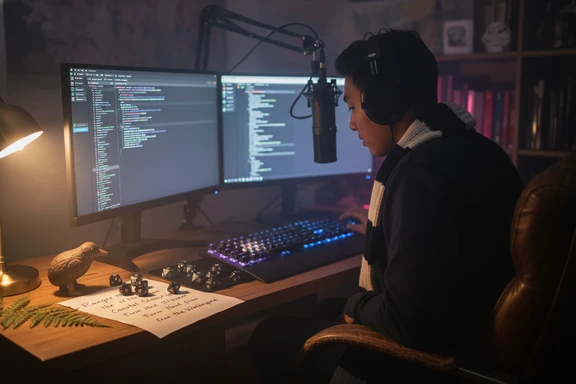
Cast a grounded ranger, a coastal skipper or a Wairarapa farm hand in indie games, animation and tabletop sessions. A Kiwi accent gives characters a Pacific flavour without slipping into a British or Australian register — useful for studios that want a Middle-earth tone rooted in real speech.
Accent Training & Pronunciation Practice
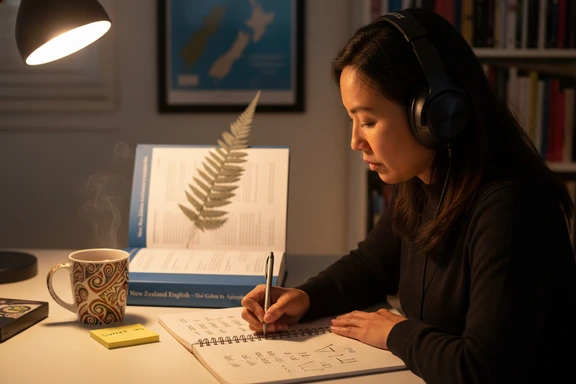
Actors preparing for Kiwi roles and dialect coaches studying the vowel shift can type any phrase and hear it at adjustable speed. Slow playback to 0.75x to isolate the centralised KIT sound, then speed up once you match the cadence. Handy for audition tapes and accent reels.

Audiobooks & Narration
Turn manuscripts into audio with a natural Kiwi narrator. The warm Pacific register suits New Zealand fiction — Eleanor Catton, Witi Ihimaera, Janet Frame — and nature writing about the Southern Alps or coastal bush. Assign Mitchell or Molly to different chapters for tonal variety in longer works.
How the Accent Converter Works — 3 Steps
Three steps to convert any English text into Kiwi-accented audio online. No software, no signup.
Paste or type your text
Type directly or paste up to 1,000,000 characters. Upload DOCX, PDF, or SRT files. Try this Kiwi sample: "Sweet as, bro. Heading down to the dairy for some fish and chips, then over to the bach for the weekend."
Pick Mitchell, Aria or Molly
All three are Neural PRO speakers with native en-NZ pronunciation. Filter by en-NZ in the voice selector, then adjust speed and pitch to fine-tune the reading for your project.
Listen & download free
Click Convert to Speech, preview the result, and download as MP3, WAV, or FLAC. First 1,000 characters free — no account needed. No watermark on any plan.
Frequently Asked Questions
The most recognisable feature is the NZ vowel shift: short vowels rotate so that KIT centralises toward schwa, DRESS rises and TRAP lifts. In practice, "fish and chips" sounds closer to "fush and chups" to an outside ear. Add non-rhotic R (no pronounced /r/ after a vowel), the NEAR-SQUARE merger and a relaxed, evenly-paced cadence, and you have the core Kiwi sound. Click any play button in the pronunciation table above to hear these differences side by side with Australian English.
Start by centralising your KIT vowel: say "fish" with your tongue in a more neutral, relaxed position instead of a crisp /ɪ/. Next, raise your DRESS vowel so "bed" sounds closer to "bid". Drop the R after vowels — "car" becomes /kaː/. Finally, keep an even, unhurried rhythm without the rising terminal intonation that characterises Australian speech. The text to speech reader on this page lets you type any sentence and hear all of these features applied automatically.
Both are non-rhotic and share broad A, but the vowels move in opposite directions. In New Zealand English the KIT vowel centralises (fish → /fəʃ/) while in Australian it stays front (/fɪʃ/). Australians raise their TRAP vowel more than Kiwis, and Australian intonation rises at the end of statements (uptalk), whereas Kiwi speech stays flatter. The NEAR-SQUARE merger — where "beer" and "bear" sound the same — is strong in NZ but rare in mainstream Australian speech.
A systematic chain shift in short front vowels that defines Kiwi English phonology. KIT moves to a central position (→ /ə/), DRESS rises to occupy the old KIT slot (→ /ɪ/), and TRAP lifts to fill the old DRESS slot (→ /e/). Linguists often illustrate it with the phrase "fish and chips": the "i" in fish is centralised, the "e" in deck is raised, and the "a" in bad is fronted and lifted. This shift is found across the entire country and across all age groups, though it is most pronounced among younger speakers.
Te Reo Māori is a separate Polynesian language with its own phonological system — it is not an accent of English. This page covers New Zealand English only. SpeechGen does not currently offer a dedicated Te Reo Māori text to speech voice. If you need Māori loanwords pronounced correctly within an English sentence, type them as you would normally — the NZ English voices handle common borrowings like kia ora, whānau, and aroha reasonably well.