American Accent Generator
70+ American English AI voices — General American, rhotic R, TOEFL prep.
70+ AI Voices — General American with Rhotic R & Flapped T
General American is the broadcast standard heard from Midwest news desks to Hollywood — SpeechGen voices it for ESL learners drilling TOEFL listening, voice actors auditioning for US roles, and creators who need the rhotic /r/, the flat /æ/ in can't and bath, and the flapped /ɾ/ in water and butter. This American TTS engine handles everyday spelling, broadcast scripts, and dialogue without manual phonetic markup. Pick a speaker like Andrew (PRO Neural, male) or Amber (PRO Neural, female) and download your MP3 in seconds.
The catalogue covers General American — the Midwest-to-coast pronunciation pattern used across US broadcast, Hollywood, and most of the country. Useful for YouTube voice-over, audiobook narration, TOEFL and TOEIC exam prep, indie-game character work, and anyone who needs a reliable US accent online. First 1,000 characters free — no account, no watermark.
- 70+ native voices — Standard, PRO, HD
- General American — rhotic, flapped T, flat A
- Adjustable speed & pitch
- Download MP3, WAV, FLAC, OGG
- Free — 1,000 chars, no signup
American Accent Speaker — Voice Samples
Click to preview · 70+ native voices total
These are 4 featured speakers. Browse all 70+ on the voices page — filter by en-US.
Voice Styles — 6 Emotional Registers
Select PRO Neural voices unlock emotional styles on top of the default neutral register. Same sentence, same speaker — Davis, an American male PRO Neural voice — reads the line below in six different moods. Davis ships with eleven styles total; here are the six most useful.
All six samples above read the same sentence: "Everything has changed in a single day." Davis ships with 11 styles total (the six above plus chat, hopeful, shouting, terrified, unfriendly); Avery adds professional-narration and newscast variants on top; Jenny, Guy, Nancy, Sara, Jason, and Tony all support the full 10-style emotion palette. The remaining 170+ US voices read in their default neutral register.
American vs British Pronunciation — Hear the Difference
The same word sounds completely different depending on accent. Click play to compare American and British side by side.
What Makes American English Sound Unique
- Rhotic R — the R after a vowel is always pronounced. Water is /ˈwɑːtɚ/, car is /kɑːr/, hurt uses the r-colored vowel /ɝ/. This is the single biggest marker of a US accent compared to Received Pronunciation.
- Flat A vowel — can't, dance, bath use the short flat /æ/ instead of the British broad /ɑː/. "Can't" rhymes with "ant", and the difference is audible within the first word of most sentences.
- Flapped T — between vowels, the American T softens to a voiced flap /ɾ/. Water, butter, better, matter all come out closer to a D, giving US speech its relaxed rhythm. The neural voices reproduce this allophone automatically based on context.
US English — Formatting & Conventions
Small details in how you format the source text change how it comes out aloud. Four US conventions worth knowing:
Numbers
0.5 → "zero point five" (UK: "nought point five"). And US readings drop the and after hundreds: 1,020 is "one thousand twenty", not "one thousand and twenty". Past participles differ too — gotten is standard US where UK uses got.
Currency
$4.99 → "four ninety-nine" or "four dollars ninety-nine". The dollar sign sits before the number, and it reads as "dollars" automatically. Cents as a standalone unit: 25¢ → "twenty-five cents".
Dates
01/15/2026 — US format is MM/DD/YYYY (the opposite of the UK day-first). For clarity, write it out: January fifteenth, 2026. 12-hour clock with AM/PM is the default: 2:30 PM → "two thirty PM".
Spelling Differences
color, analyze, center, program, check — use US spellings with US voices. Writing "colour" or "programme" in a script meant for a US voice can nudge subtle vowel-length shifts, so keep your source text consistent with the selected accent.
What Can You Do with a US Voice Generator?
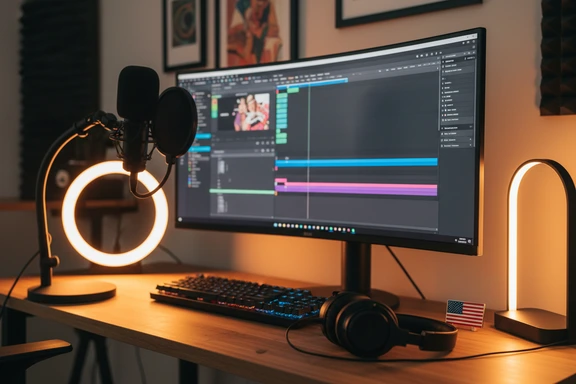
Content Creation & Voiceover
Add a US voice to YouTube videos, podcasts, and social-media reels. The Midwest-broadcast accent is the global default for online content — familiar to audiences everywhere without any regional friction. Export as MP3 and drop into Premiere, DaVinci, CapCut, or any editor with no watermark.

Audiobooks & Narration
Turn manuscripts into audiobooks with a natural narrator. Warm voices work for memoir and self-help, while sharper deliveries suit thrillers from Grisham to Patterson. Use Dialog Mode to assign distinct speakers to characters and dialogue for a full-cast production feel — an easy way to bring a novel to life before recording with human narrators.
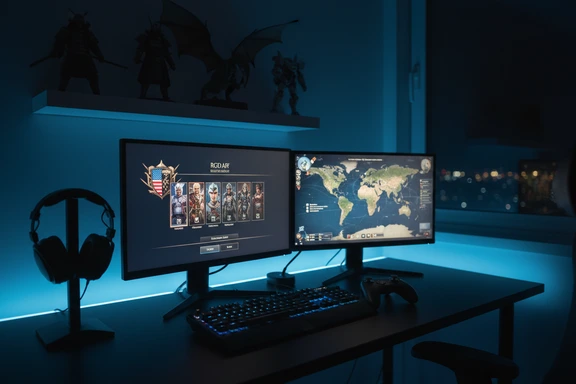
Character Voices & Gaming
Cast US characters in indie games, animation, and tabletop sessions. A Brooklyn tough guy, a California surfer, a Southern gentleman, a Valley Girl — adjust pitch and speed to shape each role. Good enough for pre-vis scratch tracks, but also for final production audio in small-studio releases.
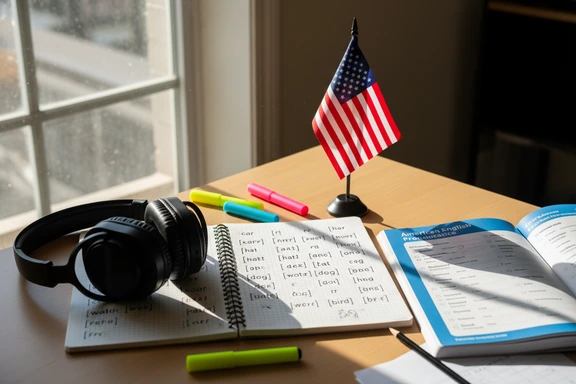
Language Learning & Exam Prep
Train your ear for the real thing — the rhotic R, the flat A, the flapped T between vowels. Useful for TOEFL and TOEIC listening practice: slow playback to 0.75× to catch every vowel, then ramp it back up once you follow along comfortably. Also works for shadowing drills — repeat each sentence out loud to match the rhythm.
US Accent — How It Works
Three steps to generate US accent audio online. No software, no signup.
Paste or type your text
Type directly or paste up to 1,000,000 characters. Upload DOCX, PDF, or SRT files. Works with any English text — scripts, articles, dialogue, study notes.
Choose a voice
Pick from 70+ native speakers. Filter by gender and quality tier (Standard, PRO Neural, HD). Filter by en-US to narrow down, then adjust speed and pitch to fine-tune the reading.
Listen & download free
Click Convert to Speech, preview the result, and download as MP3, WAV, or FLAC. First 1,000 characters free — no account needed. No watermark on any plan.
Frequently Asked Questions
Yes. The first 1,000 characters are free with no account, no card, no watermark — just paste, generate, and download. Create a free account and you get an additional 3,000 characters a day for seven days. Paid plans raise monthly limits and unlock extras (longer scripts, bulk export, API), but the commercial licence is included in every tier including the free one.
US voices are rhotic — the R after a vowel is always pronounced, so "water" comes out /ˈwɑːtɚ/ and "car" as /kɑːr/. They also use the flat /æ/ in can't and bath, and the T between vowels flaps to a /ɾ/ (so "butter" sounds closer to "budder"). British readings are non-rhotic, use a broad /ɑː/, and keep the T crisp. Pick en-US for American readings and en-GB for British — the phonology engine applies the right rules automatically.
Yes — everything runs in your browser. Paste text, pick a voice like Andrew or Amber, click Convert to Speech, download the MP3. No plugin, no software install, no account for the first 1,000 characters. Works the same on desktop and mobile.
70+ speakers across three quality tiers: Standard (baseline), PRO Neural (warmer, more natural delivery), and HD (studio-grade, best for audiobook and commercial work). The roster covers male and female voices and ranges from formal news-reader clarity through everyday conversational tones. Speed from 0.5× to 2.0× and pitch from −20 to +20 are adjustable on every voice, so you can shape any speaker to match your script.
Yes — the neural voices closely match the pronunciation used in standardised English proficiency exams. Generate sample reading passages or dialogue at 0.75× speed first to catch every vowel, then ramp back to 1.0× once you follow along comfortably. Also useful for shadowing drills: repeat each sentence aloud to match the rhythm and flap, and use the sample text as an oral drill for the speaking section.