Saudi Arabic Text to Speech
2 Saudi Arabic AI voices — Riyadh & Hejaz cadence. Free MP3.
Saudi Arabic TTS — 2 ar-SA Voices, Najdi & Hejazi Cadence
This saudi arabic text to speech page reads your script in a central Kingdom register heard from Riyadh to Jeddah — اللهجة السعودية that Gulf listeners recognise immediately. Two native ar-SA neural speakers, Hamed (male) and Zariyah (female), hold the preserved /q/ and the Najdi–Hejazi cadence broadcasters trust. Paste, pick a speaker, export a free MP3.
Writers reach for this saudi ai voice when a neutral الفصحى reading feels too formal for Gulf ears. Feed it "وش تبغى؟" or "أبغى قهوة" and the saudi voice over ai stays inside the Kingdom's soundscape. The same page also handles a common request — taking Egyptian-colloquial text and delivering it in a Riyadh reading without any rewrite of the source. For الفصحى or other Gulf, Levantine or Maghrebi variants see the main Arabic page.
- 2 native ar-SA speakers — Neural tier
- Najdi & Hejazi cadence — Gulf arabic standard
- Preserved /q/ for قاف, Kingdom vocabulary
- Download MP3, WAV, FLAC, OGG
- Free — 1,000 characters, no signup
Saudi Voices — Najdi & Hejazi Speakers
Click to preview · 2 native ar-SA speakers in the catalogue
Two ar-SA natives — Hamed (Najdi-leaning) and Zariyah (Hejazi-friendly). For الفصحى or Egyptian/Levantine/Maghrebi variants see the main Arabic page.
Saudi Arabic vs الفصحى (MSA) — Pronunciation Comparison
Same word, two readings. Hear how the saudi pronunciation reshapes familiar sounds against the Modern Standard Arabic baseline.
What Makes Saudi Arabic Sound Unique
- Preserved /q/ for قاف — unlike Egyptian or Levantine readings, Najdi speakers keep the uvular /q/ in قال and قهوة. Rural Bedouin speech even turns it into a hard /g/. First marker that tells listeners "this is khaleeji".
- Najdi vs Hejazi split — Riyadh leans on Najdi (وش, أبغى, /eː/ monophthongs). Mecca, Medina and Jeddah carry the softer Hejazi register (ايش, urban intonation). Both understood Kingdom-wide and across the Gulf.
- Proximity to Quranic Arabic — Kingdom phonology keeps classical consonants intact, which is why saudi pronunciation works for recitation-adjacent content, Hajj guides, and formal public information in the Two Holy Cities.
Saudi Conventions — Riyal, Date Format & Number Style
Local formatting rules shift how the same numbers read aloud. Four Saudi conventions worth feeding the voice correctly:
Numbers
٢٬٥٠٠٬٠٠٠ — Arabic-Indic digits appear in official print and Quranic contexts; Latin "2,500,000" reads fine in modern digital copy and Vision 2030 decks.
Currency
٥٠٠ ر.س — the Saudi riyal (SAR). Symbols ر.س and SAR are both standard; the voice reads the amount and the unit naturally.
Dates
١٥/٤/٢٠٢٦ م — day-first Gregorian, often paired with Hijri: "٢٧ شوال ١٤٤٧ هـ". Both calendars are common in Kingdom copy.
Time
٣:٣٠ مساءً — 12-hour clock with صباحاً / مساءً. Prayer-time schedules lean on 24-hour plus الأذان timing callouts.
What Can You Do with a Saudi AI Voice?
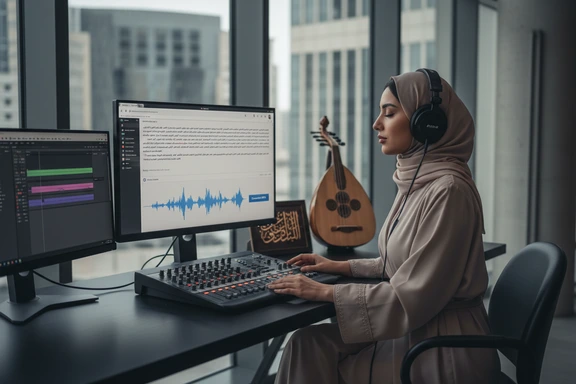
Saudi Marketing & Vision 2030
Voice campaigns for Kingdom brands, Vision 2030 initiatives and giga-projects like NEOM and The Line. A saudi ai voice from Riyadh to Jeddah reaches khaleeji listeners in a way الفصحى cannot.
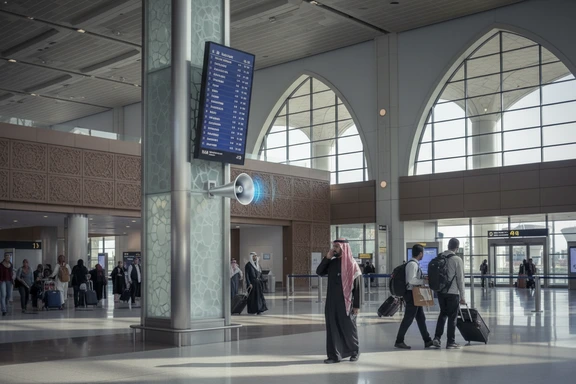
Pilgrimage & Visitor Audio
Hajj and Umrah guides, Mecca and Medina visitor information, Saudi airport announcements that pilgrims worldwide follow. Central Kingdom register — clear, respectful, appropriate for the Two Holy Cities.
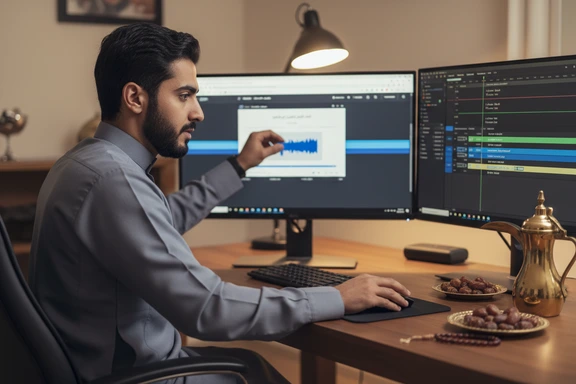
Saudi Content Creation
Produce YouTube, TikTok and podcast content in authentic Saudi Arabic. The native dialect reaches Saudi audiences and the wider Gulf — UAE, Kuwait, Qatar, Bahrain — without الفصحى stiffness that online listeners scroll past.
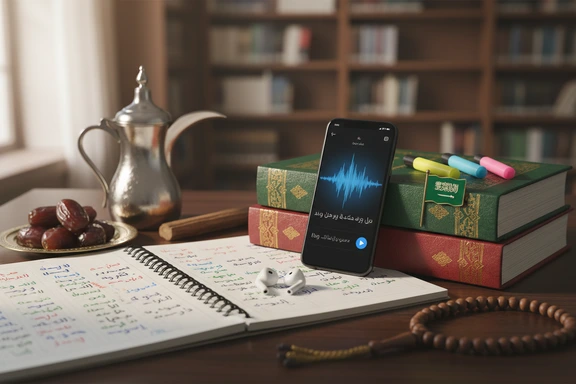
Saudi Arabic Learning
Practice Najdi and Hejazi distinctions — preserved /q/, dialect verbs like أبغى, interrogatives وش and ايش, Gulf vocabulary like عيال. Compare each line with the MSA reading to train both your khaleeji ear and your الفصحى ear.
Saudi Arabic TTS — How It Works
Three steps to generate a Kingdom reading online. No software, no signup.
Paste or type your text
Paste up to 1,000,000 characters. Najdi lines like "وش تبغى؟" and Hejazi lines like "ايش رأيك؟" read naturally.
Choose a voice
Pick Hamed (male) or Zariyah (female) — the two ar-SA Neural speakers. Adjust speed and pitch to taste.
Listen & download free
Convert, preview, export MP3, WAV or FLAC. First 1,000 characters free, no account needed.
Frequently Asked Questions — Saudi Arabic TTS
Saudi Arabic is the spoken register of the Kingdom — Najdi around Riyadh, Hejazi around Mecca, Medina and Jeddah. It preserves /q/ in قال (qaal), uses Najdi وش and Hejazi ايش, swaps أريد for أبغى, and uses Gulf vocabulary such as عيال. MSA (الفصحى) is the formal written register of news, legal writing and Quranic recitation. Both voices handle MSA cleanly and shift to saudi accent copy when you feed Kingdom dialect text.
Hamed and Zariyah both use a central Kingdom register understood from Riyadh to Jeddah and across the Gulf. Write Najdi vocabulary (وش, أبغى) for Riyadh flavour, Hejazi phrasing (ايش, urban Mecca/Medina lines) for the west coast. The dialect signal lives in your script, not in a voice toggle.
Yes. Saudi Arabic suits Hajj and Umrah guides, Mecca and Medina visitor information, Jeddah airport announcements and pilgrim-facing apps. The central Kingdom register is understood by Arabic-speaking pilgrims worldwide, and the preserved /q/ keeps phonology close to Quranic Arabic.
Two ar-SA Neural voices in the catalogue: Hamed (male, Najdi-leaning) and Zariyah (female, Hejazi-friendly). For الفصحى, Egyptian, Levantine or Maghrebi variants see our main Arabic page or browse the full voices catalogue.
Yes. Free MP3 download — no signup, no watermark. Paste your text, pick Hamed or Zariyah, preview, and export. MP3, WAV, FLAC and OGG formats are available. The first 1,000 characters are free on every visit.
Pick Hamed or Zariyah and export a Kingdom reading in seconds. Need another arabic dialect? Visit the main Arabic page.