Libyan Arabic Text to Speech — Maghrebi AI Voice
2 Libyan Arabic AI voices — Tripoli Maghrebi accent. Free MP3, no signup.
Libyan Arabic — Maghrebi Voice from Tripoli to Benghazi
This Libyan Arabic text to speech page turns any script into an authentic ليبي reading — the coastal register heard from طرابلس (Tripoli) east to Benghazi, Misurata and Sabha. Two native ar-LY neural speakers, Iman (female) and Omar (male), read with the Maghrebi cadence, strongly retained qaf and the Italian loanwords that define the accent. Paste, pick a speaker, download a free MP3 — no signup.
The variant sits inside the wider Maghrebi cluster with Tunisian and Algerian neighbours, yet keeps a voice of its own: Italian loanwords (banka, biscotti, machina, tomati) from the early 20th-century colonial period, a Bedouin substrate carried in by the Banu Hilal migration, and the east/west split between Tripolitania and Cyrenaica. For Modern Standard Arabic or other regional voices, see our main Arabic page.
- 2 native ar-LY speakers — Neural tier
- Tripoli & Benghazi register — Maghrebi cadence
- Italian loanwords, retained qaf, Bedouin substrate
- Download MP3, WAV, FLAC, OGG
- Free — 1,000 characters, no signup
Libyan Voices — Iman & Omar from Tripoli
Click to preview · 2 native ar-LY speakers total
Both native ar-LY speakers carry a Tripoli-centred register also heard across broadcast media from the coast down to Sabha. For الفصحى, Egyptian, Gulf, Levantine or other Maghrebi variants visit the main Arabic page.
Libyan Arabic vs MSA (الفصحى) — Pronunciation Comparison
Same meaning, two readings. Hear how the dialect reshapes Arabic against the MSA baseline.
What Makes the Accent Sound Unique
- Italian loanwords — banka (bank), biscotti, machina (car), tomati (tomato) entered daily speech during the colonial period (1911–1943). Italian is heavier here than in the French-leaning Maghrebi neighbours to the west.
- Retained qaf — قلب is read /qalb/, not /ʔalb/ (Cairo) or variable /g/ in some Gulf registers. The Bedouin influence anchors this classical consonant.
- Tripolitania vs Cyrenaica — the western coast (Tripoli, Misurata, Zawiya) leans Maghrebi; the east (Benghazi, Derna, Tobruk) leans Bedouin. The voice models a broadcast-central register bridging both.
- Berber / Amazigh substrate — Nafusa Mountain villages and the Ghadames oasis preserve Tamazight alongside Arabic, feeding vocabulary and place-names into the dialect.
Local Conventions — Dinar, Date Format & Number Style
Local formatting rules shift how the same numbers read aloud. Four ar-LY conventions worth feeding the voice correctly:
Numbers
٢٬٥٠٠٬٠٠٠ — both Latin (2,500,000) and Arabic-Indic digits circulate; Arabic-Indic is more common in print here than among Tunisian or Algerian neighbours.
Currency
15,250 د.ل — the dinar (LYD), divided into 1,000 dirhams. Written "د.ل" or "LD". Older speakers still remember the historical "lira" from the pre-independence era.
Dates
15/04/2026 — day-first DD/MM/YYYY standard. The Hijri calendar appears in religious contexts; Gregorian dominates media and commerce.
Time
14:30 — 24-hour clock standard in official and broadcast contexts; casual speech uses 12-hour with صباح / مساء qualifiers.
What Can You Do with a Libyan AI Voice?
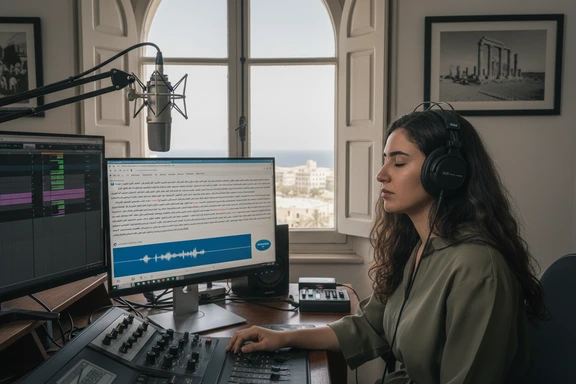
Media & Heritage Narration
Voice narration for cultural heritage — Leptis Magna Roman ruins, the Sabratha amphitheatre, the Tripoli Old Medina. Iman and Omar deliver authentic Tripolitania cadence for documentaries, museum audio guides and educational media.
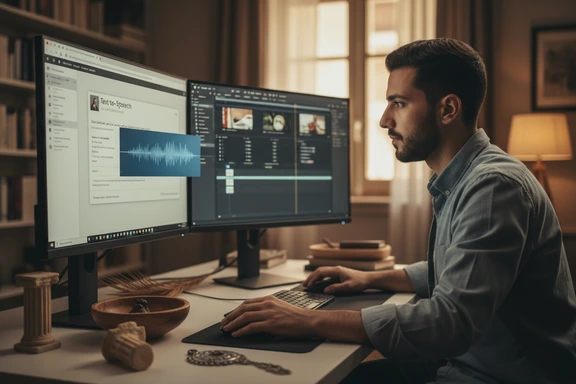
Maghrebi Diaspora Content
Creators across Europe, Turkey and the Gulf produce YouTube, TikTok and podcast content in their native accent. Reach the diaspora with a voice that carries the unmistakable rhythm — retained qaf, Italian loans and Bedouin colour.
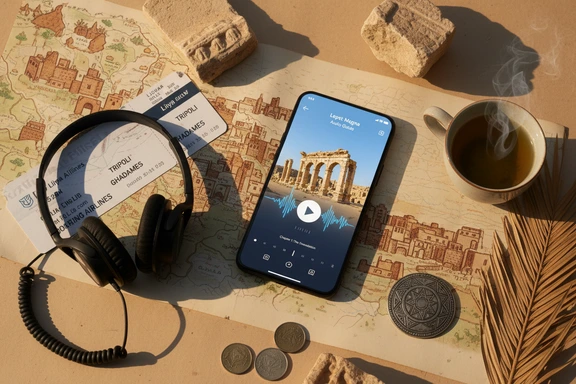
Mediterranean Tourism & Archaeology
Build audio guides for Sabratha, Leptis Magna, Cyrene, the Ghadames oasis and the Nafusa Mountains. The voice gives archaeology and Sahara desert-travel content authentic Maghrebi character — distinct from Tunisian or Egyptian narration.
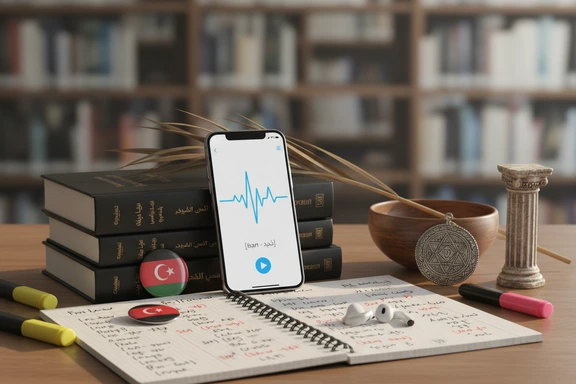
Libyan Arabic Learning
Practice a Maghrebi variant with a Bedouin twist — retained qaf, Italian loanwords, and east/west sub-variants. Compare the dialect with الفصحى to bridge formal and everyday registers, or study the Tripoli–Benghazi contrast.
Libyan Arabic TTS — How It Works
Three steps to generate an ar-LY reading online. No software, no signup.
Paste or type your text
Up to 1,000,000 characters. Mix Arabic script with Italian-origin loanwords — banka, machina, biscotti — and the voice reads them in Tripoli cadence.
Choose a voice
Pick Iman (female) or Omar (male). Adjust speed and pitch.
Listen & download free
Convert, preview, export MP3, WAV or FLAC. First 1,000 characters free.
Frequently Asked Questions — Libyan Arabic TTS
The dialect belongs to the Maghrebi cluster (alongside Tunisian and Algerian neighbours) but keeps features of its own: it strongly retains the classical qaf (قلب = qalb, not 2alb), carries many Italian loanwords from the early-20th-century colonial period (banka, biscotti, machina, tomati), and blends a Bedouin substrate brought by the Banu Hilal migration. The eastern variant around Benghazi/Cyrenaica leans Bedouin; the western variant around Tripoli/Tripolitania leans Maghrebi.
Yes — write naturally with Italian-origin words embedded in your Arabic text (banka, machina, biscotti, tomati). Iman and Omar read them with local cadence rather than a French pronunciation contour — this is the authentic Tripolitania flavour you won't get from an MSA reading.
The ar-LY voices model a central register rooted in Tripolitania (Tripoli, Misurata) — the most broadcast-standard variant. Cyrenaica (Benghazi, Derna) has a slightly more Bedouin colour; the core vocabulary overlaps and the voice remains intelligible for eastern listeners.
Two ar-LY Neural voices: Iman (female) and Omar (male). Both use a Tripoli-centred register also heard across Maghrebi broadcast media, from the coast down to Sabha.
Yes. Free MP3 download — no signup, no watermark. Paste your text, pick Iman or Omar, export. WAV, FLAC and OGG are also available. First 1,000 characters are free.
Pick Iman or Omar and export the reading in seconds. Need another Arabic variant? Visit the main Arabic page.