Syrian Arabic Text to Speech — Shami AI Voice
2 Syrian Arabic AI voices — Damascene Shami accent. Free MP3, no signup.
Damascene Shami — Urban Register of Damascus & Aleppo
This Syrian Arabic text to speech page turns any script into an authentic Damascene reading — the urban Shami (شامي) register heard on the streets of دمشق and across every Levantine-family broadcast from Aleppo to Latakia. Two native ar-SY neural speakers, Amany (female) and Laith (male), read with the slow, emotive cadence that audiences recognise from musalsalat such as Bab Al-Hara. Paste, pick a speaker, download a free MP3 — no signup.
Creators reach for this variant when an MSA reading feels formal to a Damascus ear. Feed the engine a line of كلام سوري — "شلون حالك؟ هلّأ بنحكي هيك" — and the reading stays in the urban pocket: qaf softened to a glottal stop, the long ā leaning toward ē, iconic particles shlon and ktir woven through. For other Arabic variants or الفصحى see the main Arabic page.
- 2 native ar-SY speakers — Neural tier
- Damascene urban register, Aleppan northern variant
- Qaf → glottal stop, strong imaala, Shami particles
- Download MP3, WAV, FLAC, OGG
- Free — 1,000 characters, no signup
Shami Voices — Amany & Laith from Damascus
Click to preview · 2 native ar-SY speakers total
Both native ar-SY speakers — Amany and Laith, each tuned to the central Damascene register also heard on state television and in global musalsalat. For الفصحى, Egyptian, Gulf, Maghrebi or other Levantine-family variants visit the main Arabic page.
Damascene Shami vs MSA (الفصحى) — Pronunciation Comparison
Same meaning, two readings. Hear how the dialect reshapes Arabic against the MSA baseline.
What Makes Syrian Arabic Sound Unique
- Urban qaf → glottal stop — capital speakers drop the /q/ to /ʔ/ ("qalb" → "alb"), a signature of the دمشق register. Aleppo and rural northern speech often preserve /q/, giving the two cities a clear sonic contrast.
- Strong imaala — the long ā leans toward ē/ī in open syllables ("kitaab" → "kteeb"), the most audible Levantine-family vowel shift. MSA keeps the pure ā.
- Iconic Shami particles — شلون (shlon = how), هلّأ (halla2 = now), كتير (ktir = a lot), هيك (hek = like this). These four words land on almost every sentence of كلام سوري and instantly mark the reading as Damascene rather than Cairene or Gulf.
- Musalsalat cadence — the slow, emotive pause-rich rhythm inherited from Syrian television drama (Bab Al-Hara, Al-Hayba, adab al-sham storytelling). Less French code-switching than the Beirut register; more Classical influence in educated speech.
Syrian Conventions — Pound, Date Format & Number Style
Local formatting rules shift how the same numbers read aloud. Four ar-SY conventions worth feeding the voice correctly:
Numbers
٢٠٢٦ / 2026 — Arabic-Indic digits common in print and formal copy; Latin digits dominate digital and youth contexts. Thousands separator: ٬ formal, comma elsewhere.
Currency
15,000 ل.س — the Syrian pound (SYP), written "ل.س" or "SYP". High-inflation context means prices often land in thousands; USD is also widely referenced in post-2011 quotes.
Dates
15/04/2026 — day-first DD/MM/YYYY. Hijri dates (هـ) appear in religious and formal copy. Month names use the Levantine set (كانون الثاني = January).
Time
الساعة ٣ العصر — 12-hour common in speech, 24-hour in broadcast and formal contexts. AM/PM expressed as صباحاً / مساءً.
What Can You Do with a Syrian AI Voice?
Syrian Drama & Audiobook Narration
Voice-over for musalsalat-style fiction, audiobooks and YouTube drama channels. Amany and Laith deliver the slow, emotive Damascene cadence that audiences recognise from Bab Al-Hara and adab al-sham storytelling — ready for Arabic-language podcasts and long-form narration.
Diaspora Content & Community Media
Produce Shami content for the global community across Germany, Turkey, Sweden, the Gulf and Canada. Community radio, humanitarian-facing communications, diaspora YouTube and TikTok channels benefit from a native ar-SY reading that carries the sound of home.
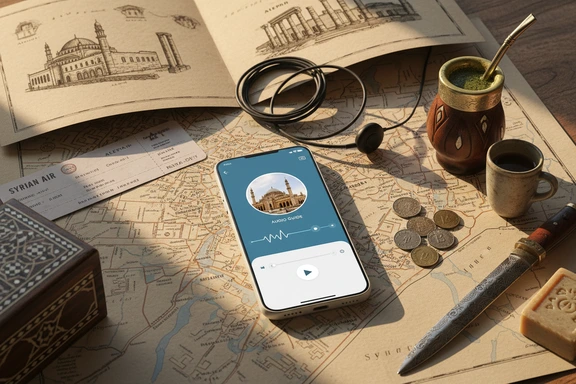
Damascus & Aleppo Heritage Audio
Build audio guides for the Old City of Damascus, the Umayyad Mosque, the Al-Hamidiyah souq and the Aleppo citadel, plus the coast from Latakia to Homs. A native Damascene reading gives heritage and museum apps the gravitas the material deserves.
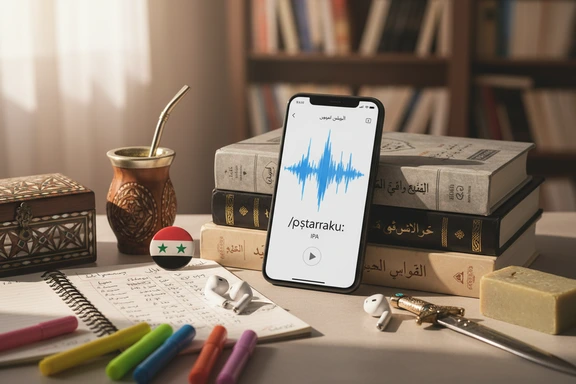
Shami Language Learning
Practice one of the most widely understood Arabic variants — Levantine-family speech travels from Beirut and Amman to Damascus and beyond. Train pronunciation with Amany and Laith, then compare each line with الفصحى to bridge formal and colloquial registers.
Syrian Arabic TTS — How It Works
Three steps to generate an ar-SY reading online. No software, no signup.
Paste or type your text
Up to 1,000,000 characters. Mix Arabic script and Latin "Arabizi" — "shlon 7alak? هلّأ بنحكي" — the speaker handles both.
Choose a voice
Pick Amany (female) or Laith (male). Adjust speed and pitch to match drama, news or learning delivery.
Listen & download free
Convert, preview, export MP3, WAV or FLAC. First 1,000 characters free.
Frequently Asked Questions — Syrian Arabic TTS
Shami (شامي) is a Levantine-family dialect centred on Damascus and Aleppo. Four features define the Damascene urban register: the qaf drops to a glottal stop ("qalb" → "alb"), the long ā leans toward ē/ī under strong imaala ("kitaab" → "kteeb"), the soft /ʒ/ replaces the MSA /dʒ/, and daily speech is studded with the particles شلون (shlon), هلّأ (halla2), كتير (ktir) and هيك (hek). The overall rhythm carries the slow, emotive cadence of musalsalat.
All three sit inside the Shami continuum and are largely mutually intelligible. The giveaways: the Damascene register keeps the strongest imaala and has less French code-switching than the Beirut register; the Beirut register shares the qaf-to-glottal shift but adds heavier French loans and music-industry vocabulary; the Palestinian continuum splits between a rural reading (keeps /q/ as /k/) and the urban Jerusalem/Ramallah reading (glottal stop). Cultural anchors differ too — Syria for drama and Damascene adab al-sham, Lebanon for music, Palestine for oral poetry. This page uses the Damascene urban register as its default.
The two ar-SY speakers, Amany and Laith, use the central Damascene urban register — the most widely heard reading on television, radio and in global musalsalat. Aleppan pronunciation (which preserves /q/ rather than dropping to a glottal stop) is not a separate voice, but you can lean the reading toward an Aleppan feel by spelling qaf-words in full MSA form. Homs, Latakia and rural registers are not distinguished in the current lineup.
No — this is text to speech, not translation. Paste كلام سوري in Arabic script, Latin "Arabizi" ("shlon 7alak?") or a mix of both, and you receive an audio file. For cross-language conversion use a separate dictionary or translation service; the engine reads what you write.
Two ar-SY Neural speakers — Amany (female) and Laith (male), both in the Damascene urban register. Free MP3 download, no signup, no watermark. Paste your text, pick a speaker, export. WAV, FLAC and OGG are also available. First 1,000 characters are free.
Pick Amany or Laith and export the reading in seconds. Need another Arabic variant? Visit the main Arabic page.