Iraqi Arabic Text to Speech
2 Iraqi Arabic AI voices — Baghdadi accent. Free MP3.
Iraqi Arabic TTS — 2 ar-IQ Voices, Baghdadi Mesopotamian Cadence
This Iraqi Arabic text to speech page reads any script in an authentic Baghdadi register — the mesopotamian cadence a listener from Basra or Mosul picks up in the first second. Two native ar-IQ neural speakers, Bassel (male) and Rana (female), carry the gilit dialect: /q/ collapses to /g/, /k/ shifts to /tʃ/, and the iconic ماكو negation replaces لا يوجد. Paste a line, pick a speaker, export a free MP3 — no signup, broadcast quality.
Creators reach for this iraqi ai voice when an MSA reading would feel foreign to a Baghdad audience. Feed it a street line — "شلون حالك؟ هواية زين، ماكو مشكلة" — and the iraqi voice over stays in the Baghdadi pocket, with Persian, Turkic and Kurdish loanwords pronounced the way the diaspora hears them. Every ar-IQ voice in the catalogue is a native Iraqi speaker, tuned for the Baghdadi register heard across Mesopotamian media. For a neutral الفصحى reading or other arabic dialect variants, visit the main Arabic page.
- 2 native ar-IQ speakers — Neural tier
- Baghdadi accent — gilit dialect standard
- /q/ → /g/ & /k/ → /tʃ/ shifts
- Download MP3, WAV, FLAC, OGG
- Free — 1,000 characters, no signup
Iraqi Arabic AI Voice — Baghdadi Speakers
Click to preview · 2 native ar-IQ speakers
Two native ar-IQ neural speakers — Bassel (male) and Rana (female) — tuned to the Baghdadi register. For الفصحى (MSA), Egyptian, Levantine or Maghrebi variants browse the voices page or the main Arabic page.
Iraqi Arabic vs الفصحى (MSA) — Pronunciation Comparison
Same word, two readings. Hear how the Baghdadi gilit dialect reshapes familiar sounds against the Modern Standard Arabic baseline.
What Makes Iraqi Arabic Sound Unique
- Gilit dialect (/q/ → /g/) — the Baghdadi shift from the classical /q/ to a voiced /g/ is the clearest iraqi pronunciation marker. "قلت" reads /gilit/, "قال" reads /gaːl/ — the sound-shape that names the whole mesopotamian group (gilit vs qultu).
- Persian, Turkic & Kurdish loanwords — the Iraqi voice handles چاي (chāy), باشا (basha), خوش (khosh) and the fourth letter چ for /tʃ/. Centuries of contact with Tehran, Istanbul and Kurdistan left lexical layers no other arabic dialect carries the same way.
- ماكو & شلون — iconic negation and questions — ماكو for "there is none" and شلون for "how" are pan-Iraqi, instantly recognised from Baghdad to the diaspora in Detroit or Stockholm. The voice reads them with native Baghdadi cadence, not MSA paraphrase.
Iraqi Conventions — Dinar, Date Format & Number Style
Local formatting rules shape how the same numbers read aloud. Four Iraqi conventions worth feeding the voice correctly:
Numbers
٢٬٥٠٠٬٠٠٠ — Arabic-Indic digits remain common in Iraqi print and TV captions; Latin "2,500,000" also reads naturally.
Currency
د.ع IQD — the Iraqi dinar. Large figures are common: "خمسين ألف دينار" for a small purchase, read as thousands.
Dates
١٥/٤/٢٠٢٦ — day-first DD/MM/YYYY. Spell months when clarity matters: "١٥ نيسان ٢٠٢٦" (Levantine month names in Iraq).
Time
٣:٣٠ مساءً — 12-hour clock with صباحاً / مساءً. 24-hour form appears in timetables and broadcast schedules.
What Can You Do with an Iraqi Arabic AI Voice?
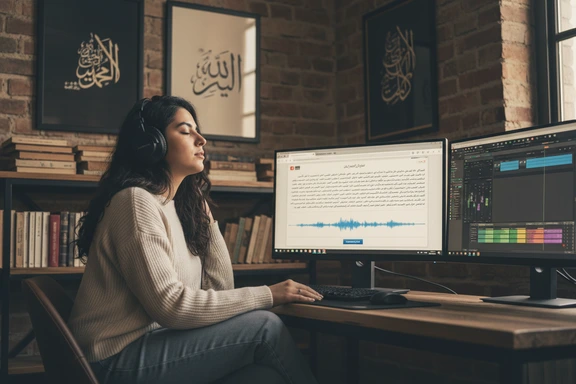
Iraqi Diaspora Media
Voice news reads, podcasts and social posts that reach the Iraqi community in Detroit, London, Stockholm and Sydney. Authentic Baghdadi cadence feels like home — شلون وماكو land naturally, while MSA-only reads drift toward cold broadcast tone.
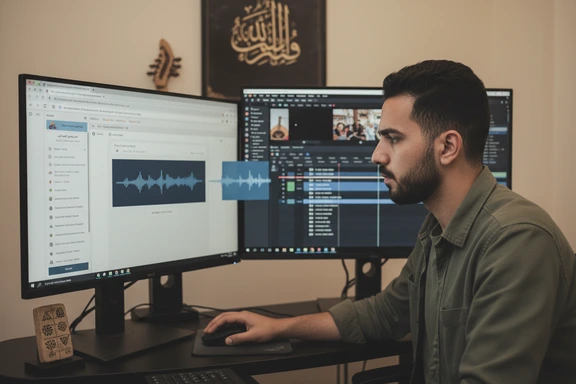
Iraqi Content Creation
Produce YouTube channels and podcast episodes in native Iraqi Arabic. Code-switch Persian-origin loanwords naturally — the voice handles چاي, شلون and the Mesopotamian rhythm that an iraqi voice over needs to feel authentic, not translated.
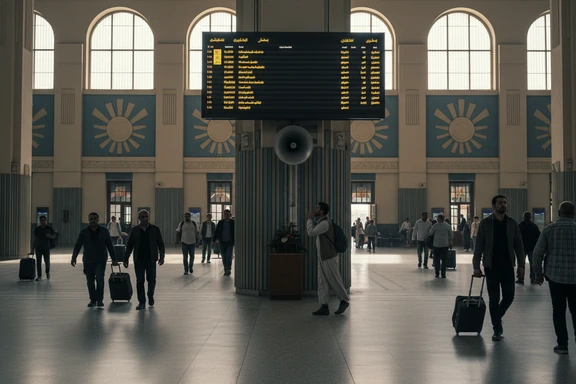
Cultural & Educational Audio
Generate museum guides for the Iraq Museum, lectures on Mesopotamian history from Babylon to Basra, and cultural programs in Iraqi Arabic. A Baghdadi reading signals authenticity where an MSA voice would sound imported.
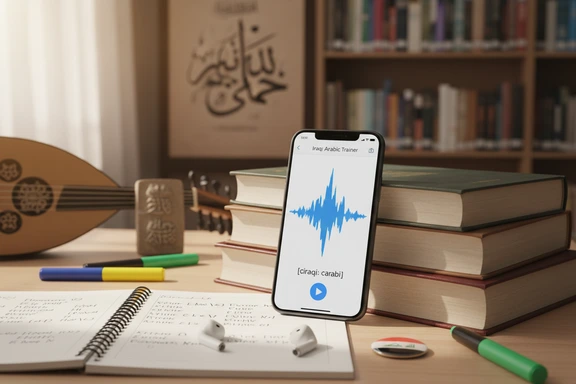
Iraqi Arabic Learning
Practice Mesopotamian Arabic — the gilit shift, the /k/ → /tʃ/ palatalisation, iconic ماكو negation. Run an MSA comparison side by side to train both your الفصحى ear and your Iraqi street-register ear.
Iraqi Arabic TTS — How It Works
Three steps to generate a Baghdadi reading online. No software, no signup.
Paste or type your text
Paste up to 1,000,000 characters. Baghdadi lines like "شلون حالك؟ ماكو مشكلة" read naturally.
Choose a voice
Pick Bassel (male) or Rana (female), the two ar-IQ speakers. Adjust speed and pitch.
Listen & download free
Convert, preview, export MP3, WAV or FLAC. First 1,000 characters free.
Frequently Asked Questions — Iraqi Arabic TTS
Iraqi Arabic belongs to the Mesopotamian group and is built on the gilit dialect — the shift from classical /q/ to a voiced /g/, heard in /gilit/ for قلت and /gaːl/ for قال. It palatalises /k/ to /tʃ/ before front vowels (/tʃam/ for كم), swaps كيف for شلون, replaces لا يوجد with the iconic ماكو, and carries a deep Persian-Turkic-Kurdish lexical layer, including the letter چ for /tʃ/ in چاي. Iraqi pronunciation reads naturally for audiences in Baghdad, Basra and Mosul, and for the diaspora in Detroit, London, Stockholm and Sydney.
Yes. Write naturally with شلون, ماكو, هواية, چاي, باشا and خوش — the ar-IQ speakers read them with native Baghdadi cadence, including the fourth letter چ for /tʃ/. Numbers in Arabic-Indic digits and Iraqi dinar figures are handled as an Iraqi listener would read them aloud.
Yes. Iraqi Arabic reaches the global diaspora — Detroit, London, Stockholm, Sydney and beyond. An iraqi ai voice works for community media, family messages, NGO announcements and cultural programming that Baghdad, Basra and Mosul listeners recognise as their own.
Two ar-IQ neural speakers: Bassel (male) and Rana (female), both Baghdadi. For الفصحى (MSA), Egyptian, Levantine or Maghrebi variants see the main Arabic page.
Yes — free MP3 export with no signup. Paste your script, pick Bassel or Rana, export as MP3, WAV, FLAC or OGG. The first 1,000 characters are free; longer projects use the standard SpeechGen credits.
Pick Bassel or Rana and export a Baghdadi reading in seconds. Need another variant? Visit the main Arabic page.