Tunisian Arabic Text to Speech — Derja AI Voice
2 Tunisian Arabic AI voices — Tunis Derja accent. Free MP3, no signup.
Tunisian Derja — Maghrebi Arabic with French & Italian Accents
This Tunisian Arabic text to speech page turns any script into an authentic Derja reading — the everyday register heard from Tunis to Sousse, Sfax and Bizerte. Two native ar-TN neural speakers, Reem (female) and Hedi (male), read with the Maghrebi cadence, French code-switching and Italian loanwords that define تونسي. Paste, pick a speaker, download a free MP3 — no signup.
Creators reach for this dialect when an MSA reading feels stiff to a local ear. Feed the system a line in Tounsi — "عسلامة! ça va?" or "برشا صحة" — and the speaker stays in the local pocket, a true Maghrebi accent coloured by Italian trade and French schooling. For MSA or other regional variants see our main Arabic page.
- 2 native ar-TN speakers — Neural tier
- Tunis/Sousse register — Maghrebi cadence
- French & Italian loanwords, Amazigh substrate
- Download MP3, WAV, FLAC, OGG
- Free — 1,000 characters, no signup
Tunisian Voices — Reem & Hedi from Tunis
Click to preview · 2 native ar-TN speakers total
Both ar-TN native speakers — Reem and Hedi, each with a central register also heard in Sousse and Sfax media. For الفصحى, Egyptian, Gulf, Levantine or other Maghrebi variants visit the main Arabic page.
Tunisian Derja vs MSA (الفصحى) — Pronunciation Comparison
Same meaning, two readings. Hear how the dialect reshapes Arabic against the MSA baseline.
What Makes Tunisian Arabic Sound Unique
- French code-switching — daily speech is woven with french loanwords ("bonjour", "ça va", "normal", "voiture"). The speaker reads them with French phonetics embedded in the Arabic flow — a sound no MSA render can fake.
- Italian loanwords — centuries of Mediterranean trade left Italian vocabulary inside Derja, from "برشا" (a lot, likely from "parecchio") to kitchen and harbour terms. This Italian layer is absent from Algerian and Moroccan Maghrebi.
- Amazigh (Berber) substrate — t-prefix verbs like "تفرنس" (to act French), negation patterns "ما...ش", and everyday nouns from the pre-Arab Tamazight layer. Central, Sahelian and southern speech all carry this substrate.
- Maghrebi vowel reduction — short vowels collapse, creating consonant clusters that make the dialect opaque to Cairo or Gulf listeners without exposure.
Tunisian Conventions — Dinar, Date Format & Number Style
Local formatting rules shift how the same numbers read aloud. Four ar-TN conventions worth feeding the voice correctly:
Numbers
2,500,000 — Latin digits dominate locally; Arabic-Indic numerals are rare outside religious contexts. French comma-decimal style: 2.500,00.
Currency
15,250 د.ت — the dinar (TND), divided into 1,000 millimes. Written "د.ت" or "DT"; the speaker reads "خمسطاش ألف ومايتين وخمسين دينار".
Dates
15/04/2026 — day-first DD/MM/YYYY, a French legacy. Month names are often French in bilingual copy: "15 Avril 2026".
Time
14:30 — 24-hour clock standard (French legacy). The 12-hour صباحاً / مساءً style of Egypt and the Gulf is rare in local media.
What Can You Do with a Tunisian AI Voice?
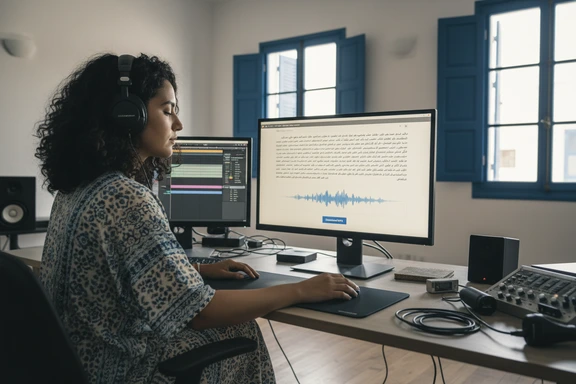
Tunisian Media & Marketing
Voice campaigns for Tunisiana, Ooredoo and Mosaïque FM. A native ar-TN cadence with french and italian loanwords reaches Sousse, Sfax, Bizerte — and the Maghrebi diaspora — in a way a generic Arabic spot cannot.
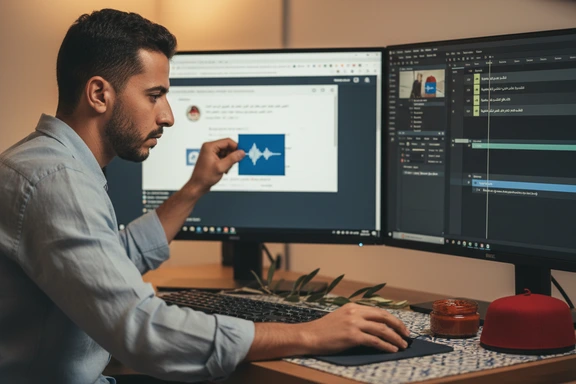
Maghrebi Diaspora Content
Produce Tounsi content for YouTube, TikTok and Reels aimed at Maghrebi communities in France, Italy and Germany. The ar-TN ai voice switches from Arabic to French mid-sentence the way local creators actually do — ready for voice-over on mezoued-inspired edits and street-comedy sketches.
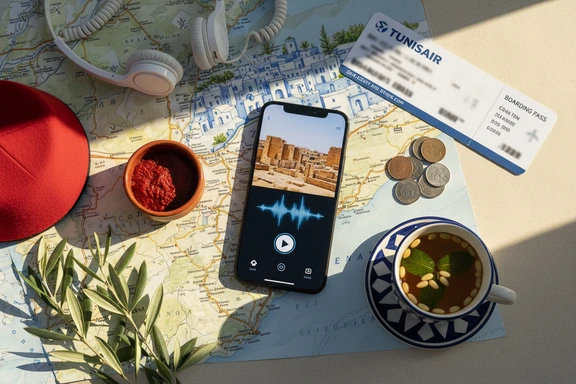
Mediterranean Tourism
Build audio guides for the Carthage ruins, Sidi Bou Said, the Tunis medina and Kairouan — then stretch south to Djerba and the Sahara. A native ar-TN voice gives heritage and hospitality content authentic maghrebi character, ready for museum apps and hotel self-checkin kiosks.
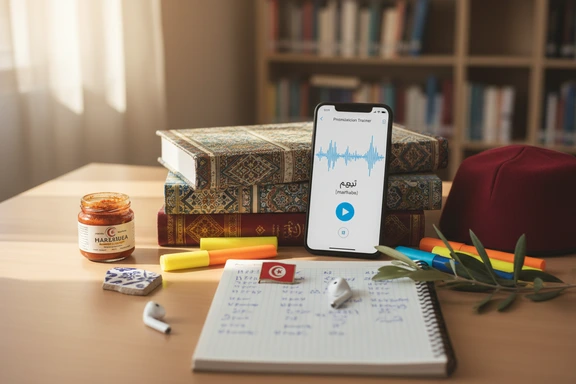
Derja Learning
Practice a distinctive Maghrebi variant — french loanwords, italian loanwords, amazigh t-prefixes and severe vowel reduction. Train your pronunciation with Reem and Hedi, then compare each line with الفصحى to bridge formal and street registers.
Tunisian Arabic TTS — How It Works
Three steps to generate an ar-TN reading online. No software, no signup.
Paste or type your text
Up to 1,000,000 characters. Mix Arabic and French — "عسلامة! ça va?" — the speaker handles both.
Choose a voice
Pick Reem (female) or Hedi (male). Adjust speed and pitch.
Listen & download free
Convert, preview, export MP3, WAV or FLAC. First 1,000 characters free.
Frequently Asked Questions — Tunisian Arabic TTS
Derja (also called Tounsi, كلام تونسي) is a Maghrebi dialect shaped by French colonial schooling, centuries of Italian trade contact and an Amazigh (Berber) substrate. Expect daily French words (bonjour, ça va, normal), Italian-origin items (برشا), t-prefix verbs from the amazigh layer (تفرنس = "to act Frenchified"), and severe vowel reduction that creates consonant clusters. The variant is largely opaque to Mashreq Arabs without exposure.
Yes — local speech mixes French words (bonjour, normal, voiture) and Italian-origin items (برشا, بندير) constantly. Write them inside your Arabic text and Reem or Hedi will blend them with authentic Tounsi cadence. No SSML overrides needed.
Two ar-TN Neural voices: Reem (female) and Hedi (male). Both use a central register also heard on Mosaïque FM and in Sousse and Sfax media — the register a local listener recognises as "home".
No — this is text to speech, not translation. Paste your Derja (Arabic script, Latin "Arabizi", or mixed with French) and you receive an audio file. For ar-TN translation use a separate dictionary service; our engine reads what you write.
Yes. Free MP3 download — no signup, no watermark. Paste your text, pick Reem or Hedi and export. WAV, FLAC and OGG are also available. First 1,000 characters are free.
Pick Reem or Hedi and export the reading in seconds. Need another Arabic variant? Visit the main Arabic page.