Egyptian Arabic Text to Speech
55 Egyptian Arabic AI voices — Cairo cinema-standard accent. Free MP3.
Egyptian Arabic TTS — 55 ar-EG Voices, Cairo Cinema Standard
This Egyptian Arabic text to speech page turns any script into an authentic Cairene reading — the register every Arab ear recognises from Egyptian cinema, Ramadan drama and the voice of Umm Kulthum. Fifty-five native ar-EG neural speakers, led by Salma (female) and Shakir (male), read with the glottal /ʔ/, the hard /g/ for جيم and the warm Cairo cadence listeners trust across the Arab world. Paste, pick a speaker, download a free MP3 — no signup.
Writers reach for this Egyptian voice over ai when a Modern Standard Arabic reading would feel formal or foreign. Feed the system a Cairo street line — "إزيك يا باشا" or "هو فين دلوقتي؟" — and the egyptian ai voice stays in the Cairene pocket, a true cairo accent, without retreating to الفصحى. The same page also handles a frequent studio request — taking a Modern Standard Arabic draft and delivering it as a Cairene colloquial read, without rewriting the source. Every ar-EG voice in the catalogue is a native Egyptian speaker, tuned for the Cairo cinema register. For a neutral الفصحى reading or other arabic dialect variants see our main Arabic page.
- 55 native ar-EG speakers — Neural tier
- Cairene accent — cinema arabic standard
- Glottal /ʔ/ for ق & hard /g/ for ج
- Download MP3, WAV, FLAC, OGG
- Free — 1,000 characters, no signup
Egyptian Arabic AI Voice — Cairene Speakers
Click to preview · 55 native ar-EG speakers total
Four highlighted speakers from the 55-voice Egyptian roster — including two ar-EG natives (Salma, Shakir) and two multilingual speakers tuned to the Cairene accent. For الفصحى (MSA), Gulf, Levantine or Maghrebi variants browse the voices page or visit the main Arabic page.
Egyptian vs الفصحى (MSA) — Pronunciation Comparison
Same word, two readings. Hear how the Cairene accent reshapes familiar arabic dialect sounds against the Modern Standard Arabic baseline.
What Makes Egyptian Arabic Sound Unique
- Glottal /q/ → /ʔ/ — the Cairene glottal stop is the first marker most Arab listeners pick up. "قال" reads as /ʔaːl/, "قلب" as /ʔalb/ — a sound-shape no other major arabic dialect produces the same way.
- Hard /g/ for جيم — while Levantine and MSA render جيم as /dʒ/ ("jamal"), the Egyptian voice says /g/ ("gamal"). This "Gamal Abdel Nasser" consonant is one of the loudest cinema arabic signals.
- Cinema-standard dialect — a century of Egyptian cinema, radio and Umm Kulthum recordings made Cairene the de-facto shared register across the Arab world. Speakers from Morocco to Oman understand it by ear.
Egyptian Conventions — Pound, Date Format & Number Style
Local formatting rules shift how the same numbers read aloud. Four Egyptian conventions worth feeding the voice correctly:
Numbers
٢٬٥٠٠٬٠٠٠ — Arabic-Indic digits are common in print; Latin "2,500,000" reads fine in modern digital copy.
Currency
٥٠٠ ج.م — the Egyptian pound (EGP). Symbols ج.م and £ both in use; the voice reads "خمسمية جنيه".
Dates
١٥/٤/٢٠٢٦ — day-first DD/MM/YYYY. Spell months when clarity matters: "١٥ أبريل ٢٠٢٦".
Time
٣:٣٠ مساءً — 12-hour clock with صباحاً / مساءً. 24-hour form lives mostly in timetables.
What Can You Do with an Egyptian AI Voice?
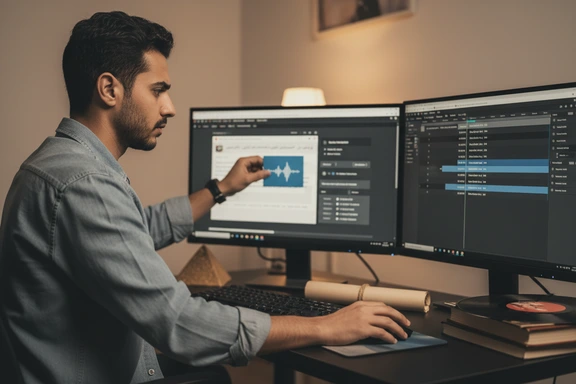
Egyptian Cinema & Voiceover
Generate dialogue, narration and trailer reads for Egyptian-style productions. The Cairene voice carries the cinema-standard tone heard from Cairo to Casablanca — the accent Umm Kulthum, Faten Hamama and modern Ramadan drama made the shared sound of the Arab world.
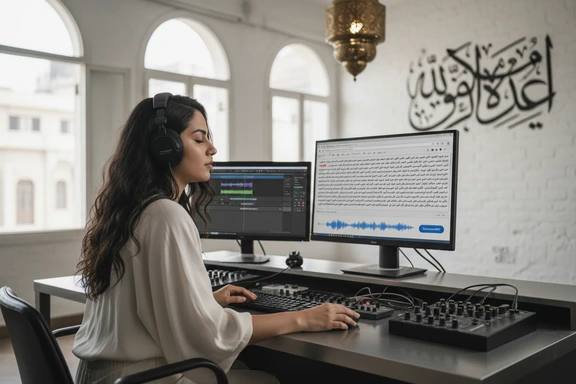
Cairo Marketing & Broadcasting
Voice spots for Egyptian brands, Vodafone-Etisalat telecom campaigns and FMCG radio ads. The native Cairene accent connects with Egypt's 110 million speakers and the wider Arab audience — a neutral الفصحى read cannot land the same way.
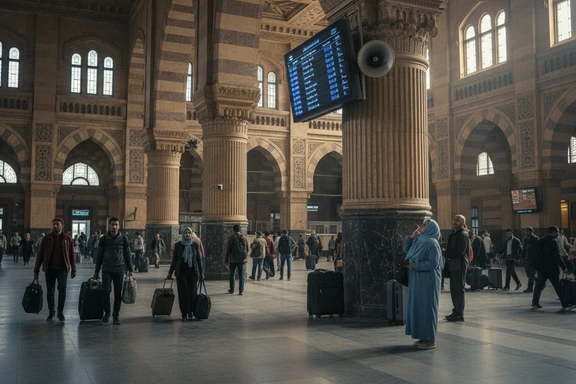
Public Announcements & Education
Generate Cairo metro announcements, museum guides for the Egyptian Museum and university lectures. The Cairene reading is clear to listeners from Alexandria to Aswan — and to Arabic speakers across the region who grew up on Egyptian broadcasting.
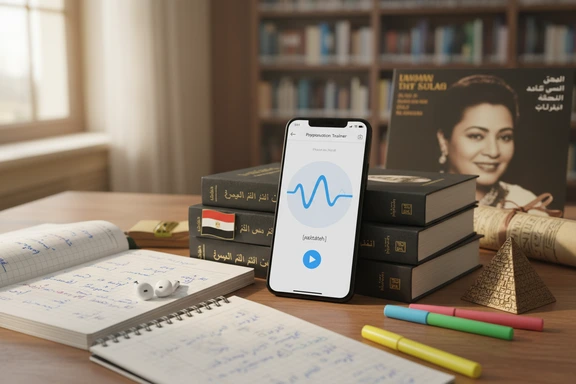
Egyptian Arabic Learning
Practice Cairene pronunciation — the glottal stop for ق, the hard /g/ for ج, dialectal verbs like "شاف" and "عايز". Run an الفصحى comparison side by side to train both your MSA ear and your Egyptian ear.
Egyptian Arabic TTS — How It Works
Three steps to generate a Cairene reading online. No software, no signup.
Paste or type your text
Paste up to 1,000,000 characters. Cairene lines like "إزيك يا باشا" read naturally.
Choose a voice
Pick Salma, Shakir or any of the 55 Egyptian speakers. Adjust speed and pitch.
Listen & download free
Convert, preview, export MP3, WAV or FLAC. First 1,000 characters free.
Frequently Asked Questions — Egyptian Arabic TTS
Egyptian Arabic is the spoken Cairene register; Modern Standard Arabic (الفصحى) is the formal written register shared across the Arab world. Egyptian flips ق to the glottal /ʔ/, reads ج as a hard /g/, stops /θ/ and /ð/ into /t/ and /d/, swaps "رأى" for "شاف" and uses the progressive marker "عمّال". الفصحى keeps the classical consonants and conjugations used in news, legal writing and Qur'anic recitation. Most Egyptian voices on this page handle both — feed them الفصحى text for formal narration, Cairene text for drama and ads.
A century of Egyptian cinema, radio and television — from Umm Kulthum and the golden-age Cairo studios to modern Ramadan drama — made the Cairene accent the shared auditory standard of the Arab world. Listeners from Morocco to Oman decode Egyptian by ear long before they master another arabic dialect. That is why Egyptian voice over ai clips travel well for regional brand campaigns and pan-Arab content.
Yes. Feed it "إزيك", "عايز", "دلوقتي", "خلاص", "يا باشا" or "معلش" and the Cairene speakers read them naturally — no SSML overrides, no settings change. Numbers in Arabic-Indic digits (٢٠٢٦) and pound amounts (٥٠٠ ج.م) are read as expected for an Egyptian audience.
Fifty-five ar-EG voices in the catalogue, spanning native Neural speakers (Salma, Shakir) and multilingual speakers tuned to the Cairene accent (Ada EG, Alessio EG and others). For الفصحى, Gulf, Levantine or Maghrebi variants see our main Arabic page.
No — this is a text-to-speech reader, not a translation engine: قراءة، لا ترجمة. You supply the Egyptian Arabic text (typed, pasted or imported as DOCX / PDF / SRT) and the voice reads it aloud. If you need Arabic translation first, prepare the Cairene script in your usual tool, then paste it here for the voice reading.
Pick Salma, Shakir or any of the 55 Cairene speakers and export an Egyptian reading in seconds. Need another variant? Visit the main Arabic page.