Spanish Text to Speech
207 Spanish AI voices across 22 accents — Castilian to Argentine. Free.
207 AI Voices for Spanish TTS — Castilian, Mexican & Argentine
Paste any text and hear natural speech read aloud by a native speaker — Castilian from Madrid, neutral Latin American from Mexico City, the rioplatense lilt of Buenos Aires. The catalogue ships 207 neural voices across 22 accent groups: 127 Castilian voices form the core (es-ES), then 22 US Hispanic (es-US), 20 Mexican (es-MX), plus 2-voice (male + female) sets for Argentine, Colombian, Chilean, Peruvian, Cuban, Venezuelan, and a dozen more Latin American varieties. Speakers like Arnau (PRO Neural, male) and Abril (PRO Neural, female) cover the most common voiceover registers, with 33 HD voices on top for studio-grade narration. Spanish text to speech online, no software to install.
A spanish pronunciation generator for DELE prep — paste any text, pick the accent, hear the result. The same editor powers AP coursework, audiobook narration of Cervantes and García Márquez, YouTube voice-over for the Hispanic market, and audio guides for the Alhambra or Chichén Itzá. Text to speech in spanish handles the trilled rr, the ñ in año, the inverted ¿ ¡ punctuation, and the regional split between /θ/ and /s/ in words like cinco. Free MP3 download — first 1,000 characters, no account needed.
- 207 Spanish voices — 33 HD, 157 PRO Neural, 17 Standard
- Castilian
es-ES— 127 voices (core) - US Hispanic
es-US— 22 voices - Mexican
es-MX— 20 voices - 19 Latin American dialects — Argentine, Colombian, Chilean, Peruvian, Cuban, Venezuelan, Dominican, Puerto Rican, Uruguayan, Paraguayan, Bolivian, Ecuadorian, Costa Rican, Guatemalan, Honduran, Nicaraguan, Panamanian, Salvadoran, Equatoguinean (2 voices each)
- Free MP3 — 1,000 chars, no signup
Spanish Voice Samples — Hear the Accents
Click to preview · 207 Spanish voices across 22 accents
These are 4 featured speakers out of 207 — each a native spanish speaker trained on authentic regional pronunciation. Pick any voice — male or female, Neural PRO or HD — and click preview before exporting. Browse the full catalogue on the voices page and filter by es-ES, es-US, es-MX, es-AR, es-CO or any of the other 17 Latin American locale codes.
Voice Styles — Cheerful vs Sad
A handful of PRO Neural voices unlock emotional styles on top of the default neutral register — pick any spanish ai voice with styles enabled, then choose the mood from the style dropdown that appears next to the voice picker, no markup needed. Same text, same speaker (Alvaro, a Castilian male voice), read twice in each row: once cheerful, once sad.
Voices that ship with emotional styles (select the voice in the picker, then pick the mood from the style dropdown):
- Alvaro — Castilian (
es-ES), PRO Neural male. Styles: cheerful, sad. - Jorge — Mexican (
es-MX), PRO Neural male. Five styles: cheerful, chat, whispering, sad, excited. - Jazmin — Mexican (
es-MX), PRO Neural female. Three styles: cheerful, sad, whispering. - Lupe — US Hispanic (
es-US), PRO Neural female. One style: newscast.
The other 200+ voices read in their default neutral register — the right fit for most narration, e-learning, and voiceover work. You can still adjust speed and pitch on every voice, style-enabled or not.
Spanish Pronunciation Audio — The Core Sounds
The spelling is largely phonetic — once you know the patterns below, every word reads the way it's written. Click each row for pronunciation audio on five features learners and TTS editors stumble on most. A full spanish pronunciation online reference, free to use. Regional accent differences (ceceo, yeísmo, sheísmo) are covered separately in the next section.
Why Spanish Sounds the Way It Does
- Syllable-timed rhythm — every syllable takes roughly the same length, unlike stress-timed English. The result is the steady "rat-a-tat" cadence that lets Spanish be spoken at speeds that sound impossible to English ears, without losing intelligibility.
- One letter, one sound — almost. Spelling rules are tighter than English or French, so once a learner knows the patterns above, reading aloud is mechanical. The neural voices benefit from the same regularity, which is why they produce natural spanish speech even on edge-case words.
- Stress is marked — when a word doesn't follow the default stress rule, an acute accent (´) tells you exactly where to put it: público vs publico vs publicó. Type the accent and the AI voice puts the emphasis in the right place; skip it and the meaning shifts.
Castilian vs Latin American — Hear the Split
Same text, different region. Click both sides of each row to hear Arnau (Castilian, es-ES) next to Jorge (Mexican, es-MX) and Tomas (Argentine, es-AR) read the same phrase — the ceceo /θ/ vs seseo /s/ split on the first two rows, then the Argentine sheísmo /ʃ/ on the last two.
The phonology engine applies each region's rules automatically — pick the voice whose locale matches your audience and the seseo, ceceo, yeísmo or sheísmo comes out right on its own. Use the catalogue as a spanish accent generator: filter by es-ES for Spain, es-MX for Mexico, es-AR for Argentina, or any other Latin American locale code.
Spanish — Formatting & Conventions for TTS
Small details in how you format the source text change how it comes out aloud. Four Spanish conventions worth knowing:
Numbers
1.500 → mil quinientos. The thousands separator is a period in Spain and most of Latin America, the reverse of English. Decimal mark splits regionally: 3,14 in Spain reads as tres coma catorce; Mexico writes 3.14 and reads tres punto catorce.
Currency
15,50 € → quince euros con cincuenta céntimos in Spain. Latin America uses the peso with the $ symbol — Mexican, Argentine, Colombian and Chilean pesos each look identical on paper, so adding the country code (MXN, ARS, COP, CLP) keeps the reading unambiguous.
Dates & Time
7 de abril de 2026 → siete de abril de dos mil veintiséis. Day-first throughout the Spanish-speaking world. Months stay lowercase. 24-hour clock is common in formal contexts: 14:30 → las catorce treinta.
Spelling & Accents
Always type ñ, accent marks á é í ó ú, and the inverted ¡ ¿. Skipping them shifts stress and changes meaning: publico (I publish) vs público (audience) vs publicó (he/she published) — three different words separated only by the accent.
What Can You Do with a Spanish Voice Generator?

Content Creation & Voiceover
Add a spanish voice over to YouTube videos, podcasts, and social-media reels. Pick a Castilian speaker for the European market, a neutral Latin American one for the broadest LatAm reach, or a Mexican voice for the US Hispanic audience. Export as MP3 and drop into Premiere, DaVinci, or CapCut.
Audiobooks & Narration
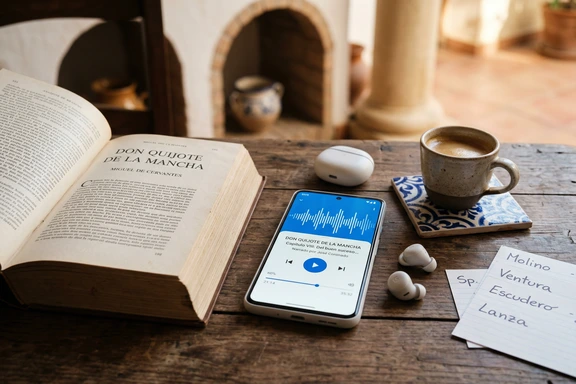
Turn manuscripts into audiobooks with a natural Spanish narrator. Warm Castilian works for Cervantes and Lorca; a Mexican or Argentine voice fits García Márquez, Borges, Cortázar, or Allende. Use Dialog Mode to assign distinct speakers to characters and dialogue, just like a full-cast production.
Language Learning & Pronunciation
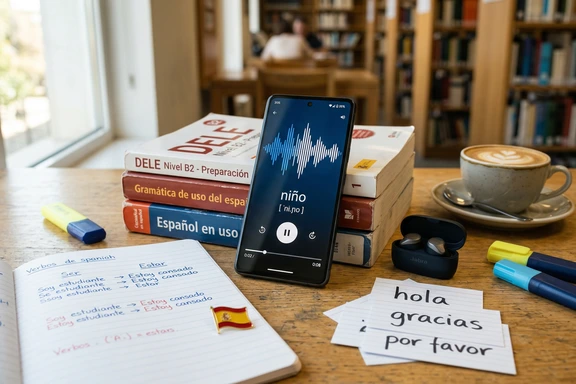
Train your ear for the real thing — DELE listening practice, AP Spanish drills, Cervantes Institute coursework. Slow the playback to 0.75× to catch every rr and ñ, then ramp it back up. Compare a Castilian voice against a Mexican one to hear seseo vs ceceo side by side.
Media, News & Podcast Production
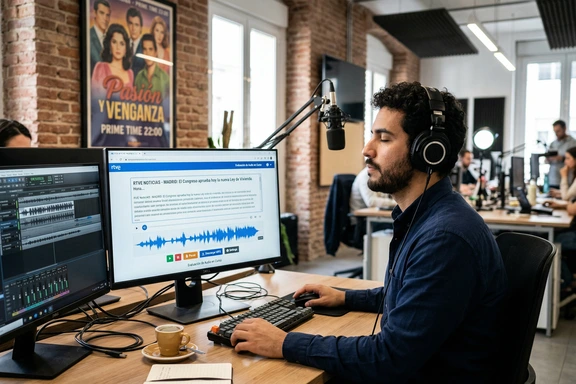
Generate news segments, a spanish voiceover for telenovelas, and corporate communications for the Hispanic market. From IVR menus and station-style PA announcements to broadcast-grade narration — the AI voices deliver newsroom polish on the first take, no studio booking required.
How It Works — Three Steps
Three steps from text to speech spanish audio, downloadable in seconds. Online spanish tts — no software, no signup.
Paste or type your text
Type directly or paste up to 1,000,000 characters for text to speech in spanish — scripts, articles, dialogue, study notes, or DELE practice materials. Upload DOCX, PDF, or SRT files.
Choose voice & accent
Pick from 207 native speakers across 22 accent groups — free spanish tts with every tier. Filter by gender and quality — Standard, PRO Neural, or HD. Filter by es-ES for Castilian, es-US for US Hispanic, es-MX, es-AR, es-CO for Latin American varieties. Adjust speed and pitch to fine-tune.
Listen & download MP3
Click Convert to Speech, preview the result, and download as spanish mp3, WAV, or FLAC. First 1,000 characters free — no account needed, no watermark, commercial licence on every tier.
Frequently Asked Questions
Spanish TTS (text to speech) converts written text into spoken audio using AI voices trained on native speakers. Paste or type any text, pick a voice and accent — Castilian, Mexican, Argentine, Colombian, or any of the other 19 Latin American varieties — and the engine reads it aloud in seconds. The result downloads as MP3, WAV, or FLAC. No recording studio, no voice actor, no signup for the first 1,000 characters.
207 native speakers across 22 accent groups. The Castilian base (es-ES) alone ships 127 voices, plus 22 US Hispanic (es-US), 20 Mexican (es-MX), and 2-voice male/female sets for each of 19 other Latin American dialects. The roster breaks down by quality tier into 33 HD (studio-grade), 157 PRO Neural (warm, expressive), and 17 Standard (baseline), with a roughly even male/female split. Use any of them as tts spanish — speed (0.5×–2.0×) and pitch (−20 to +20) adjustable on every voice.
Yes. The catalogue covers Castilian (Madrid), Mexican, Argentine (rioplatense), Colombian (paisa and bogotano), Cuban, Puerto Rican, Dominican, Peruvian, Chilean, and Venezuelan varieties. The biggest audible split is the Castilian /θ/ in cinco, gracias, zapato versus the Latin American /s/. The yeísmo merger (ll = y) is universal in modern voices, with the Argentine /ʃ/ variant available in select speakers. Filter by es-ES, es-MX, es-AR, or es-CO to match your audience.
Yes — it works as a spanish reader out of the box: paste any article, news story, or PDF and the engine reads the text aloud in seconds. Useful as an accessibility tool, a study aid, or a way to consume long-form content as audio — a full-featured spanish text reader. The engine can read spanish text aloud at any speed you set. Pick any spanish reader voice — male or female, Castilian or Latin American — and download the result as MP3. No signup needed for the first 1,000 characters.
Yes — every plan, including the free tier, includes a commercial licence. Use the spanish voice over in YouTube videos, podcasts, ads, e-learning courses, and client work without paying per-use royalties. PRO Neural and HD voices are typically the right pick for a client-facing voiceover or narrator read; Standard works for internal drafts and scratch tracks.
Yes. The first 1,000 characters are free with no account, no card, no watermark — paste, generate, and download. Create a free account and you get an additional 3,000 characters per day for seven days. Paid plans raise the monthly limit and unlock extras (longer scripts, bulk export, API access), but commercial use is included on every tier including the free one.